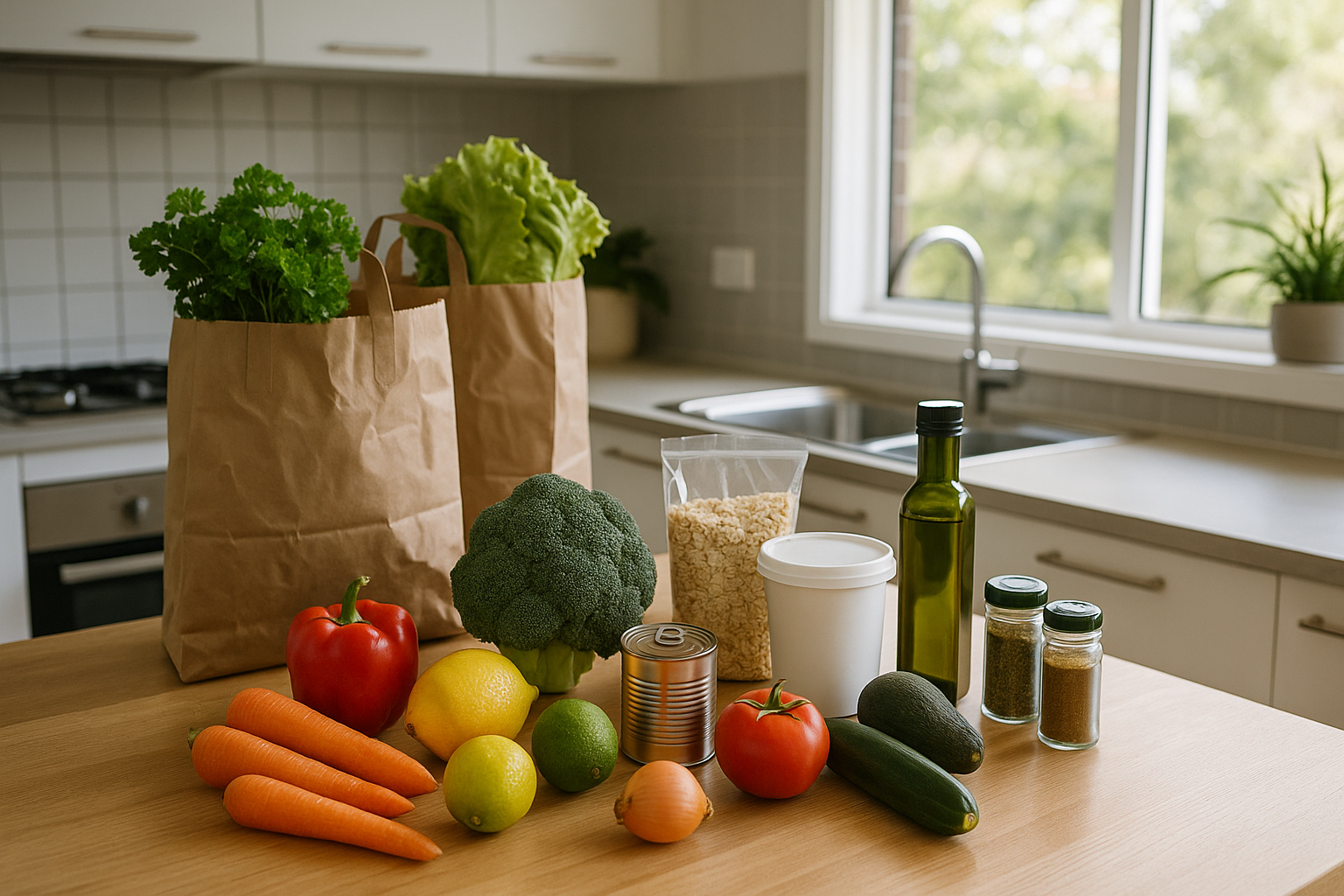

Gold Coast Supermarket Shopping: Materials Comparison & Selection Tips for a Healthier Trolley
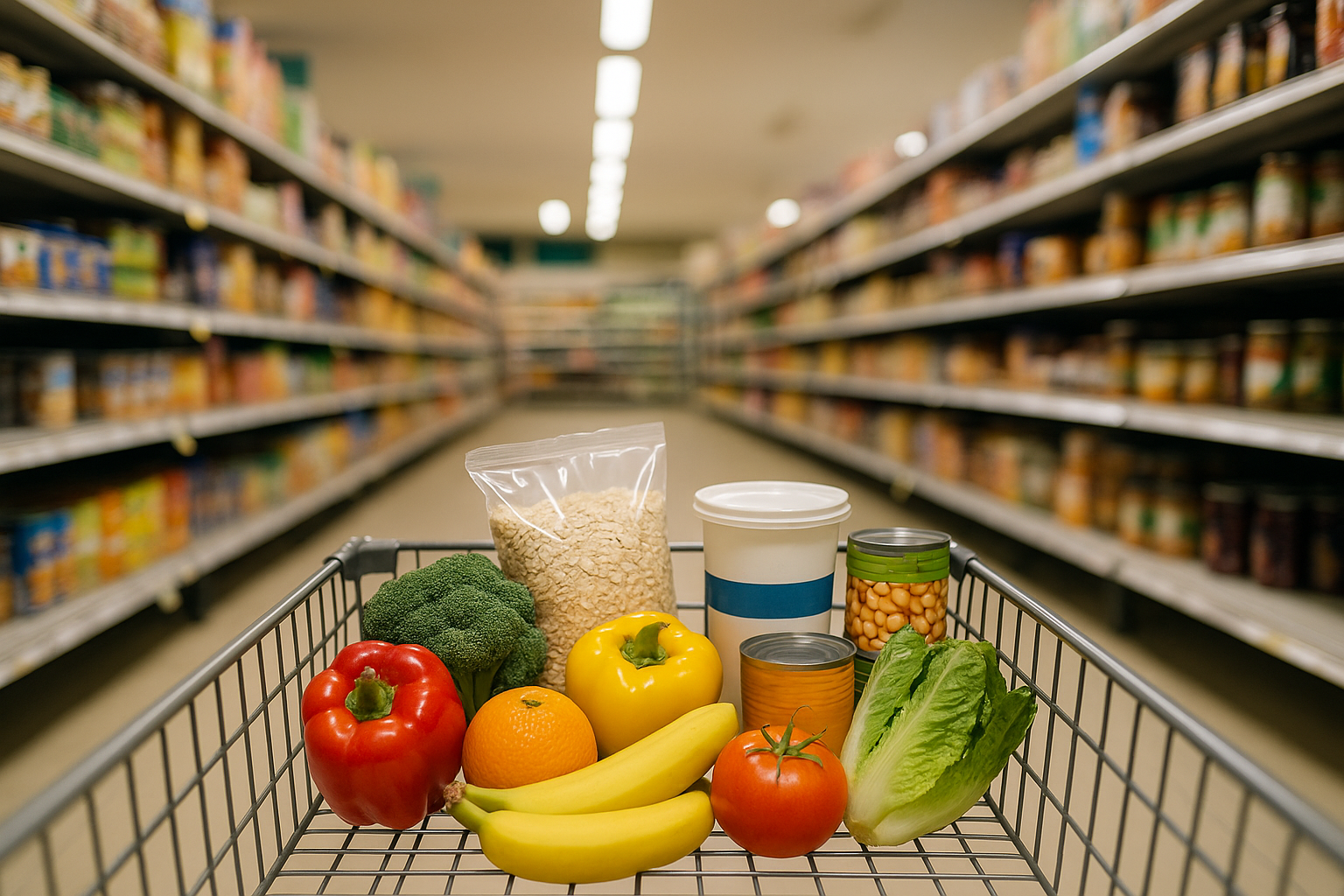
You can build a healthier trolley in the time it takes to compare two labels.
This guide shares Gold Coast supermarket shopping materials comparison and selection tips you can use in the aisle—whether you’re doing a quick shop in Southport, Robina or Burleigh, or a bigger weekly stock-up.
You’ll learn how to compare:
- Packaging materials (glass, tin, carton, plastic)
- Product formats (fresh, frozen, tinned, dried)
- Label details (ingredients, nutrition panel, serving size)
If you’d like hands-on support in-store, Beta Me offers Supermarket Shopping Tours on the Gold Coast.
What “materials” means at the supermarket

At the supermarket, “materials” usually means three things:
- Packaging type: glass, tin, carton, plastic tub, pouch
- Product format: fresh, frozen, tinned, dried, chilled, ready-to-eat
- Label details: ingredients list, nutrition information panel and allergens
None of these automatically makes a food “good” or “bad”.
A better question is: Which option fits my body, my goals, and my week?
Gold Coast reality matters here. Heat, sport, beach days, shift work, and school routines all change what’s practical—and what gets eaten before it spoils.
If you shop weekly and have a warm drive home from Southport, Robina or Burleigh, a mix of frozen veg, long-life staples, and a few hardy fresh items can help you stick to your plan.
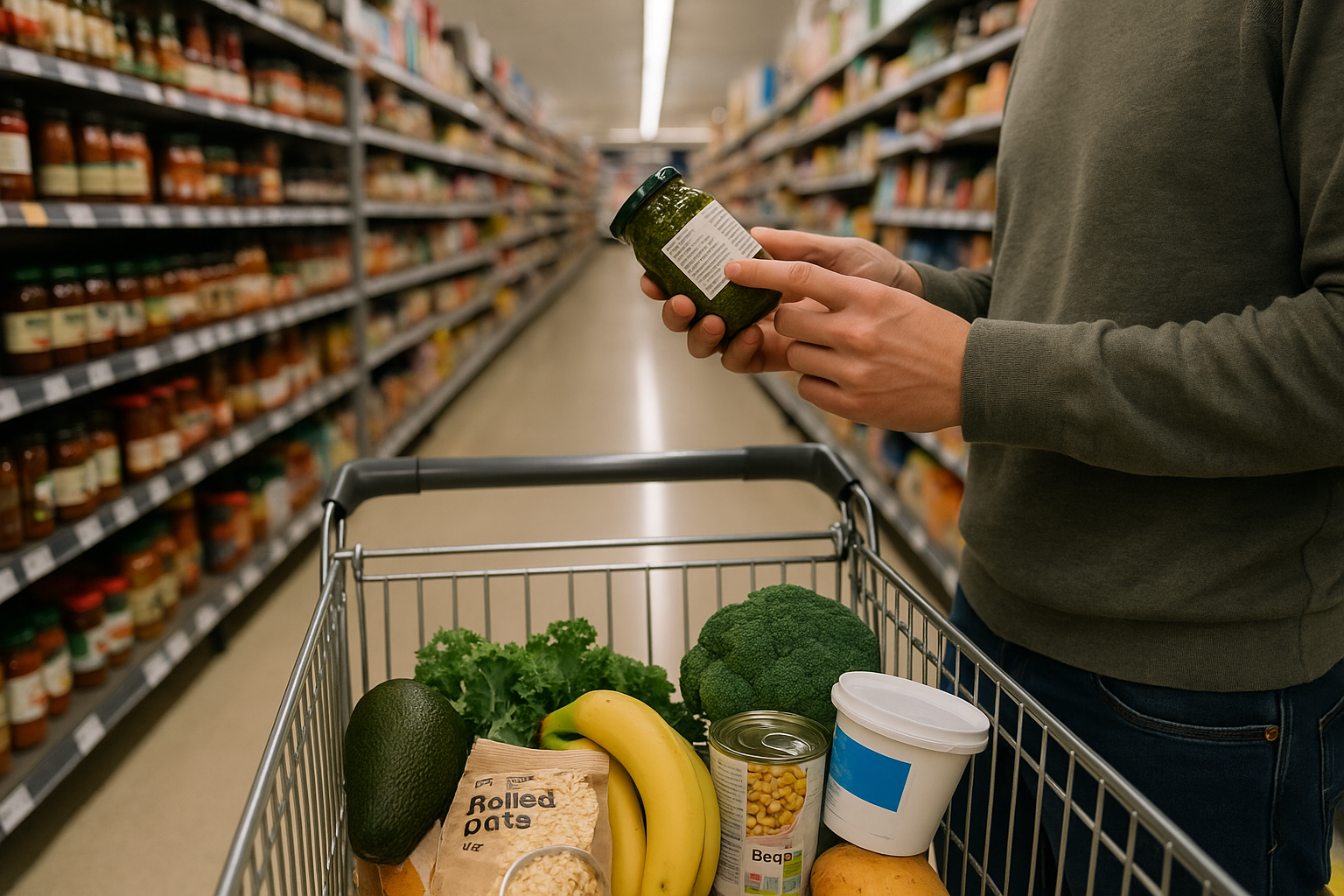
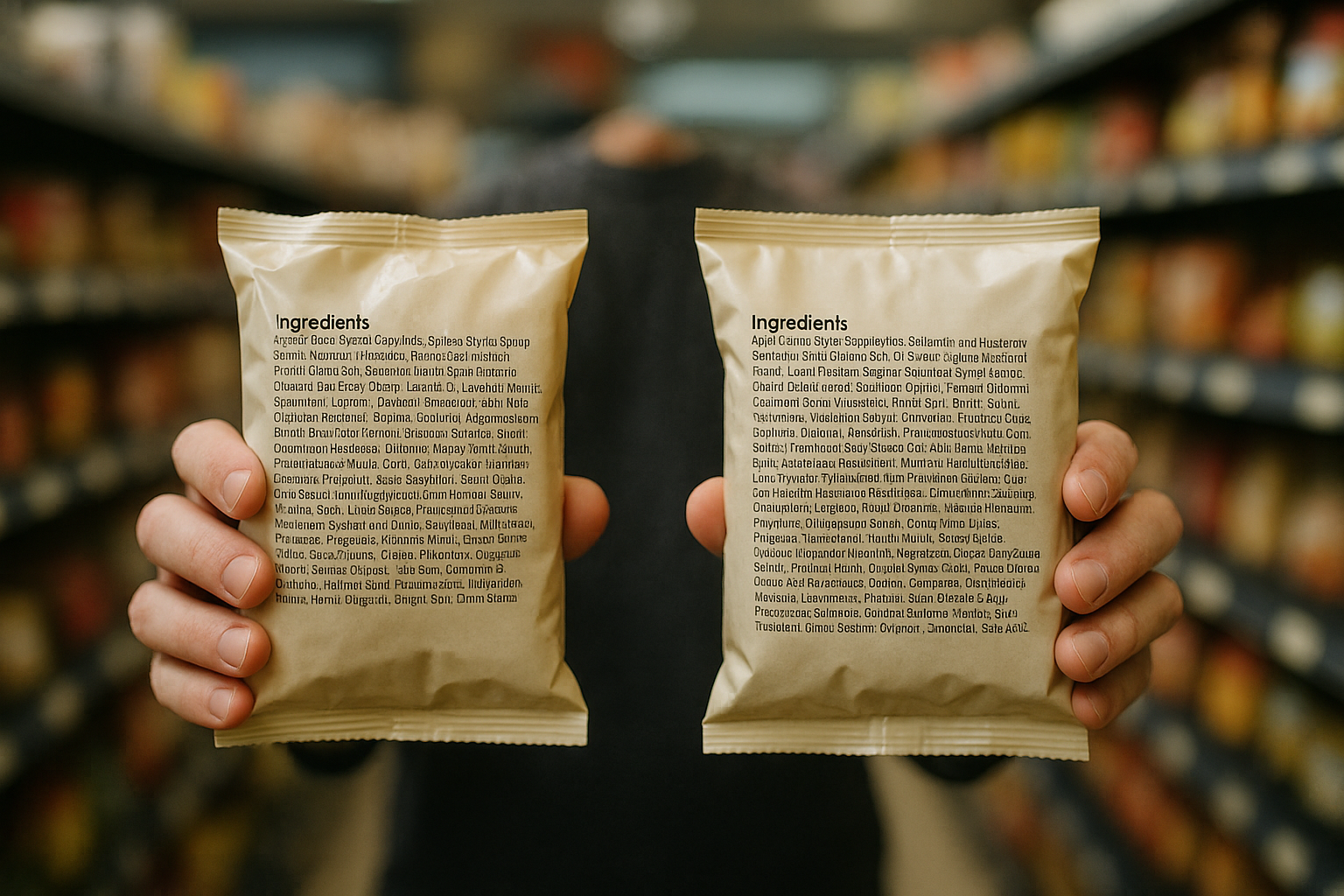
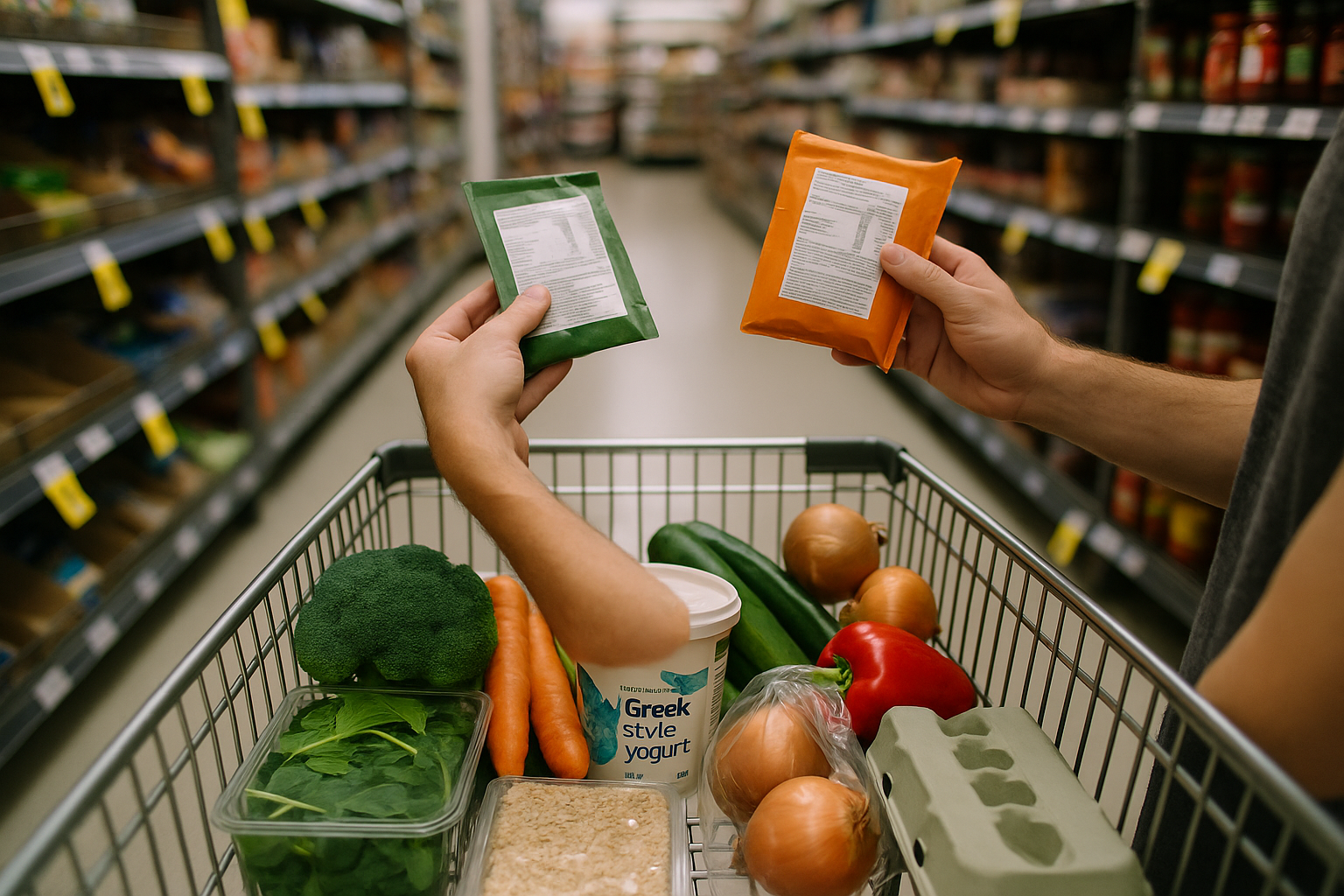
The 20-second label method (to compare similar products)
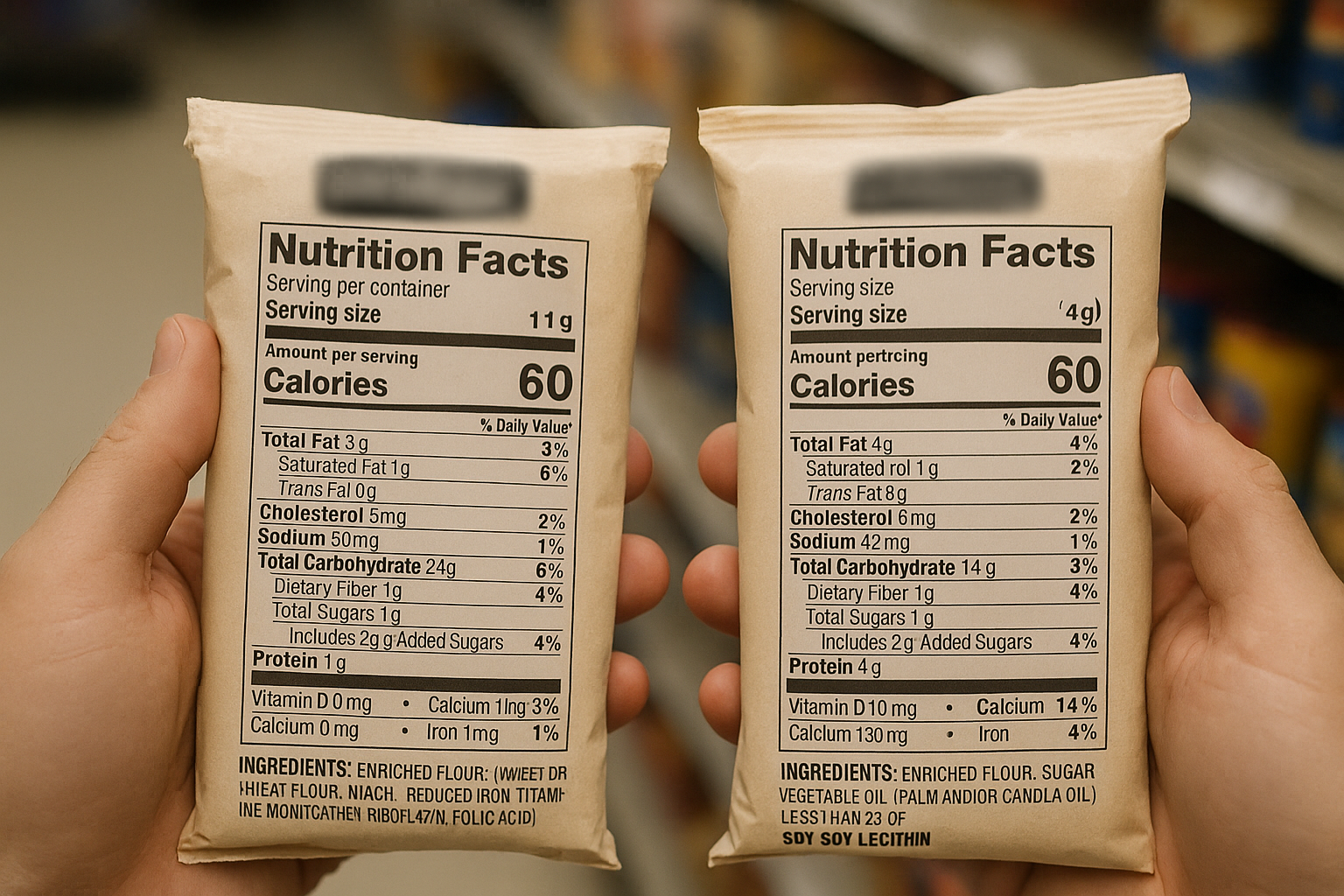
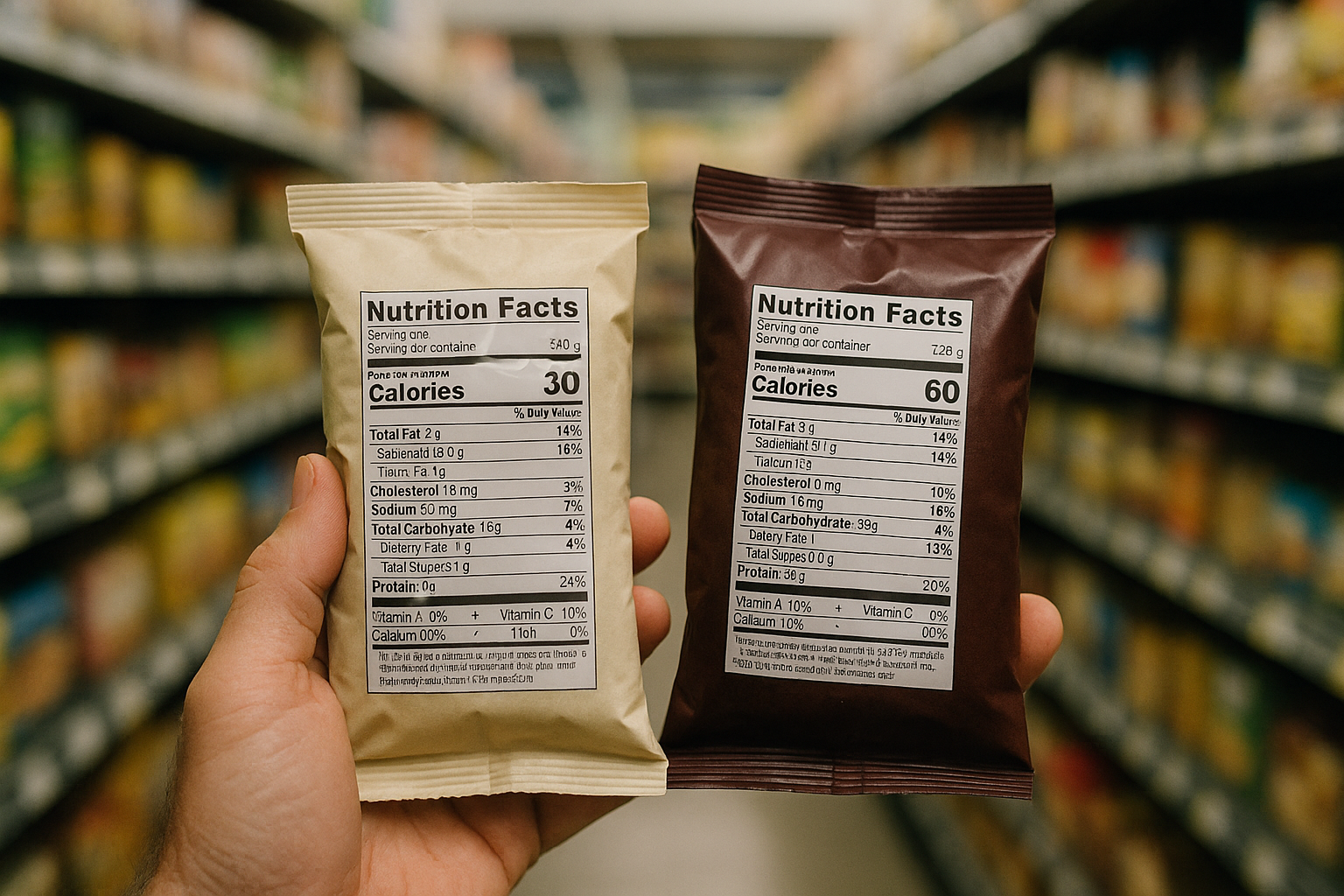
Use this when you’re choosing between Brand A and Brand B.
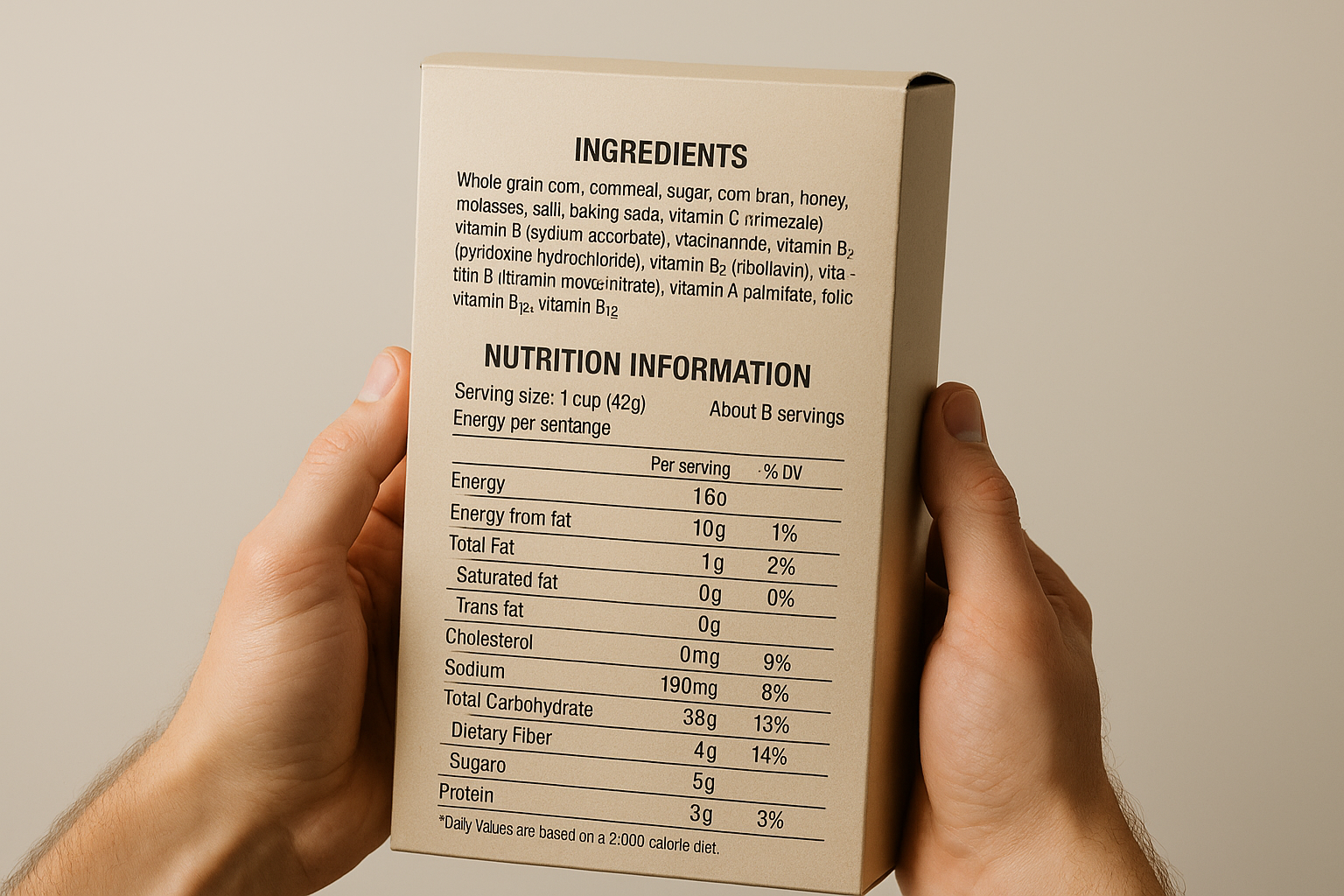
Step 1: Check the ingredients list first
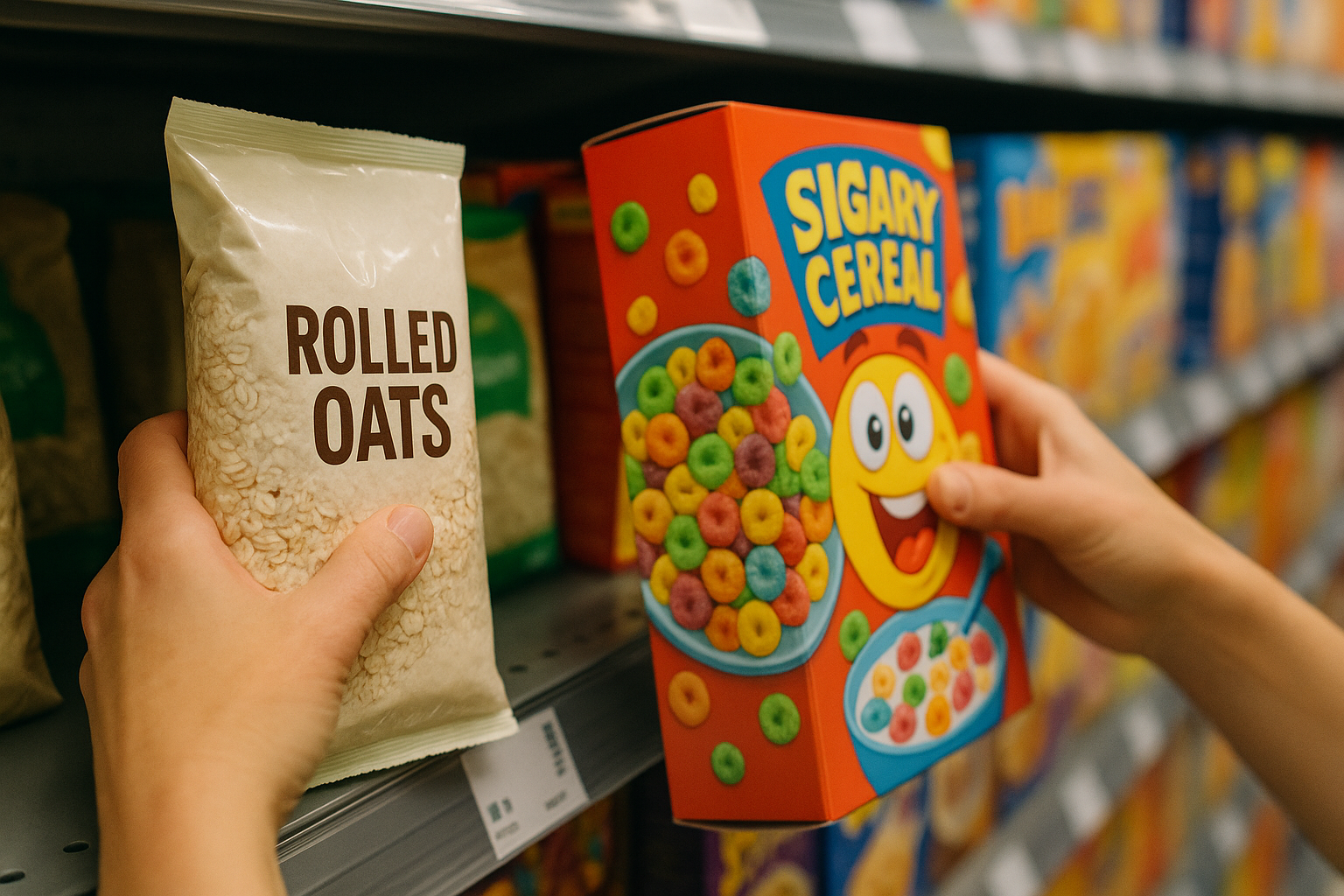
When foods are similar, choose the one with the simpler ingredients list.
Watch for added sugars in everyday items like:
- yoghurt
- cereal and muesli
- pasta sauces
- flavoured drinks
Ingredients are listed from most to least. If sugar (or several types of sugar) is near the top, it’s doing a lot of the work.
Front-of-pack claims can help you scan quickly, but the back label shows what you’re really buying.
Decision guide
- If two options are close, pick the one you’ll use consistently.
- For kids (or picky eaters), a slightly “less perfect” option that gets eaten beats a “perfect” option that gets wasted.
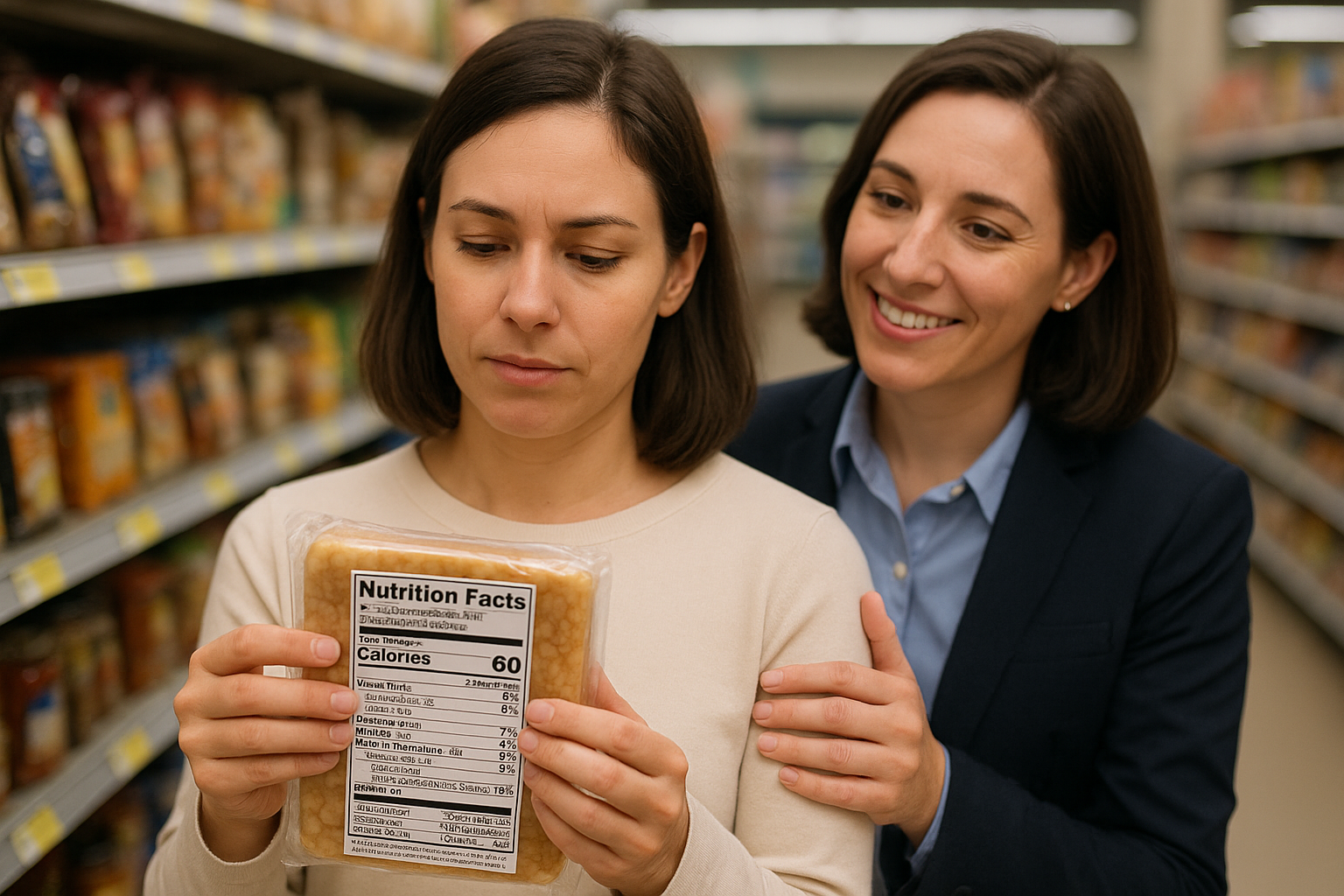
Step 2: Compare the nutrition panel per 100 g (or 100 mL)
Per 100 is the fairest comparison.
As a general guide, aim for:
- higher protein and fibre
- lower sodium
- lower added sugar
If the lowest-sodium option tastes bland and sits in the pantry, choose the middle-ground option you’ll actually cook with. Cooking at home more often is still a win.
Step 3: Check the serving size
Some products look “better” because the serving size is tiny.
If you usually eat two serves, mentally double the numbers.
This comes up a lot with muesli, crackers, and flavoured yoghurt pouches—especially after sport, long workdays, or late pickups.
If you’re managing gut symptoms
Some ingredients are common triggers for some people. They’re not automatically “bad”.
People sometimes notice symptoms with:
- certain sweeteners (including sugar alcohols)
- inulin/chicory fibre
- larger amounts of gums and thickeners
A practical approach is to change one variable at a time (one product or one ingredient swap) for 1–2 weeks. That way, you can tell what’s helping.
If you’re stuck, support from a gut health dietitian Gold Coast locals work with can help you link symptoms with ingredients and eating patterns—without cutting out whole food groups “just in case”.
Packaging materials: what matters most

Packaging can be a helpful shortcut, but keep your priorities in order:
- Ingredients
- Nutrition panel
- Convenience (so you’ll actually use it)
Also think about how often you shop. If you shop weekly (or less), packaging that keeps food fresh longer can reduce waste and save money.
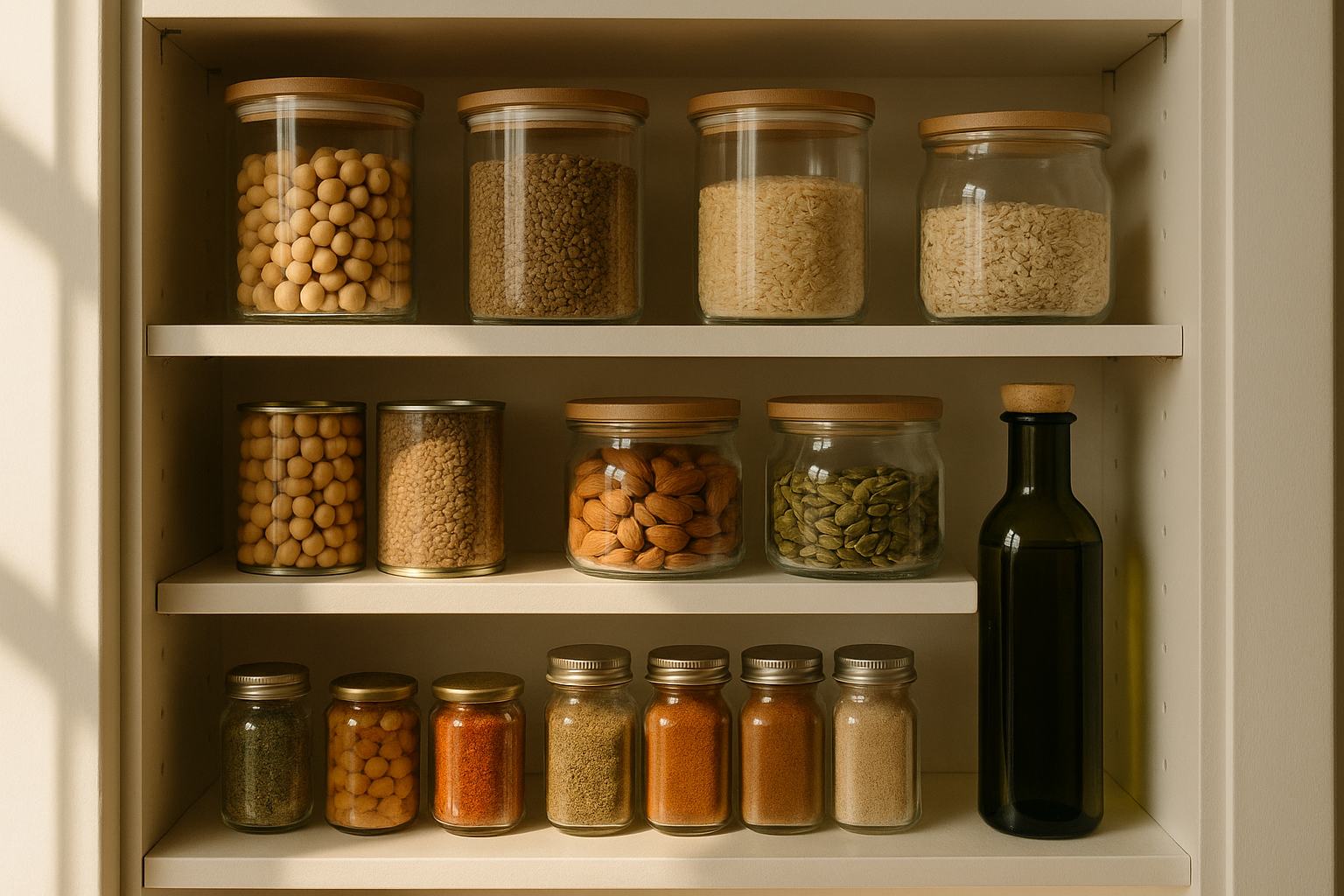
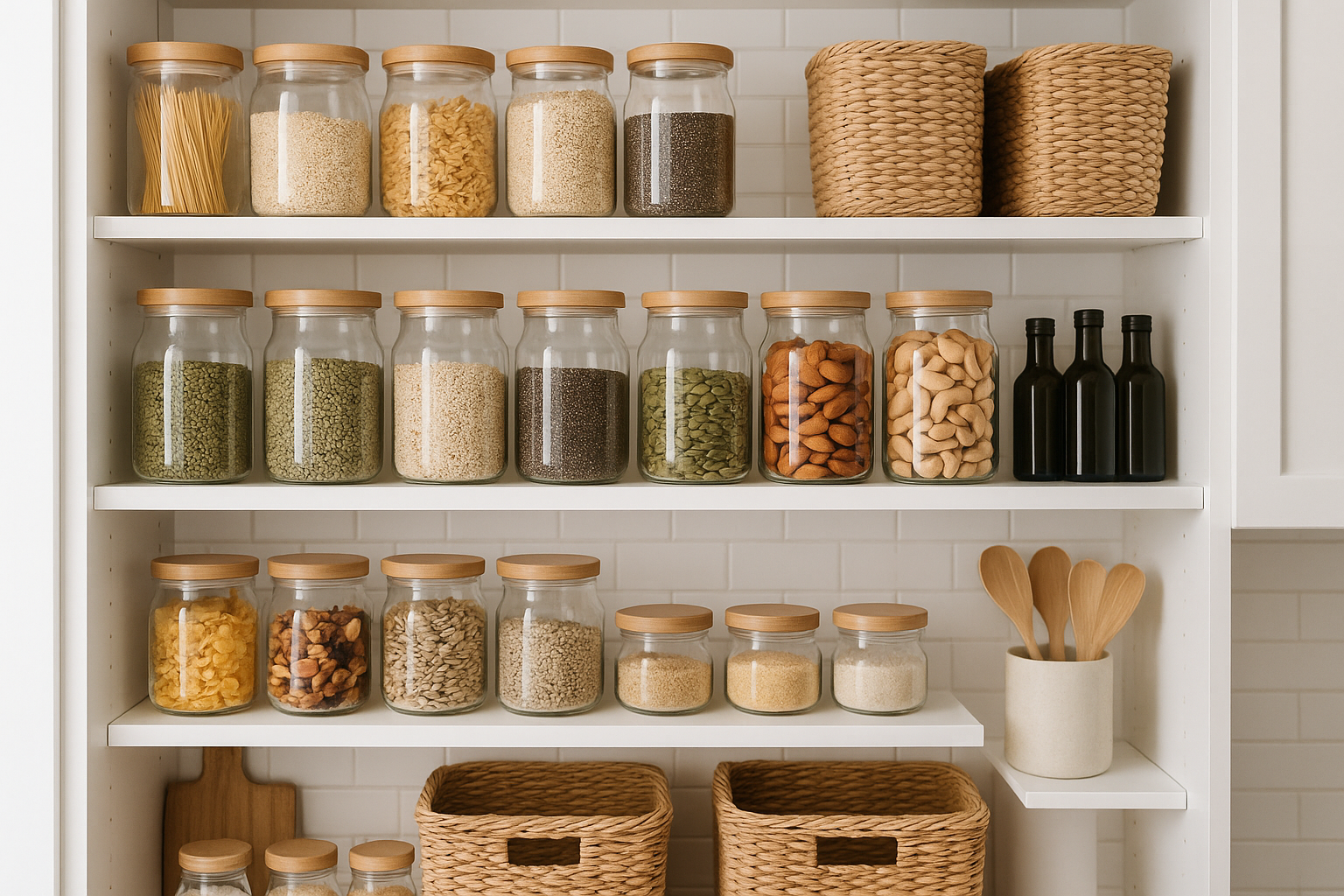
Glass jars (pasta sauce, olives, pickles)
Why they’re useful
- easy to reseal and store (handy if you cook for 1–2 people)
- easier to see what you’ve got in the pantry
- sometimes (not always) a simpler ingredients list
What to watch
- “gourmet” can still mean high sugar or high sodium
- price differences can be big, so compare per 100 g
Quick pasta sauce check: tomatoes plus herbs/spices and oil is a solid baseline. If sugar is listed early, compare another brand.
If you’re cooking for kids, check the chilli level too. Some sauces are surprisingly spicy.
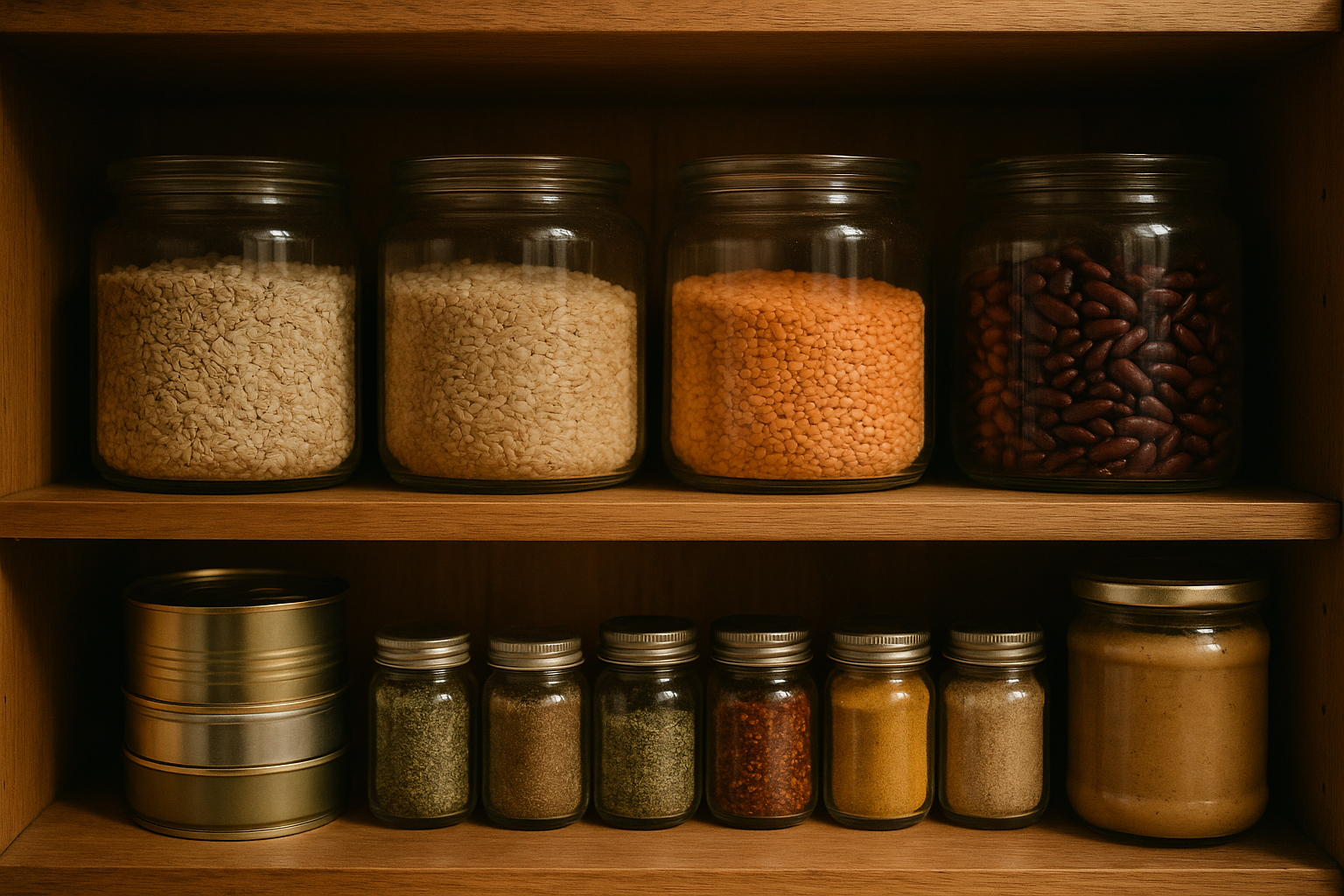
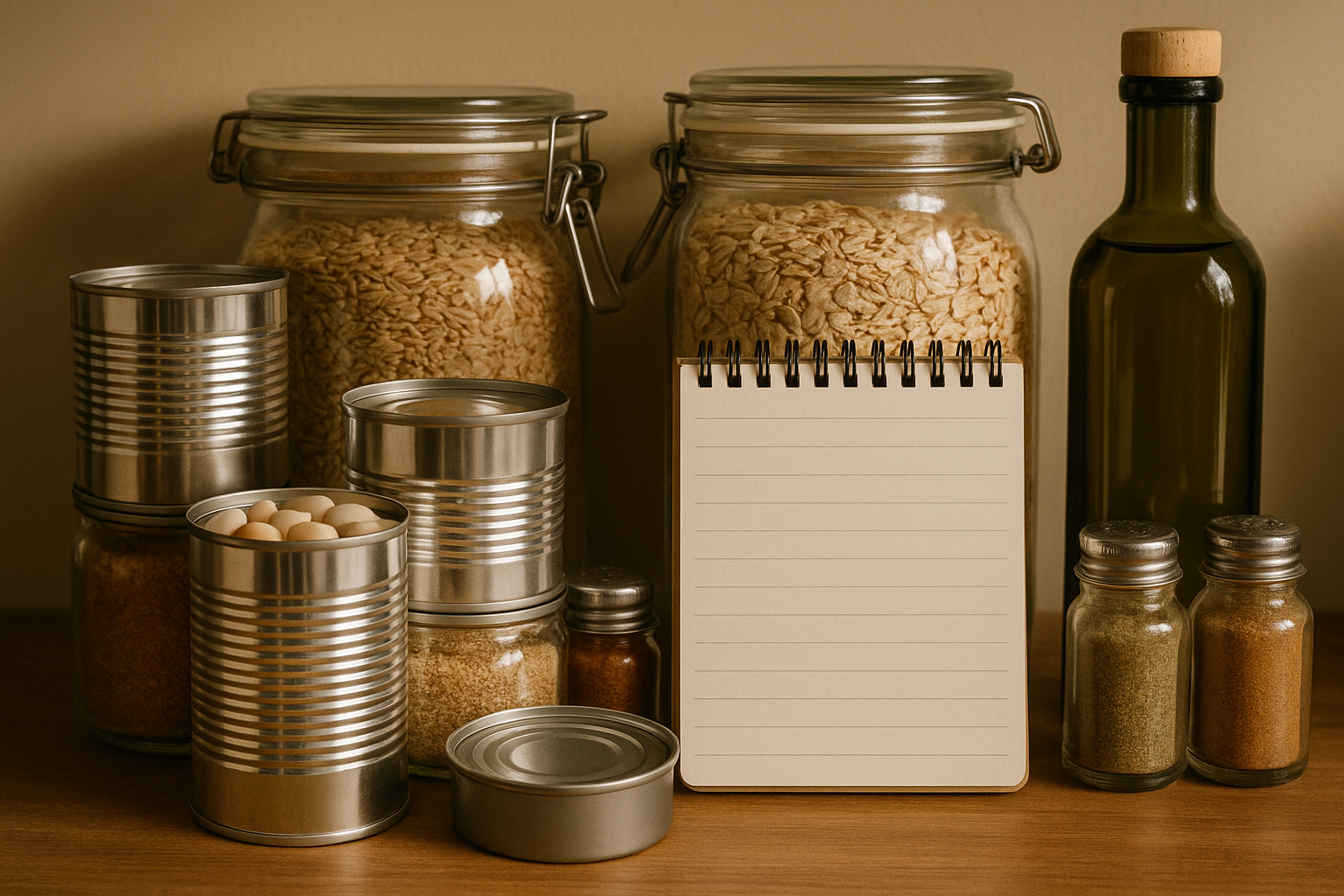
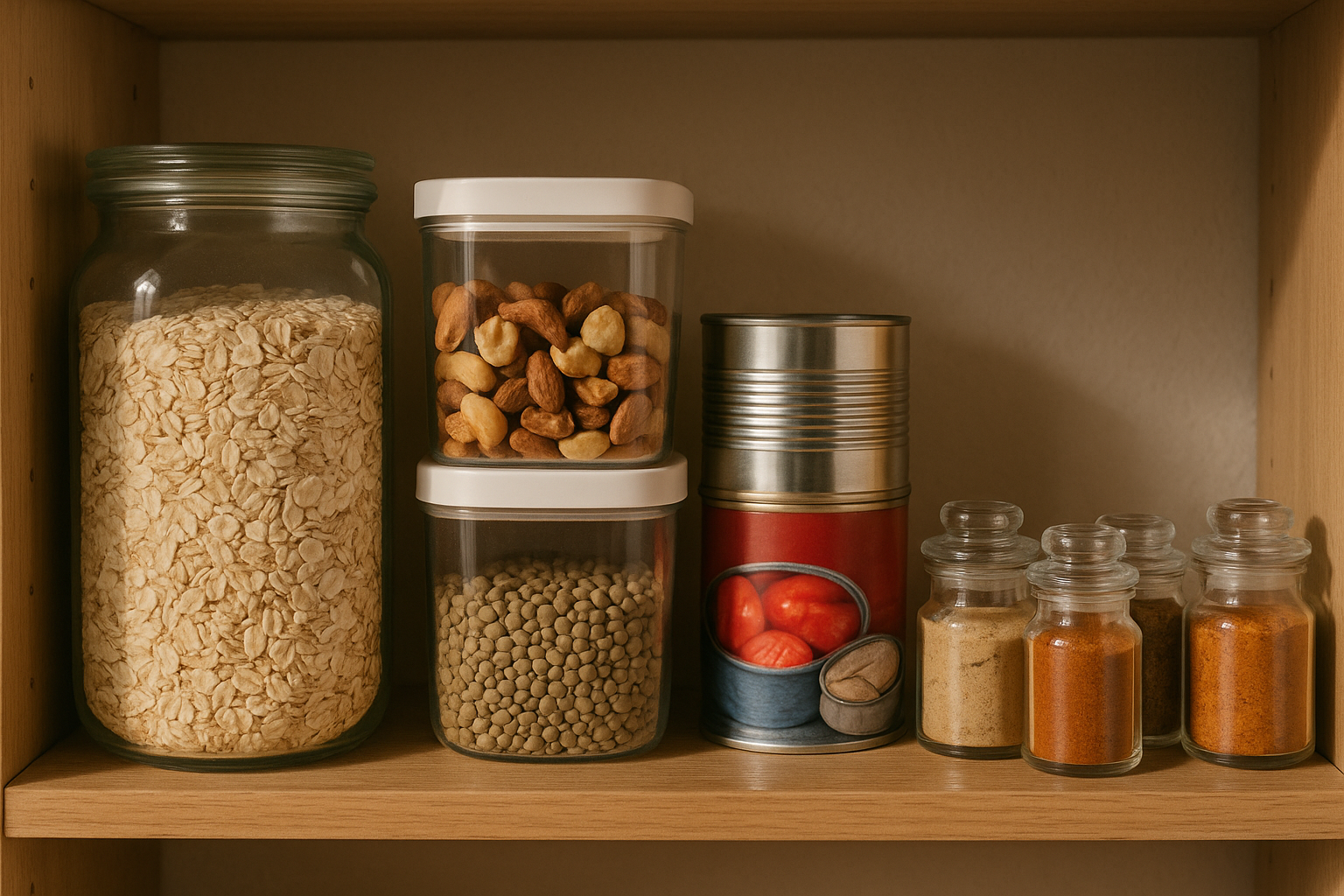
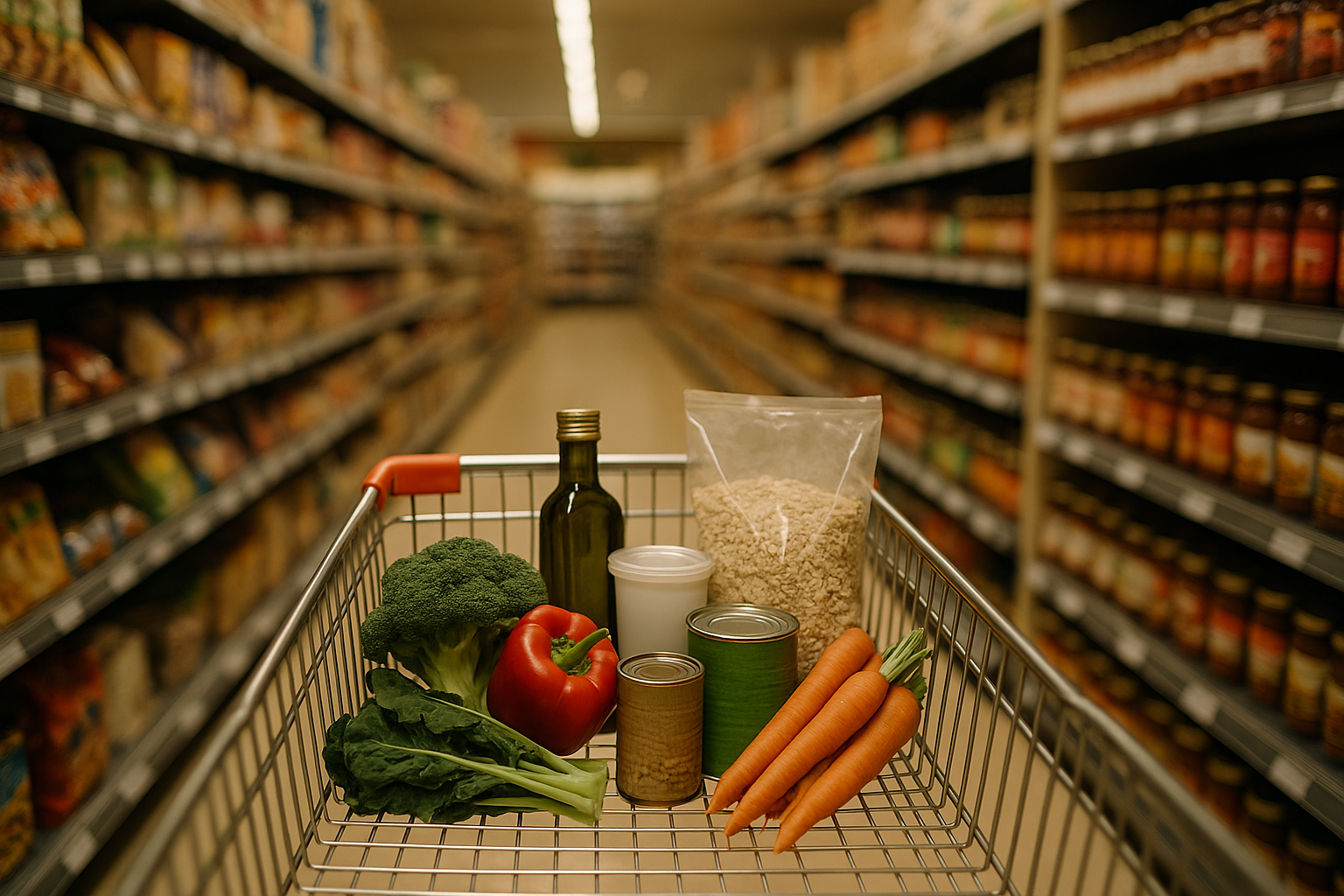
Cans/tins (beans, lentils, tuna, tomatoes)
Why they’re helpful
- budget-friendly pantry staples
- fast protein and fibre (especially beans and lentils)
- easy to keep on hand for “what’s for dinner?” nights
What to watch
- sodium is often higher in flavoured options
- portion sizes vary (single-serve tuna vs larger tins)
- fish packed in oil or flavoured sauces changes the overall meal balance
Simple default: choose no-added-salt where possible. If it’s not available, rinse and drain legumes to reduce sodium.
Extra tip: keep a mix.
- a couple of plain tins you season yourself
- one convenient flavoured option for low-energy nights
Cartons (UHT milk, passata, stock/broth)
Why they’re handy
- long shelf life
- easy to store
- useful for backup meals when you can’t face another shop
What to watch
- stock and broth can be a hidden sodium source
Easy swap: compare options per 100 mL and choose the lower-sodium one you’ll actually use.
If you cook in bulk (soups, risottos, slow-cooker meals), that difference can add up over the week—especially if you also use salty add-ons like cheese, olives, or deli meats.
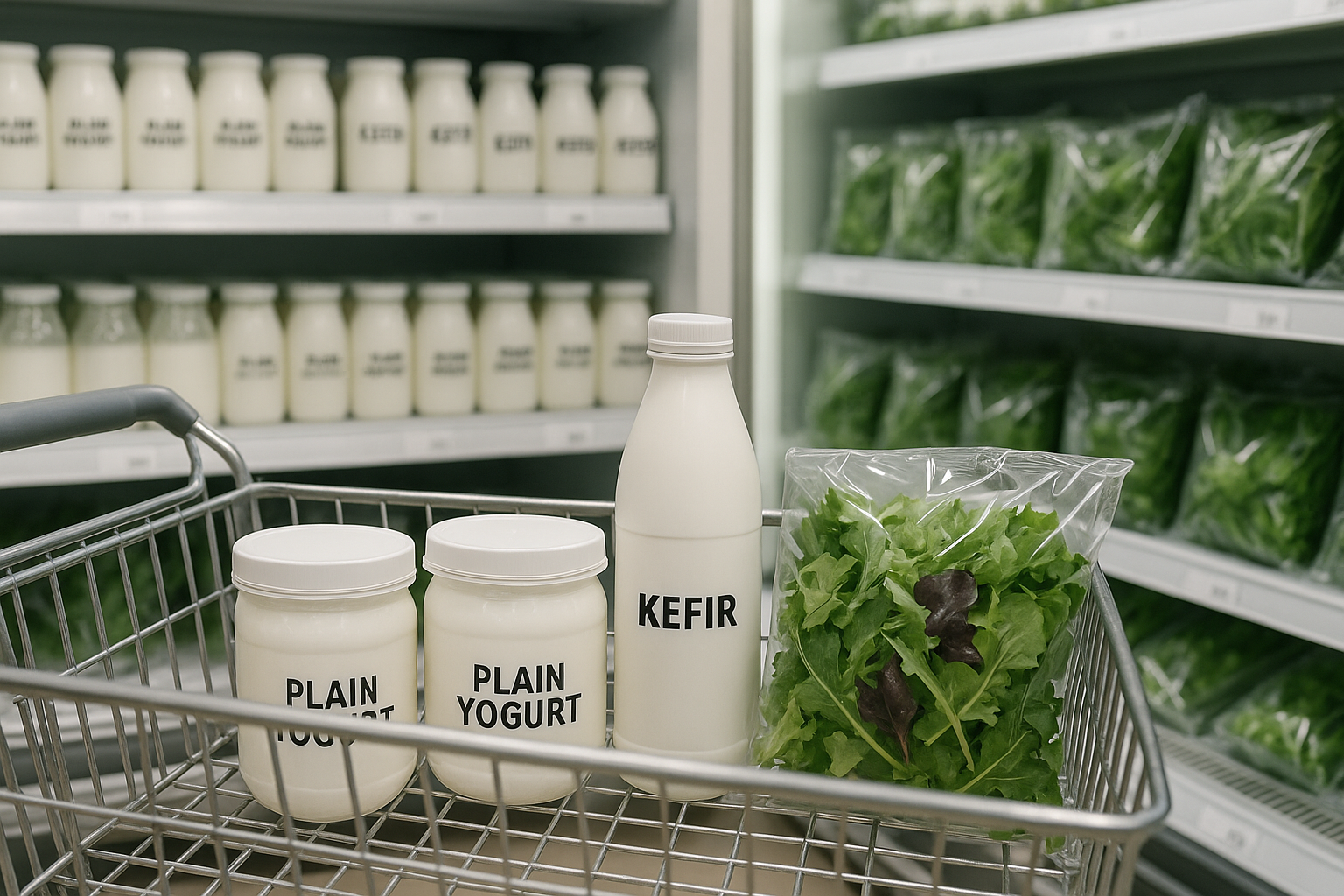
Plastic tubs and pouches (yoghurt, dips, pre-cut salads)
Why they’re common
- convenient and portable
- easier portioning (useful for lunchboxes and work snacks)
What to watch
- “high protein” products may include extra sweeteners, flavours and thickeners
- dips and dressings can be high in oils, sugar and salt
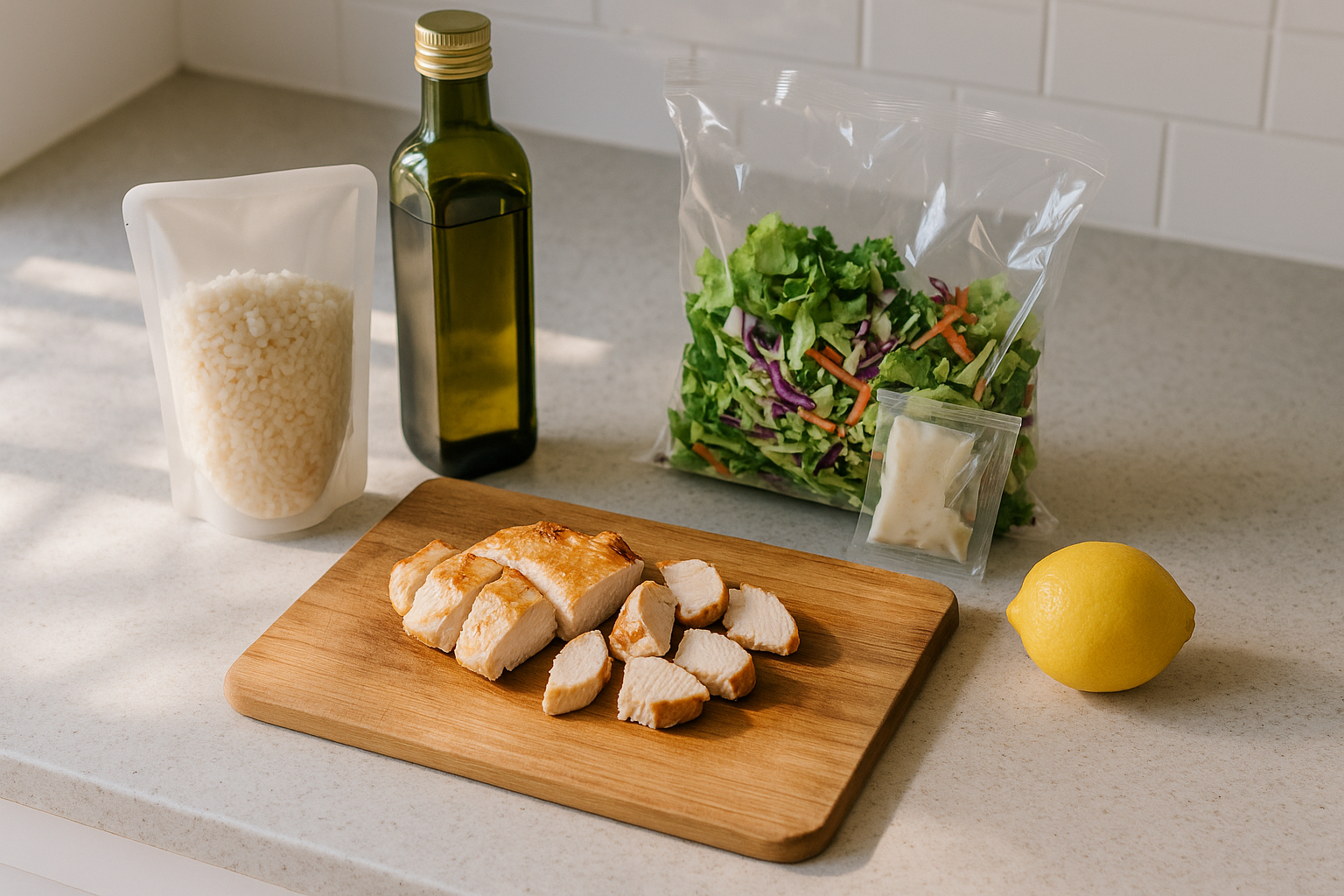
- salad kits can save time, but the dressing sachet is often where most of the sugar/salt sits
Practical approach: match the product to the job.
- If you’re focusing on gut comfort, start with simpler options and add variety gradually.
- In busy seasons (shift work, school events, sport), convenience foods can still fit. Aim for the cleaner label more often, and don’t stress the occasional shortcut.
Product formats: fresh vs frozen vs tinned (what to choose and when)

Fresh vs frozen produce
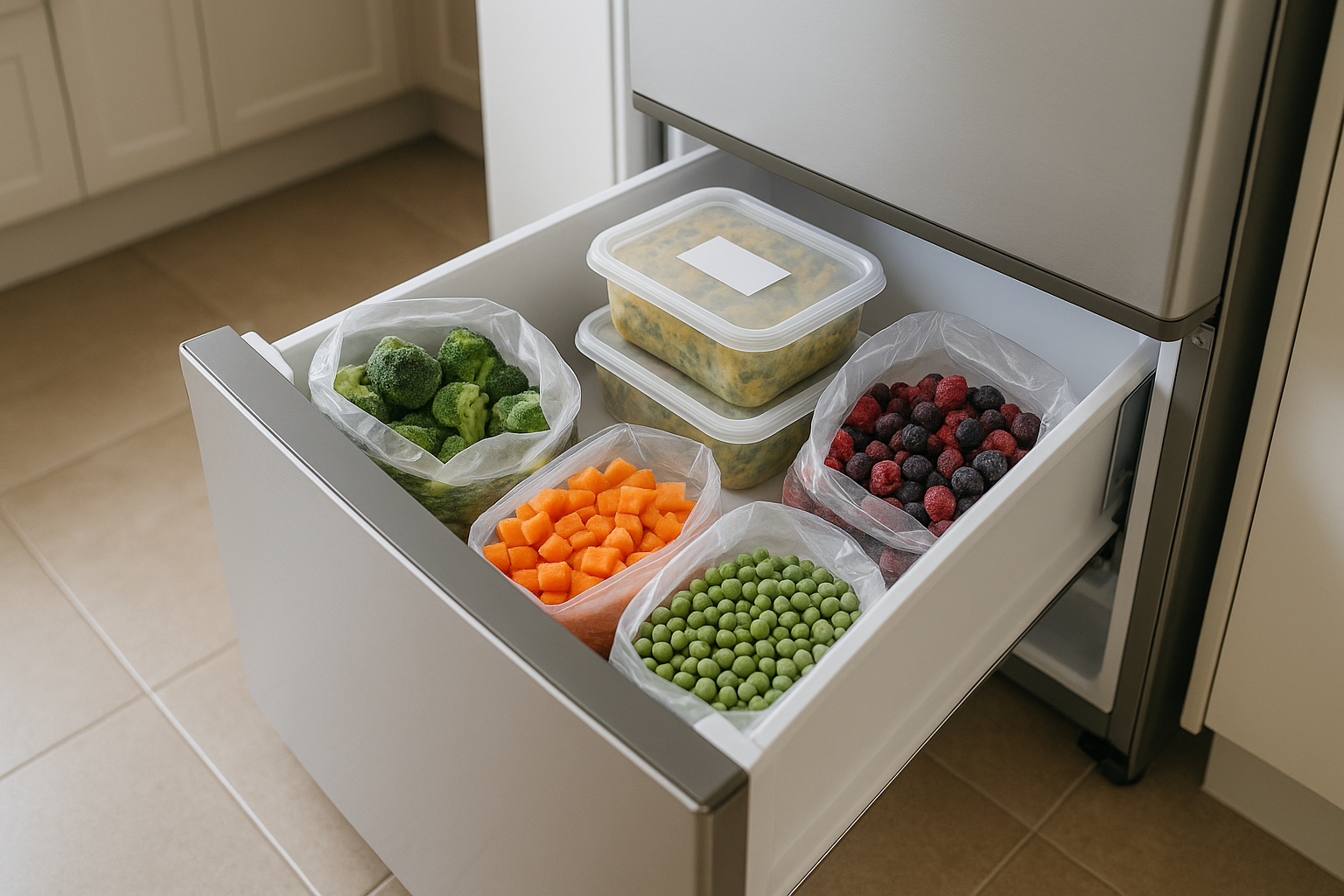
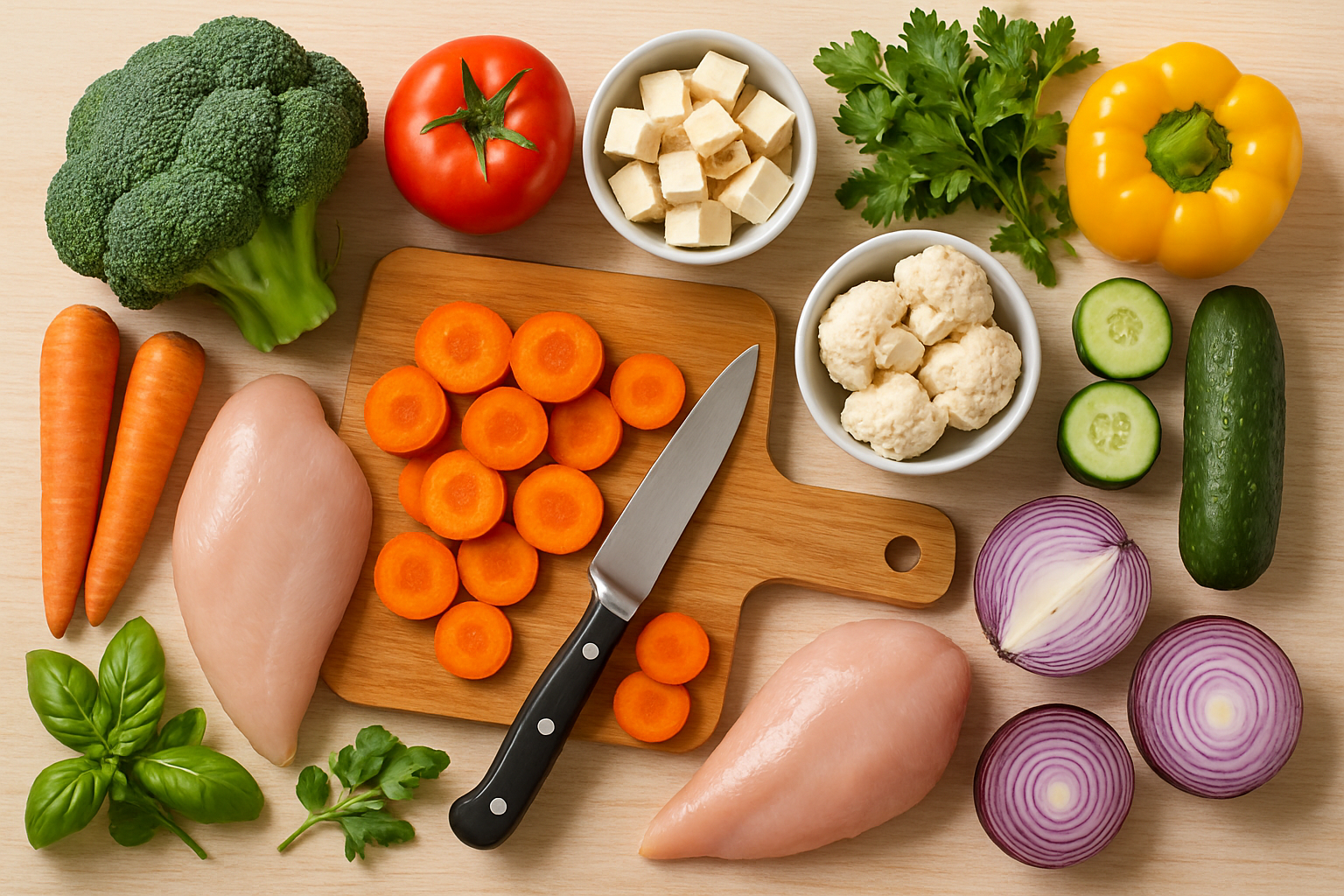
Frozen veg is one of the easiest ways to support healthier weeknights.
Choose frozen when you want:
- less waste
- faster prep
- reliable back-up dinners (stir-fries, curries, tray bakes)
Choose fresh when you want:
- crunch and texture for salads
- ingredients you know will be eaten quickly
Easy list to remember
- Frozen: berries, spinach, mixed veg, cauliflower rice
- Fresh: salad greens, tomatoes, cucumber, herbs
Gold Coast tip: a “hybrid” shop often works best (fresh salad basics + frozen veg for cooked meals). Greens can spoil fast in the heat, especially if you’re not shopping often.
Heat tip: for bigger shops, use an insulated bag or cooler in the boot for yoghurt, meat, seafood and leafy greens—especially in summer.
Seasonal produce (Queensland angle)
Seasonal produce is often better value and tastes better.
- Summer: stone fruit is great for snacks, yoghurt toppers, and quick desserts
- Winter: citrus is great for lunchboxes, dressings, and marinades
Cost-saving tip: build meals around the seasonal produce that’s on special, then add your staples (protein + wholegrains). It’s often cheaper than choosing a recipe first.
If fruit goes soft quickly, chop and freeze it for smoothies or to stir through yoghurt.
Dried vs tinned legumes
- Dried legumes are cheaper per serve, but need soaking and cooking.
- Tinned legumes are the weeknight shortcut.
Simple approach: keep both.
- tinned chickpeas/lentils for “dinner now” nights
- dried lentils for batch cooking
If you’re new to legumes or managing gut symptoms, start with smaller portions and build up. Rinsing helps, and plain varieties are often easier than heavily seasoned options.
Plain proteins vs pre-marinated packs
Pre-marinated meats can save time, but they can also add extra sodium and sugar.
If you buy pre-marinated packs, keep the rest of the meal simple (salad, plain rice, steamed veg). This helps you avoid doubling up on salty sauces.
Quick homemade flavour mix
- olive oil
- lemon
- garlic
- paprika
- dried herbs
Gold Coast weeknight tip: lean into heat-friendly meals that don’t keep you over the stove. Think BBQ plates, salad bowls with protein, or a tray bake you can walk away from.
Real trolley examples (simple swaps, not perfection)
Quick family tacos
- Wraps: compare fibre per 100 g and choose higher-fibre wholegrain
- Protein: plain mince or beans
- Salsa: tomatoes near the top of the ingredients list, minimal added sugar
- Add-on: bagged slaw + Greek yoghurt as a sour cream swap
For weeknights, keep a backup option (like tinned beans + pre-cut salad) for nights you don’t have time or energy for extra chopping.
If you want steadier energy, add more fibre (beans, corn, slaw) and go easier on sugary sauces.
Gut-friendlier breakfast
Breakfast repeats daily, so it’s a high-impact place to start.
- Base: oats or a lower-sugar muesli (check added sugars)
- Protein: plain Greek yoghurt (or lactose-free if needed)
- Toppings: berries (fresh or frozen), chia, nuts
“Gut-friendly” isn’t one-size-fits-all. If dairy, oats, or certain fibres don’t agree with you, change one thing at a time so you know what helps.
If mornings are rushed, pre-portion a few grab-and-go breakfasts (oats + yoghurt + frozen berries) to reduce decision fatigue.
This is a common starting point for people working with a nutritionist Gold Coast locals book for practical routines, or a holistic nutritionist Gold Coast families choose for day-to-day structure.
Desk snacks for the 3 pm crash
Aim for protein + fibre for steadier energy.
- tuna + wholegrain crackers
- yoghurt + berries
- nuts + fruit
- hummus + carrots
Gold Coast heat tip: choose snacks that travel well. Without an ice pack, stick to shelf-stable basics (nuts, wholegrain crackers, tinned fish) and buy fresh add-ons when you can.
If anxiety flattens your appetite earlier in the day, a reliable mid-morning snack can reduce the late-afternoon “hangry” swing.
Lunchbox ideas (school or work)
A “good enough” lunchbox usually includes:
- a protein (chicken, eggs, tuna, yoghurt, tofu)
- a fibre base (wholegrain bread/wraps, oats, rice, legumes)
- a colour add-on (fruit/veg)
Gold Coast tip: if mornings are hectic, build lunchboxes from leftovers. A simple dinner (BBQ chicken + salad + rice) can become a next-day wrap or bowl with minimal extra effort.
For kids (or picky households), keep one familiar item and add one small upgrade at a time. It’s easier to stick to, and less likely to come home untouched.
A simple checklist for your next shop
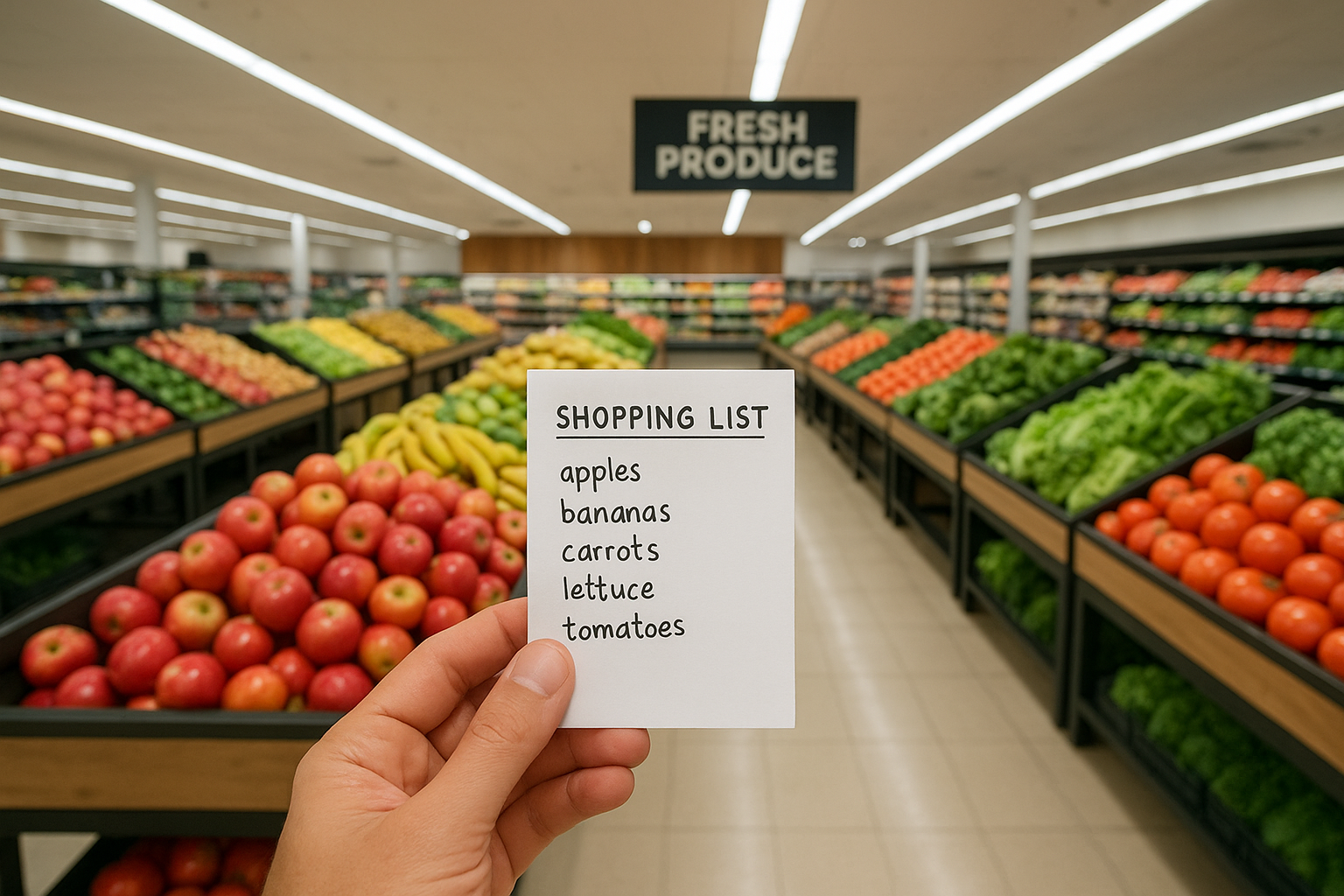
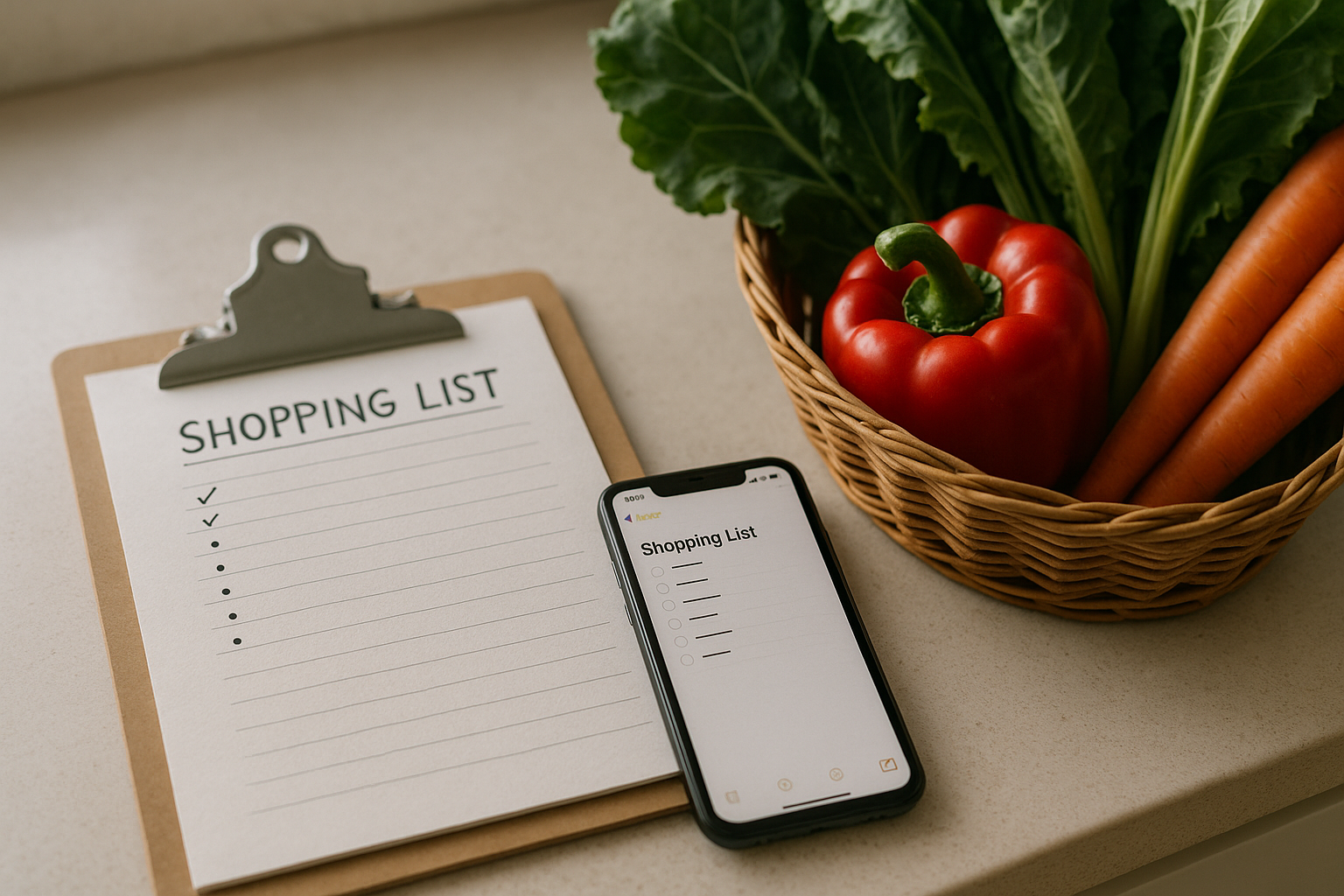
Save this list to your phone. Aim for one or two upgrades per shop.
- choose the product with the shorter ingredients list (when options are similar)
- compare added sugar (yoghurt, cereal, sauces)
- compare sodium (stock, sauces, deli meats, flavoured tuna)
- choose higher fibre (bread, wraps, cereals)
- add one easy protein (eggs, tinned fish, legumes, yoghurt)
- add one frozen veg for back-up dinners
- choose one shortcut that still fits your goals (so it stays realistic)
If you’re torn between two options, ask:
- Will I actually cook/eat this?
- Does it fit my budget most weeks?
- Will it support my goal (gut comfort, steadier energy, family nutrition) more often than not?
If you have allergies, coeliac disease, kidney concerns, or you’re on a medically prescribed diet, your label priorities can change. When in doubt, check with your GP or dietitian.
When it’s worth getting guided help
If you’ve searched for a naturopath Gold Coast, Gold Coast naturopath, or the best naturopath Gold Coast, you may be trying to connect symptoms with everyday food choices.
You may also want a highly recommended naturopath Gold Coast locals trust because the advice is practical, not overwhelming.
Guided support can help if:
- you feel overwhelmed by conflicting nutrition advice
- you’ve been told to “support your gut” but don’t know what to buy
- anxiety affects appetite, energy or food choices
- you need options that fit your household routine
- you want tailored support, not a generic list
Beta Me supports people who want real-life implementation with a naturopath and nutritionist approach. Start here: Naturopath Gold Coast | Nutritionist Gold Coast.
What to bring to a guided shop
- photos of your usual pantry and fridge staples
- a list of supplements you currently use
- your top 3 symptoms and top 3 goals
- your non-negotiables (budget, time, preferences)
You can also learn about Beta Me and Danielle Lamb.
NDIS-friendly shopping support (general info)
If you’re an NDIS participant (or you support someone who is), supermarket shopping can be one of the tougher weekly tasks.
Planning, transport, labels, budgeting, energy, sensory overload, and cooking confidence can stack up—especially in busy centres and at peak times.
NDIS-friendly nutrition support often focuses on practical skills such as:
- building a simple shopping list that suits health goals and preferences
- choosing budget-friendly staples (including frozen and tinned)
- label-reading for allergens and common triggers
- planning easy meals and snacks for the week
- reducing food waste and “panic buying”
If you’re not sure what support is appropriate, check your plan details (or ask your Support Coordinator/Plan Manager). Then speak with the provider about what they can offer within scope.
Beta Me offers Online consultations (including NDIS-related support options).
A note on anxiety, gut symptoms and food
Food changes shouldn’t feel like punishment.
If you’re looking for an anxiety naturopath Gold Coast service, helpful foundations often include:
- regular meals with protein + fibre
- fewer “spikes and crashes” from high-sugar patterns
- gut-friendly choices matched to your tolerance
Nutrition can support mood and energy, but it’s not a substitute for mental health care. If anxiety is severe or worsening, speak with your GP or mental health professional alongside nutrition support.
Explore Beta Me’s anxiety support here: Anxiety naturopath support.
Ready for a calmer, faster shop?
If you want help choosing options that suit your body, your goals and your routine, Beta Me can support you.
- Book in: Supermarket Shopping Tours on the Gold Coast
- Prefer in-home help? Mobile nutritionist and mobile naturopath consultations
- Want ongoing care with a Gold Coast naturopath and nutritionist Gold Coast approach? Naturopath Gold Coast | Nutritionist Gold Coast
- Need flexible access, including searches like NDIS dietitian Gold Coast support? Online consultations (including NIS-related support options)
If you’re comparing naturopaths Gold Coast clients recommend, look for someone who can translate advice into what you’ll actually put in your trolley—week after week.