
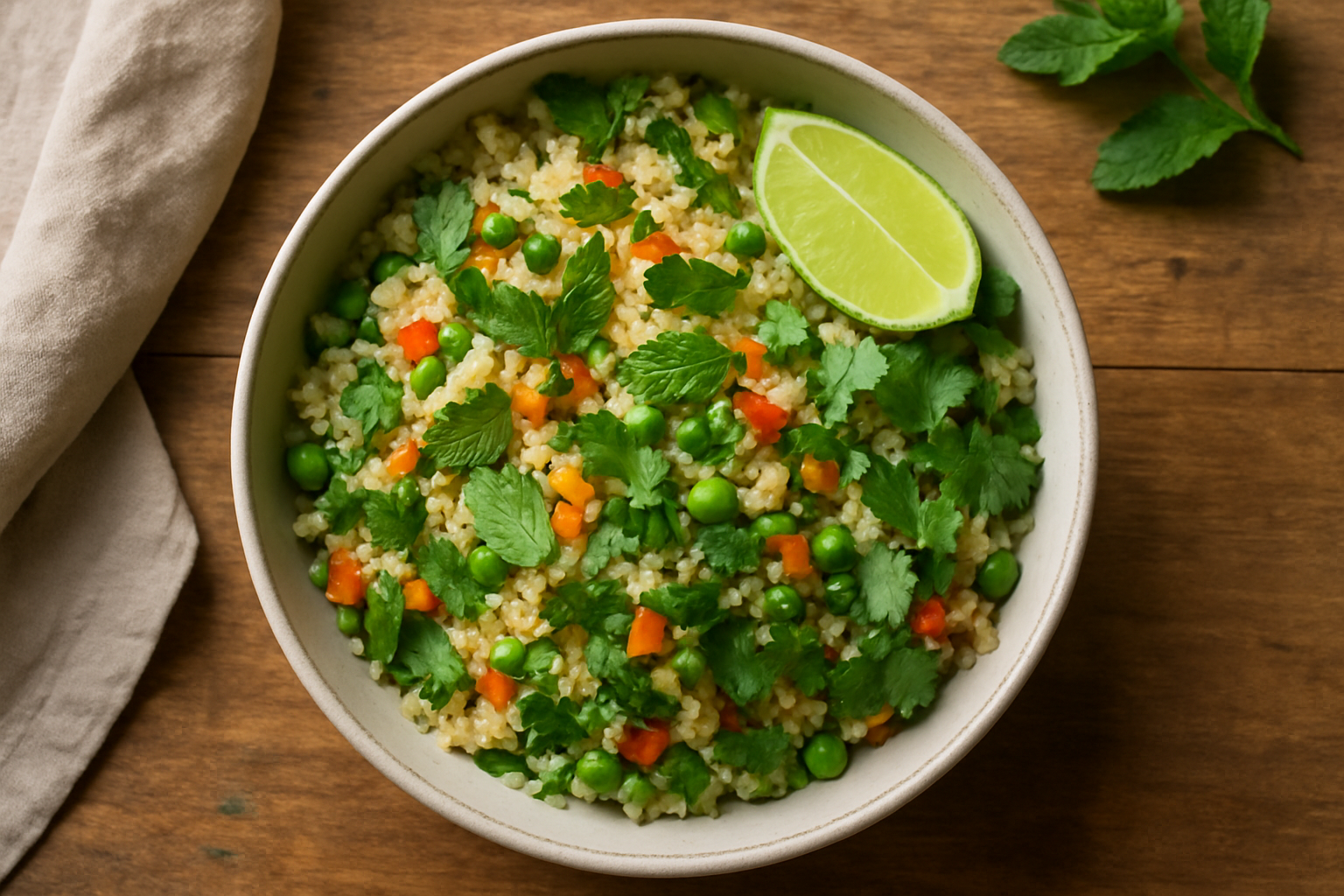
Minty cauliflower fried rice: an in‑depth guide and key considerations
If you’ve ever made cauliflower “fried rice” and ended up with a wet, bland pan of veg, you’re not alone. Cauliflower rice is a high‑moisture ingredient. It needs high heat, space in the pan, and seasoning added in the right order.
This minty cauliflower fried rice in-depth guide and key considerations article expands on Beta Me’s original recipe with practical tips for:
- better texture (no soggy cauliflower)
- flavour that tastes like “fried rice”, not steamed veg
- easy protein add‑ins for a more filling meal
- supermarket swaps you can find in Australia
Want the base recipe first? Start here: Minty Cauliflower Fried Rice (base recipe).
Why this cauliflower fried rice behaves differently
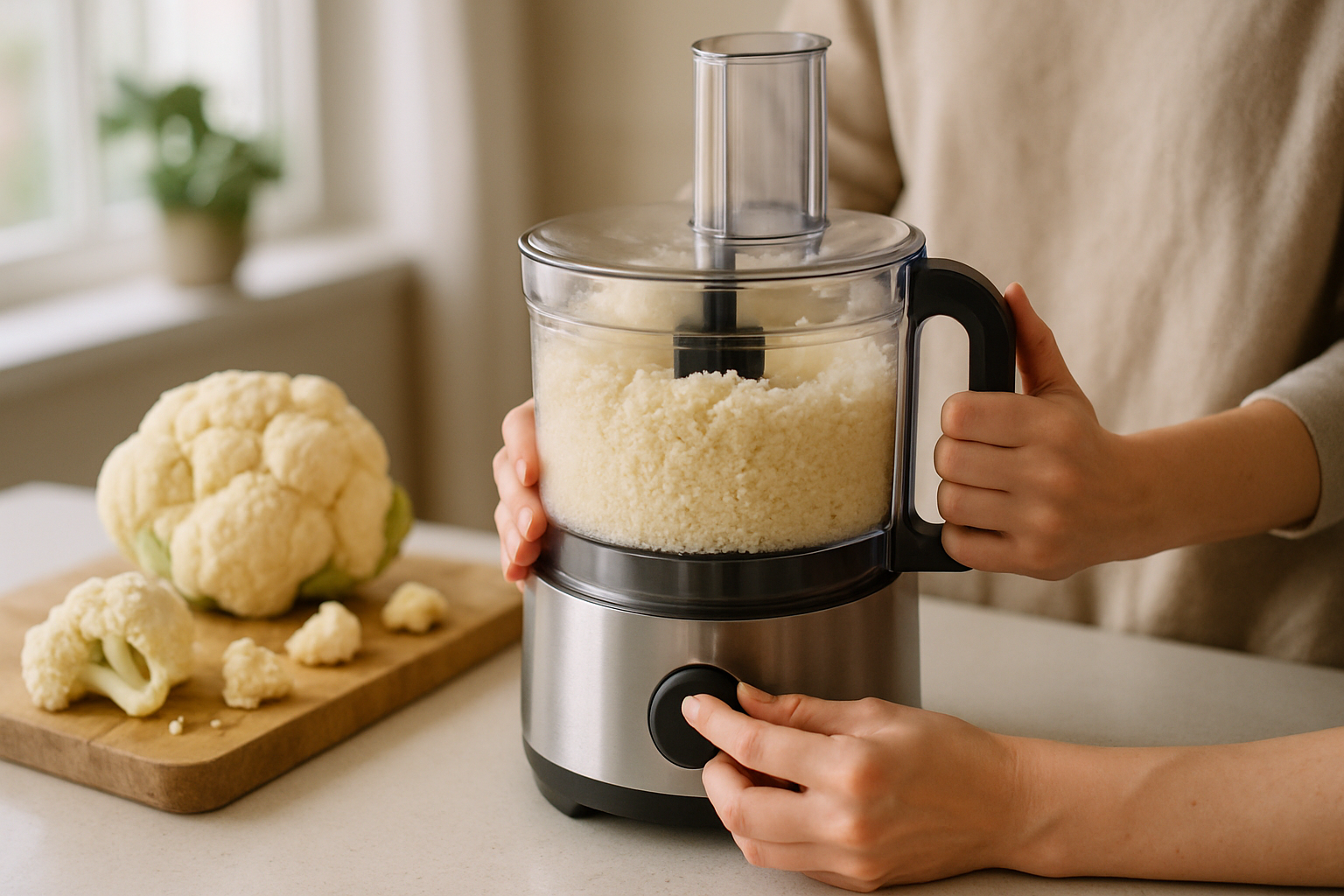
Classic fried rice works because cooked, chilled rice is relatively dry. It can fry and soak up flavour without turning to mush.
Cauliflower rice is different:
- it releases water quickly
- it can steam if the pan is crowded
- it doesn’t absorb sauces the same way as grains
The minty twist matters too. Fresh mint lifts salty, savoury flavours (tamari, sesame, lime) and keeps the dish feeling light.
Key considerations before you start
1) Texture comes down to moisture control
If cauliflower rice gets watery, it won’t “fry”. It will steam.
Do this for a drier, fried finish:
- Use high heat.
- Use a wide pan or wok.
- Cook in batches if needed.
- Keep it moving, but don’t drown it in sauce.
- Add sauces at the end.
If you’re using frozen cauliflower rice:
- Thaw first if you can.
- Drain well.
- If it’s very wet, squeeze gently in a clean tea towel.
2) Flavour works best in layers
Cauliflower is mild, which is helpful. It gives you room to build flavour.
A simple order that works:
- Aromatics (garlic, ginger, spring onion)
- Vegetables (harder veg first)
- Cauliflower rice (brief, hot fry)
- Seasoning (tamari, lime, sesame)
- Fresh herbs (mint/coriander off the heat)
Why herbs go last: heat knocks out the fresh flavour. Stir them through right at the end.
3) Make it filling with a clear protein serve
Cauliflower rice meals can look big but feel light. Protein changes that.
Easy, Australian-supermarket protein options:
- Eggs (scrambled through)
- Leftover chicken or a supermarket roast chook
- Prawns (fast cooking, great with lime)
- Tofu or tempeh (pan‑fry first for texture)
For steadier energy, aim for veg + protein + Healthy fats (for example sesame oil, avocado, nuts or seeds).
4) Gut comfort: adjust the “load” if you’re sensitive
Some people feel great on cauliflower rice. Others notice bloating.
If you’re sensitive:
- Reduce the cauliflower portion and bulk up with other veg.
- Swap onion/garlic for garlic‑infused oil and chives.
- Keep flavours simple (fewer sauces and extras).
If you’re not sure what’s triggering symptoms, working with a naturopath and nutritionist can help you test changes without over‑restricting.
A simple method (use this alongside the original recipe)
You don’t need a complicated recipe. You need the right sequence.
Step 1: Prep so the cooking stays fast
Set yourself up before the pan is hot:
- Chop your veg (spring onion, capsicum, carrot, snow peas—use what you like).
- Whisk eggs (if using).
- Mix a quick “flavour bowl”: tamari + lime juice + a little sesame oil.
- Pick and roughly chop mint and coriander.
Weeknight shortcut: keep frozen cauliflower rice and a stir‑fry veg mix in the freezer.
Step 2: Heat the pan properly
This is where most soggy cauliflower starts.
- Heat oil until hot.
- Add aromatics and stir quickly.
- Add veg and stir‑fry until just tender‑crisp.
Step 3: Fry the cauliflower rice briefly
Add cauliflower rice and stir‑fry until it looks drier and lightly toasted.
If water pools in the pan:
- keep the heat up
- spread it out
- keep stirring
- don’t add sauce yet
Step 4: Bring it together at the end
- Push everything aside and scramble eggs (or add cooked protein).
- Pour in the flavour bowl.
- Toss for 30–60 seconds.
- Turn the heat off.
- Add mint and coriander.
Taste and adjust:
- More lime = brighter
- More tamari = saltier/stronger
- Chilli flakes = gentle warmth
Smart ingredient swaps (Australian supermarket friendly)
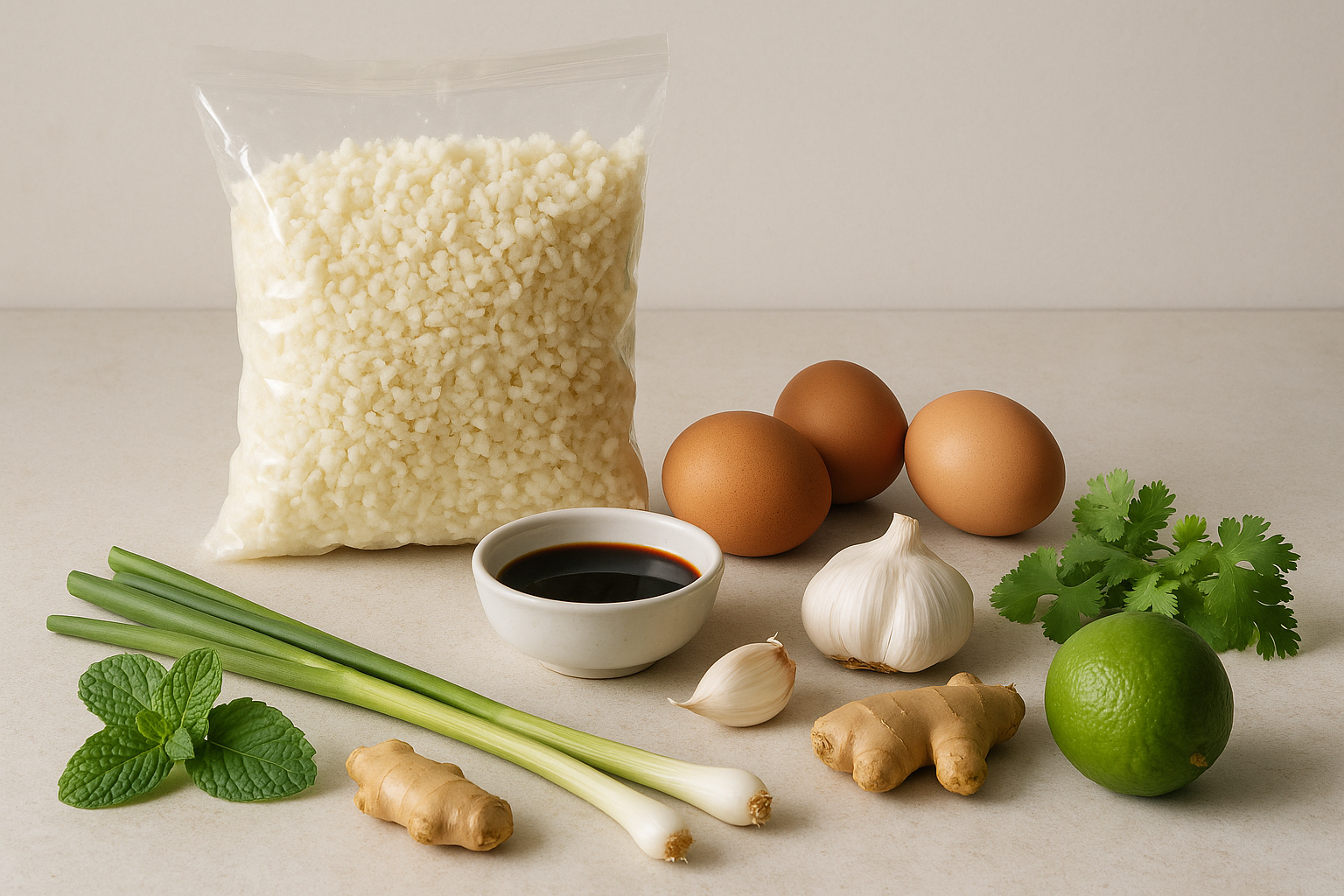
Gluten-free swaps
- Choose tamari (rather than soy sauce that may contain wheat).
- Check labels on bottled stir‑fry sauces.
Make it more filling (without losing freshness)
- Add an extra egg or a proper serve of chicken/prawns/tofu.
- Top with sesame seeds, cashews, or chopped peanuts.
- Add a small spoon of natural peanut butter into the sauce for a richer finish.
Family-friendly tweaks
- Keep chilli on the side.
- Use familiar veg (corn, peas, carrot).
- Serve with a protein your kids already eat.
If you’re watching salt
- Use less tamari.
- Lean harder on lime, ginger and herbs.
- Taste before adding extra.
Mini supermarket shopping guide: shop once, cook three ways
If decision fatigue is the problem, a simple shopping plan helps.
Version A: fast pantry-plus
Buy:
- Frozen cauliflower rice
- Eggs
- Stir‑fry veg mix
- Tamari
- Lime
- Mint/coriander
Version B: higher protein week
Buy:
- Cooked prawns or chicken
- Eggs
- Cauliflower rice
- Extra veg
- Sesame oil + seeds
Version C: vegetarian with better texture
Buy:
- Firm tofu or tempeh
- Cauliflower rice
- Crunchy veg (capsicum, beans, carrot)
- Fresh herbs
If label reading, budget, or “what do I actually buy?” is the sticking point, Beta Me offers a practical Supermarket Shopping Guide Gold Coast (shopping tours) service.
Troubleshooting: quick fixes that save dinner
Problem: It’s watery
- Turn heat up and cook longer.
- Spread it out in the pan.
- Hold sauce until the end.
- Next time: thaw and drain frozen cauliflower rice.
Problem: It tastes flat
- Add lime (acid), tamari (salt), and fresh herbs (aroma).
- Toast sesame seeds and sprinkle on top.
Problem: It doesn’t keep me full
- Add a clear protein serve.
- Add healthy fats (sesame oil, nuts, avocado).
Nutrition considerations (simple and realistic)
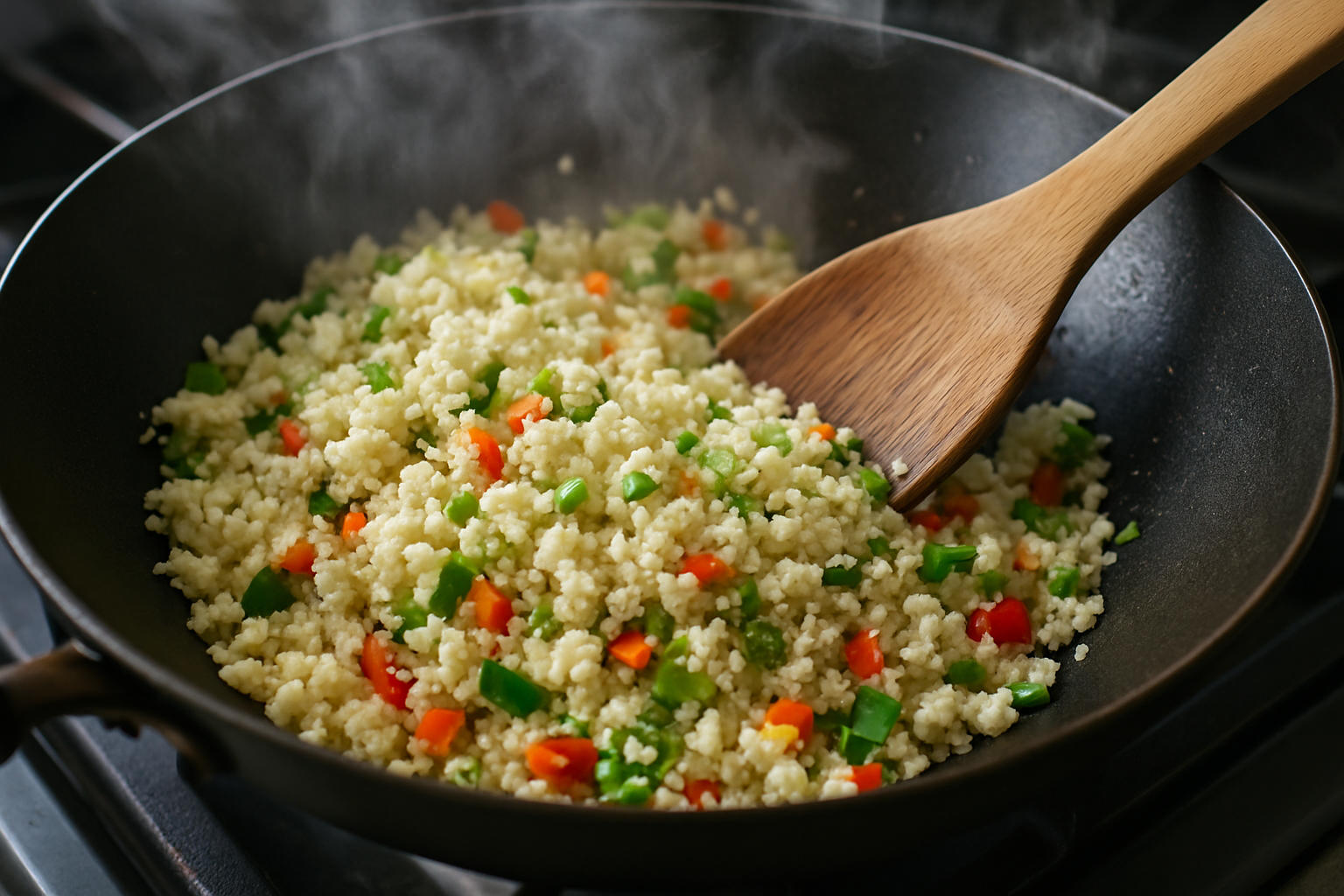
Minty cauliflower fried rice can be a great option when you want:
- more veggies without a heavy feel
- a lighter dinner that still has flavour
- a lower‑carb alternative to traditional fried rice
The key is balance. Cauliflower rice covers the veggie base. Then add:
- Protein (eggs, seafood, chicken, tofu)
- Fats + flavour (sesame, olive oil, nuts/seeds)
- Colour and variety (different veg for micronutrients)
If you’re also navigating stress, sleep issues or mood changes, food can start to feel confusing. It’s common to search for a naturopath and Anxiety approach because you want practical steps, not perfection. A good starting point is consistent meals with adequate protein, then personalised adjustments.
Want personal guidance rather than guessing?
If you’d like this recipe tailored to your needs (digestion, fatigue, family meals, or simply making weeknights easier), you can work with Danielle at Beta Me.
- Meet Danielle: About Danielle
- Explore services: Beta Me Nutrition (Naturopath Gold Coast | Nutritionist Gold Coast)
- Book online support: Online consults (NDIS Nutritionist Gold Coast)
- Prefer practical, in‑store help? Supermarket Shopping Guide Gold Coast (shopping tours)
If you’re searching from outside the Gold Coast (including queries like naturopath Bribie Island), online appointments can be an easy way to get support without travel.
More Beta Me reads
FAQs
Is minty cauliflower fried rice good for meal prep?
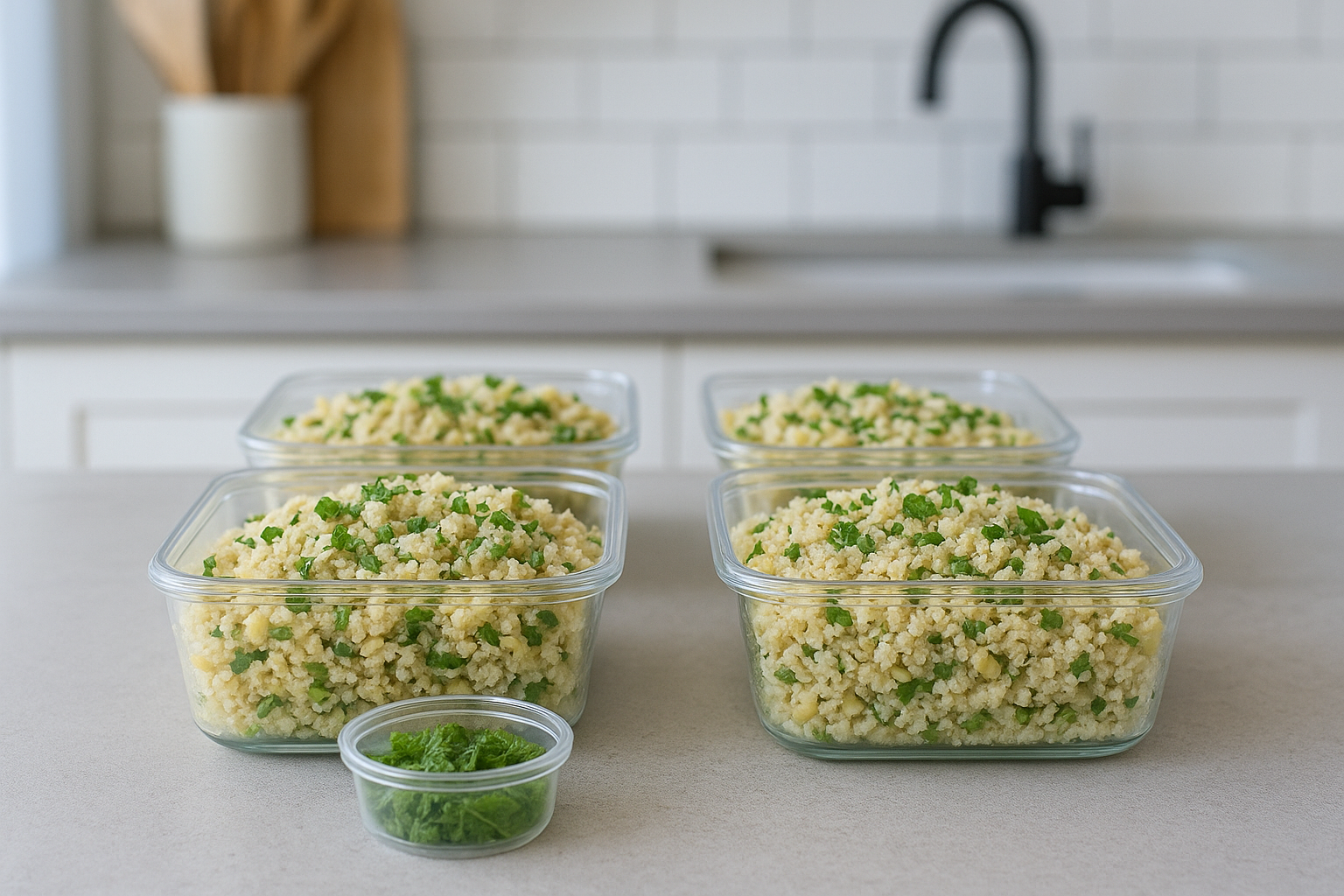
Yes. Cool it quickly, store in airtight containers, and reheat in a hot pan to drive off moisture. Add mint and coriander after reheating.
How do I stop cauliflower rice from going soggy?
Use high heat, don’t overcrowd the pan, and cook in batches if needed. Drain frozen cauliflower rice well. Add sauces at the end.
What proteins work best?
Eggs, chicken and prawns suit the mint and lime profile. Tofu and tempeh work well too, especially if you pan‑fry them first.
Can a naturopath and nutritionist help if I’m changing my diet due to stress?
Yes. A naturopath and nutritionist can help you build a realistic eating pattern that supports steady energy and nourishment, then tailor recipes to your digestion, schedule and preferences.
What should I buy at the supermarket to make this quickly?
Cauliflower rice (fresh or frozen), eggs, a stir‑fry veg mix, tamari, lime, and fresh mint/coriander. Add chicken, prawns, tofu or tempeh to make it more filling.