Minty Cauliflower Fried Rice: An In‑Depth Guide and Key Considerations (Australia)

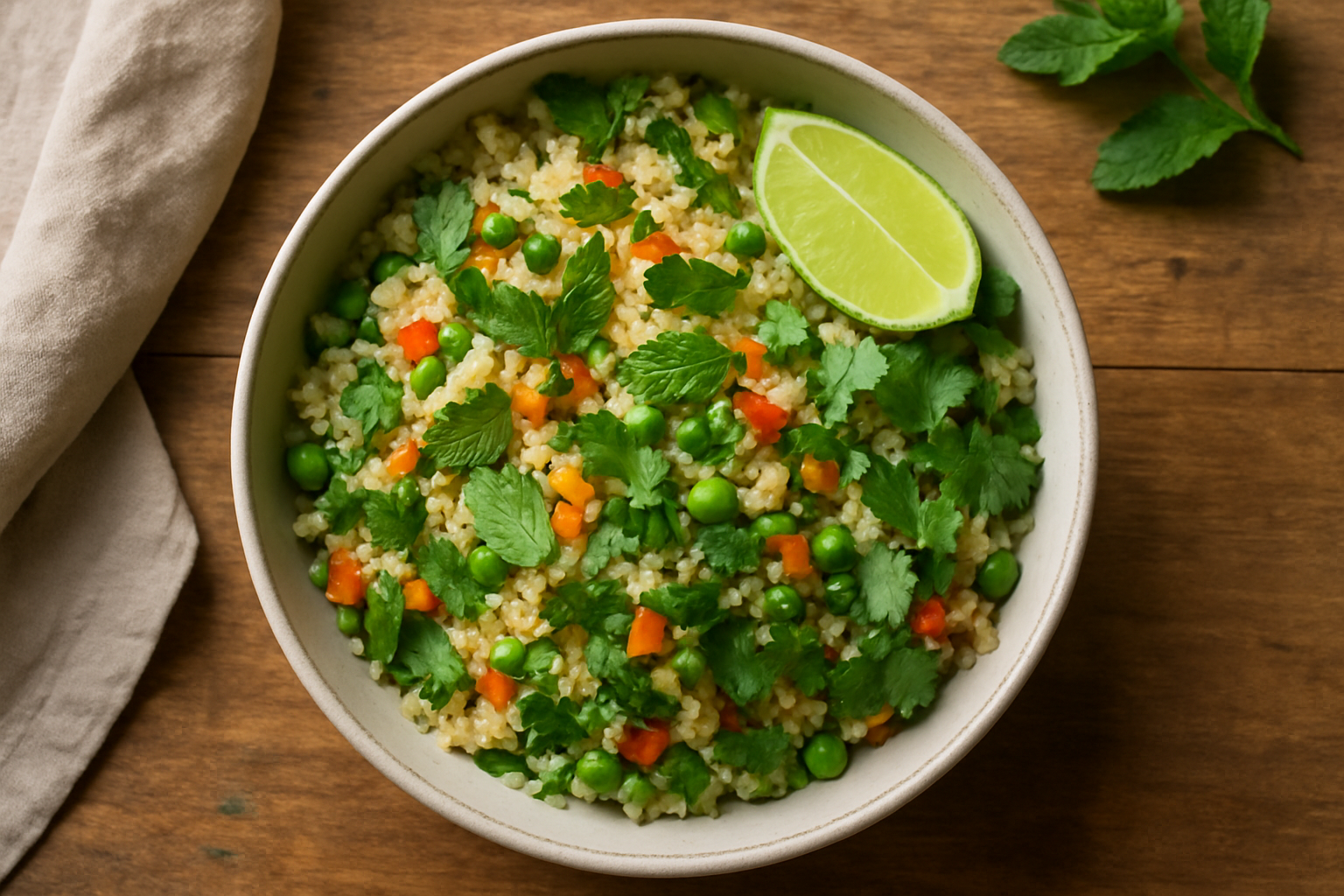
Bowl of minty cauliflower fried rice with fresh herbs and vegetables

Minty cauliflower fried rice: an in‑depth guide and key considerations

If you’ve ever made cauliflower “fried rice” and ended up with a wet, bland pan of veg, you’re not alone. Cauliflower rice is a high‑moisture ingredient. It needs high heat, space in the pan, and seasoning added in the right order.

This minty cauliflower fried rice in-depth guide and key considerations article expands on Beta Me’s original recipe with practical tips for:

  • better texture (no soggy cauliflower)
  • flavour that tastes like “fried rice”, not steamed veg
  • easy protein add‑ins for a more filling meal
  • supermarket swaps you can find in Australia

Want the base recipe first? Start here: Minty Cauliflower Fried Rice (base recipe).


Why this cauliflower fried rice behaves differently
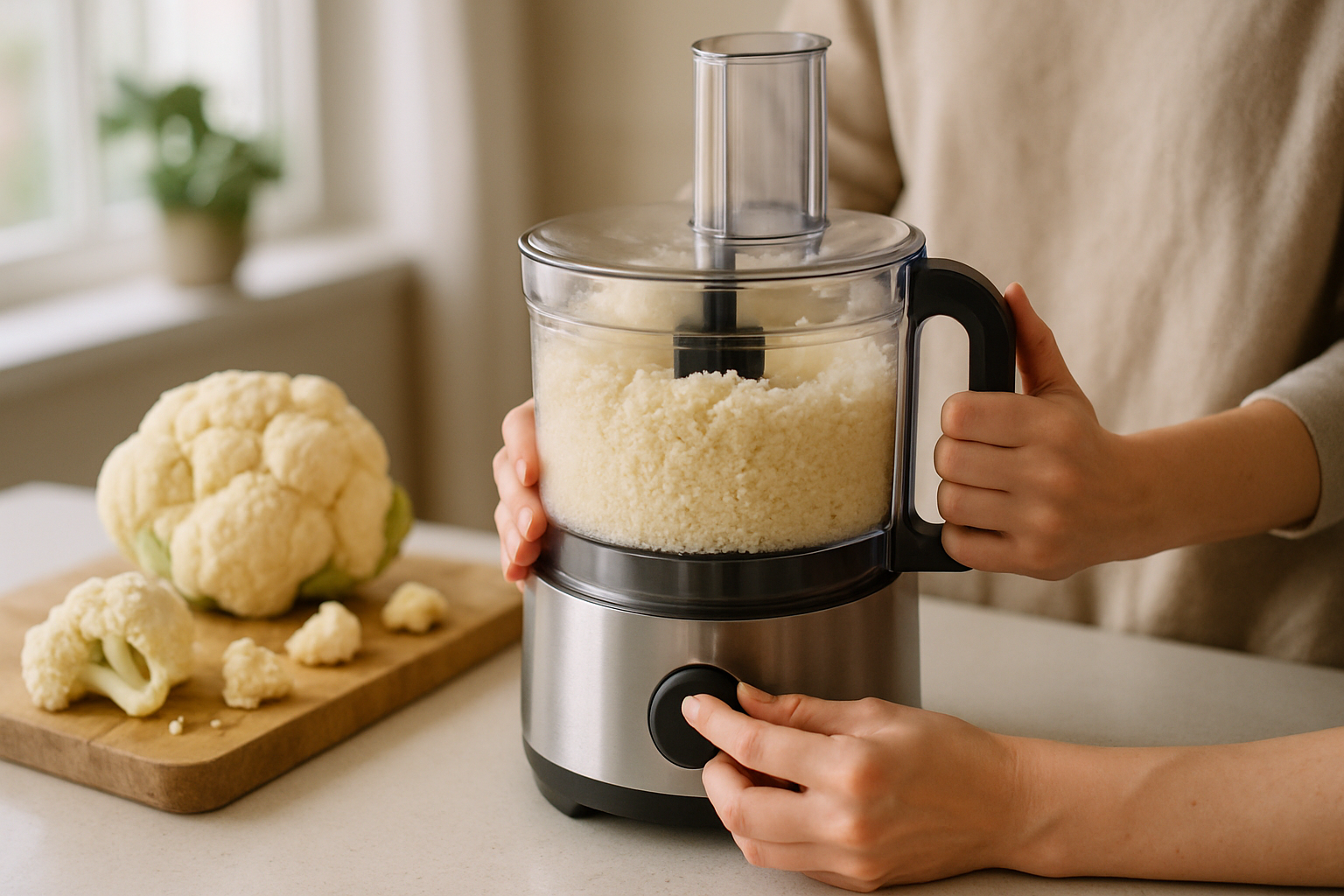
Cauliflower being pulsed into rice in a food processor

Classic fried rice works because cooked, chilled rice is relatively dry. It can fry and soak up flavour without turning to mush.

Cauliflower rice is different:

  • it releases water quickly
  • it can steam if the pan is crowded
  • it doesn’t absorb sauces the same way as grains

The minty twist matters too. Fresh mint lifts salty, savoury flavours (tamari, sesame, lime) and keeps the dish feeling light.


Key considerations before you start

1) Texture comes down to moisture control

If cauliflower rice gets watery, it won’t “fry”. It will steam.

Do this for a drier, fried finish:

  • Use high heat.
  • Use a wide pan or wok.
  • Cook in batches if needed.
  • Keep it moving, but don’t drown it in sauce.
  • Add sauces at the end.

If you’re using frozen cauliflower rice:

  • Thaw first if you can.
  • Drain well.
  • If it’s very wet, squeeze gently in a clean tea towel.

2) Flavour works best in layers

Cauliflower is mild, which is helpful. It gives you room to build flavour.

A simple order that works:

  1. Aromatics (garlic, ginger, spring onion)
  2. Vegetables (harder veg first)
  3. Cauliflower rice (brief, hot fry)
  4. Seasoning (tamari, lime, sesame)
  5. Fresh herbs (mint/coriander off the heat)

Why herbs go last: heat knocks out the fresh flavour. Stir them through right at the end.

3) Make it filling with a clear protein serve

Cauliflower rice meals can look big but feel light. Protein changes that.

Easy, Australian-supermarket protein options:

  • Eggs (scrambled through)
  • Leftover chicken or a supermarket roast chook
  • Prawns (fast cooking, great with lime)
  • Tofu or tempeh (pan‑fry first for texture)

For steadier energy, aim for veg + protein + Healthy fats (for example sesame oil, avocado, nuts or seeds).

4) Gut comfort: adjust the “load” if you’re sensitive

Some people feel great on cauliflower rice. Others notice bloating.

If you’re sensitive:

  • Reduce the cauliflower portion and bulk up with other veg.
  • Swap onion/garlic for garlic‑infused oil and chives.
  • Keep flavours simple (fewer sauces and extras).

If you’re not sure what’s triggering symptoms, working with a naturopath and nutritionist can help you test changes without over‑restricting.


A simple method (use this alongside the original recipe)

You don’t need a complicated recipe. You need the right sequence.

Step 1: Prep so the cooking stays fast

Set yourself up before the pan is hot:

  • Chop your veg (spring onion, capsicum, carrot, snow peas—use what you like).
  • Whisk eggs (if using).
  • Mix a quick “flavour bowl”: tamari + lime juice + a little sesame oil.
  • Pick and roughly chop mint and coriander.

Weeknight shortcut: keep frozen cauliflower rice and a stir‑fry veg mix in the freezer.

Step 2: Heat the pan properly

This is where most soggy cauliflower starts.

  • Heat oil until hot.
  • Add aromatics and stir quickly.
  • Add veg and stir‑fry until just tender‑crisp.

Step 3: Fry the cauliflower rice briefly

Add cauliflower rice and stir‑fry until it looks drier and lightly toasted.

If water pools in the pan:

  • keep the heat up
  • spread it out
  • keep stirring
  • don’t add sauce yet

Step 4: Bring it together at the end

  • Push everything aside and scramble eggs (or add cooked protein).
  • Pour in the flavour bowl.
  • Toss for 30–60 seconds.
  • Turn the heat off.
  • Add mint and coriander.

Taste and adjust:

  • More lime = brighter
  • More tamari = saltier/stronger
  • Chilli flakes = gentle warmth

Smart ingredient swaps (Australian supermarket friendly)
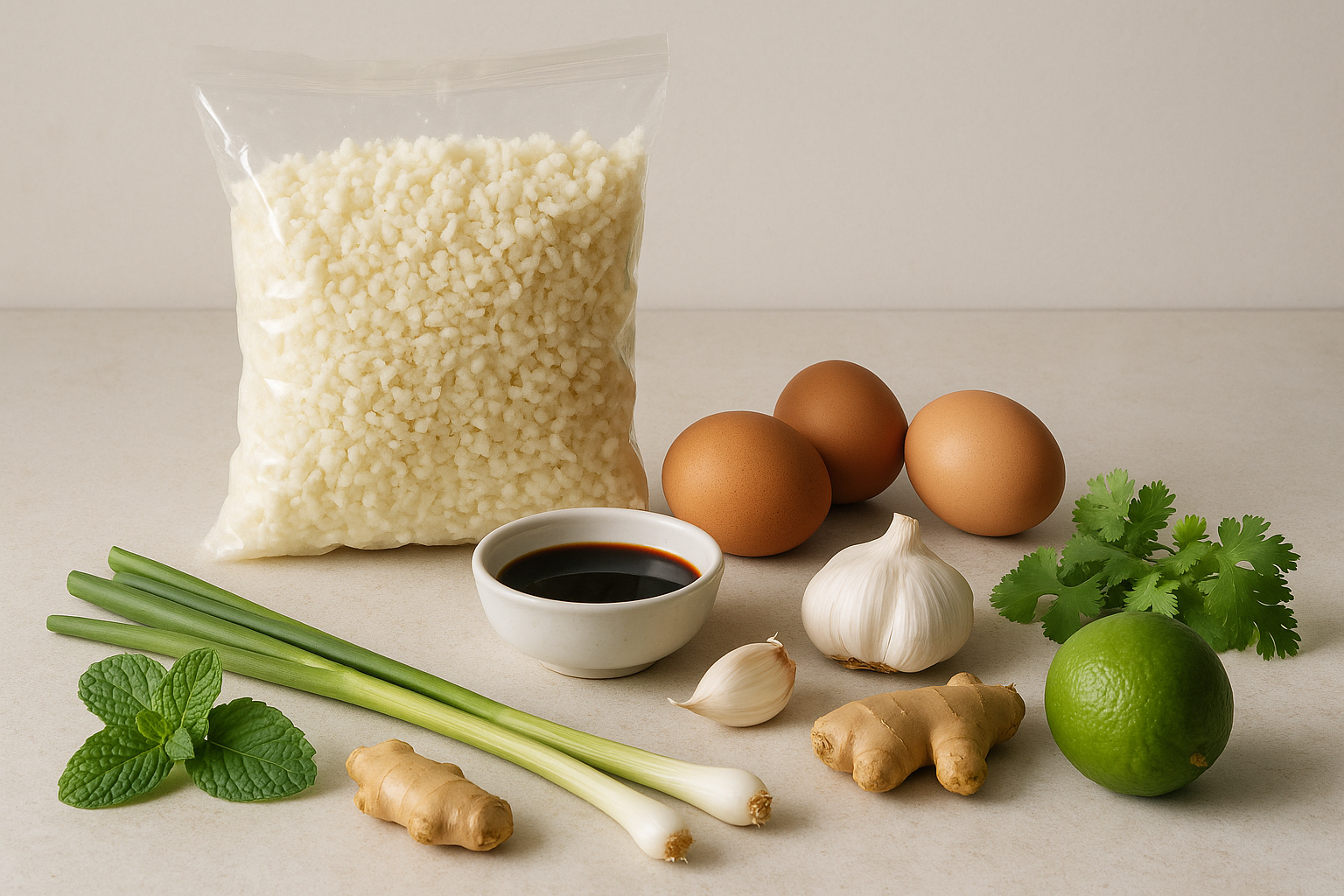
Ingredients for minty cauliflower fried rice laid out on a bench

Gluten-free swaps

  • Choose tamari (rather than soy sauce that may contain wheat).
  • Check labels on bottled stir‑fry sauces.

Make it more filling (without losing freshness)

  • Add an extra egg or a proper serve of chicken/prawns/tofu.
  • Top with sesame seeds, cashews, or chopped peanuts.
  • Add a small spoon of natural peanut butter into the sauce for a richer finish.

Family-friendly tweaks

  • Keep chilli on the side.
  • Use familiar veg (corn, peas, carrot).
  • Serve with a protein your kids already eat.

If you’re watching salt

  • Use less tamari.
  • Lean harder on lime, ginger and herbs.
  • Taste before adding extra.

Mini supermarket shopping guide: shop once, cook three ways

If decision fatigue is the problem, a simple shopping plan helps.

Version A: fast pantry-plus

Buy:

  • Frozen cauliflower rice
  • Eggs
  • Stir‑fry veg mix
  • Tamari
  • Lime
  • Mint/coriander

Version B: higher protein week

Buy:

  • Cooked prawns or chicken
  • Eggs
  • Cauliflower rice
  • Extra veg
  • Sesame oil + seeds

Version C: vegetarian with better texture

Buy:

  • Firm tofu or tempeh
  • Cauliflower rice
  • Crunchy veg (capsicum, beans, carrot)
  • Fresh herbs

If label reading, budget, or “what do I actually buy?” is the sticking point, Beta Me offers a practical Supermarket Shopping Guide Gold Coast (shopping tours) service.


Troubleshooting: quick fixes that save dinner

Problem: It’s watery

  • Turn heat up and cook longer.
  • Spread it out in the pan.
  • Hold sauce until the end.
  • Next time: thaw and drain frozen cauliflower rice.

Problem: It tastes flat

  • Add lime (acid), tamari (salt), and fresh herbs (aroma).
  • Toast sesame seeds and sprinkle on top.

Problem: It doesn’t keep me full

  • Add a clear protein serve.
  • Add healthy fats (sesame oil, nuts, avocado).

Nutrition considerations (simple and realistic)
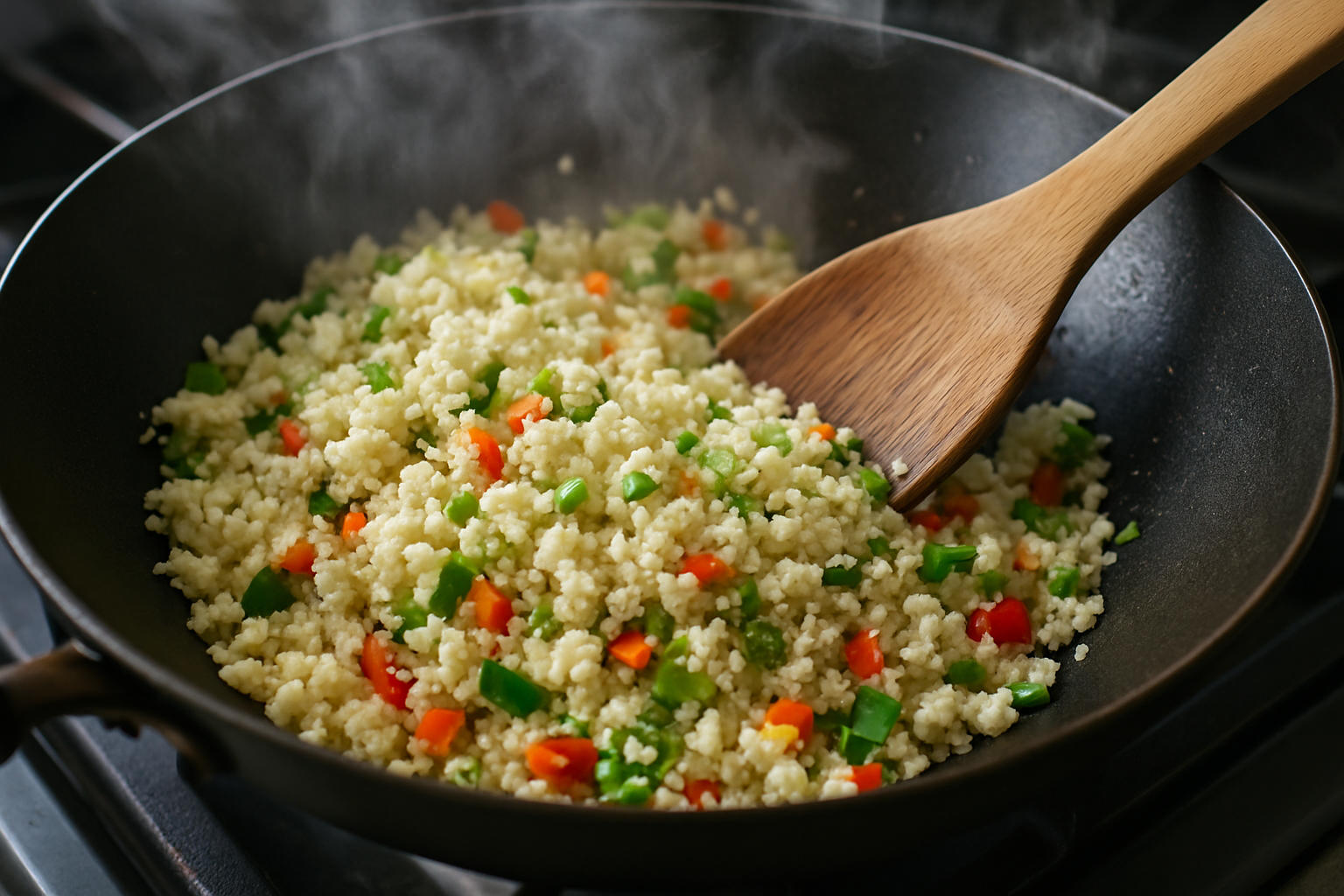
Cauliflower rice stir-frying in a hot wok with vegetables

Minty cauliflower fried rice can be a great option when you want:

  • more veggies without a heavy feel
  • a lighter dinner that still has flavour
  • a lower‑carb alternative to traditional fried rice

The key is balance. Cauliflower rice covers the veggie base. Then add:

  • Protein (eggs, seafood, chicken, tofu)
  • Fats + flavour (sesame, olive oil, nuts/seeds)
  • Colour and variety (different veg for micronutrients)

If you’re also navigating stress, sleep issues or mood changes, food can start to feel confusing. It’s common to search for a naturopath and Anxiety approach because you want practical steps, not perfection. A good starting point is consistent meals with adequate protein, then personalised adjustments.


Want personal guidance rather than guessing?

If you’d like this recipe tailored to your needs (digestion, fatigue, family meals, or simply making weeknights easier), you can work with Danielle at Beta Me.

If you’re searching from outside the Gold Coast (including queries like naturopath Bribie Island), online appointments can be an easy way to get support without travel.


More Beta Me reads
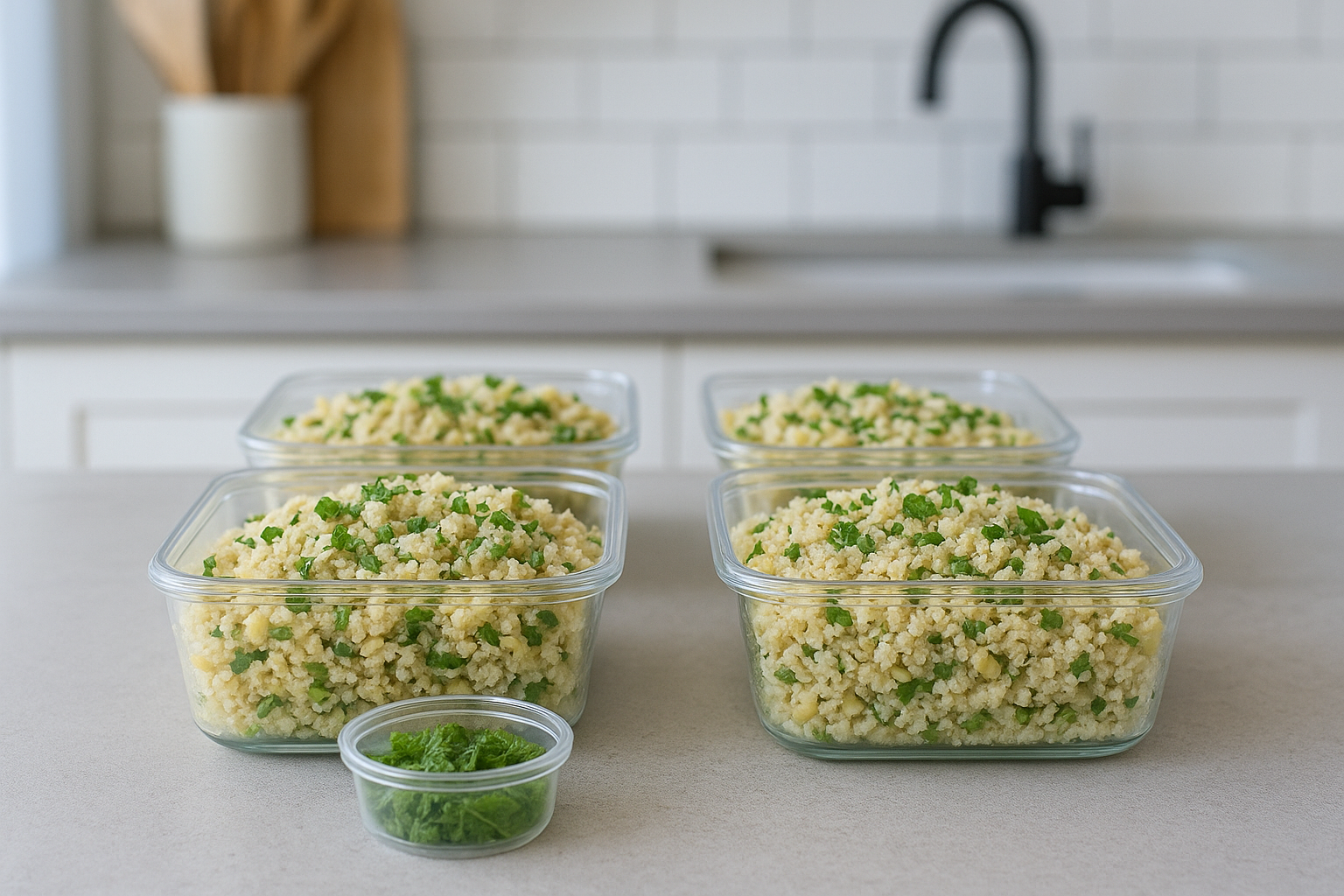

Meal prep containers of minty cauliflower fried rice with herbs kept separate

FAQs

Is minty cauliflower fried rice good for meal prep?

Yes. Cool it quickly, store in airtight containers, and reheat in a hot pan to drive off moisture. Add mint and coriander after reheating.

How do I stop cauliflower rice from going soggy?

Use high heat, don’t overcrowd the pan, and cook in batches if needed. Drain frozen cauliflower rice well. Add sauces at the end.

What proteins work best?

Eggs, chicken and prawns suit the mint and lime profile. Tofu and tempeh work well too, especially if you pan‑fry them first.

Can a naturopath and nutritionist help if I’m changing my diet due to stress?

Yes. A naturopath and nutritionist can help you build a realistic eating pattern that supports steady energy and nourishment, then tailor recipes to your digestion, schedule and preferences.

What should I buy at the supermarket to make this quickly?

Cauliflower rice (fresh or frozen), eggs, a stir‑fry veg mix, tamari, lime, and fresh mint/coriander. Add chicken, prawns, tofu or tempeh to make it more filling.

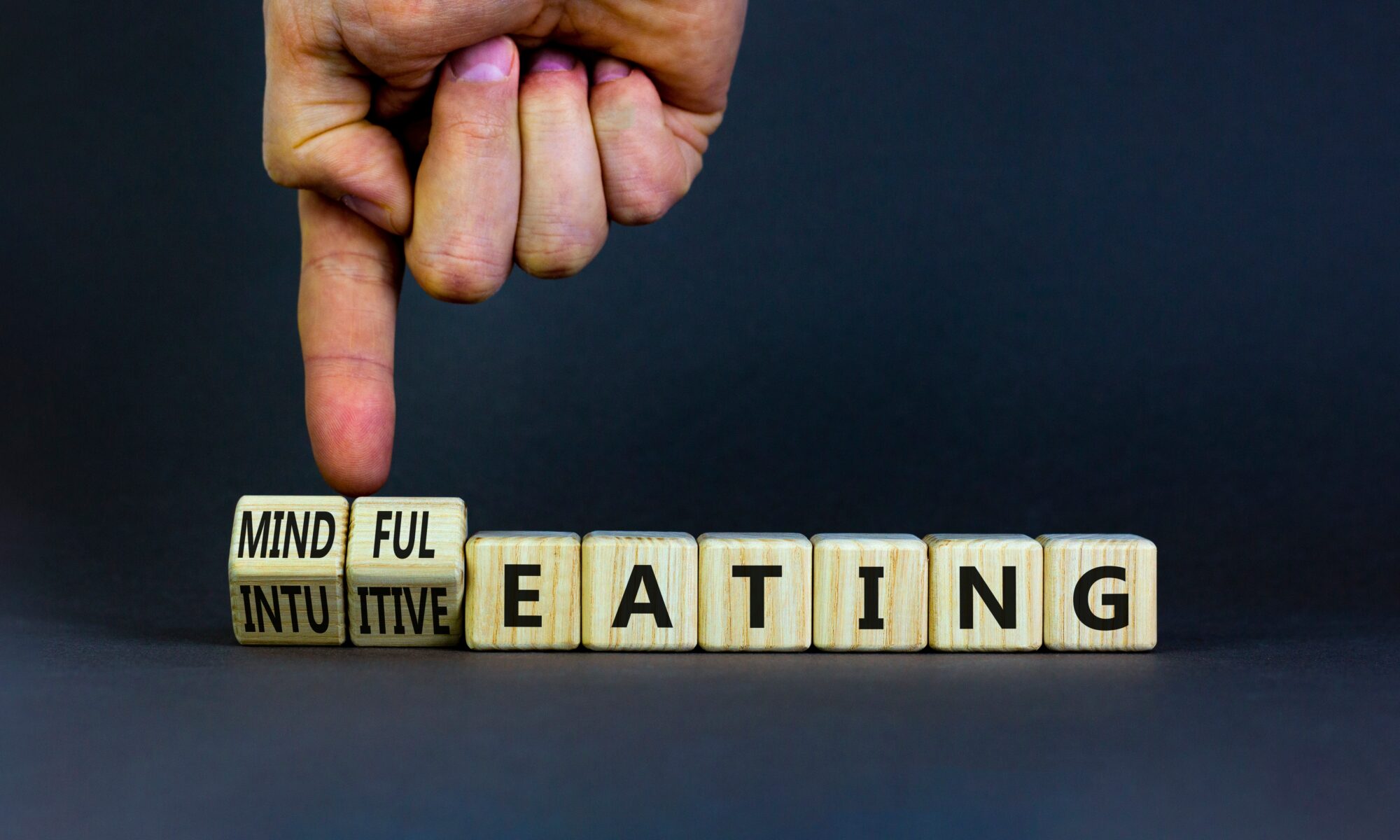
Mindful Eating – Why is it so underrated?

Mindful eating

You only need to look around your office or at your own lunch time habits to see that we are a society that likes to eat at our desk to squeeze every minute of working time out of the day. Kudos to us for being so dedicated to our work, but what about our health?

What is supposed to be an enjoyed task, eating has become much of a chore or inconvenience to us, something we must simply do to survive the day.

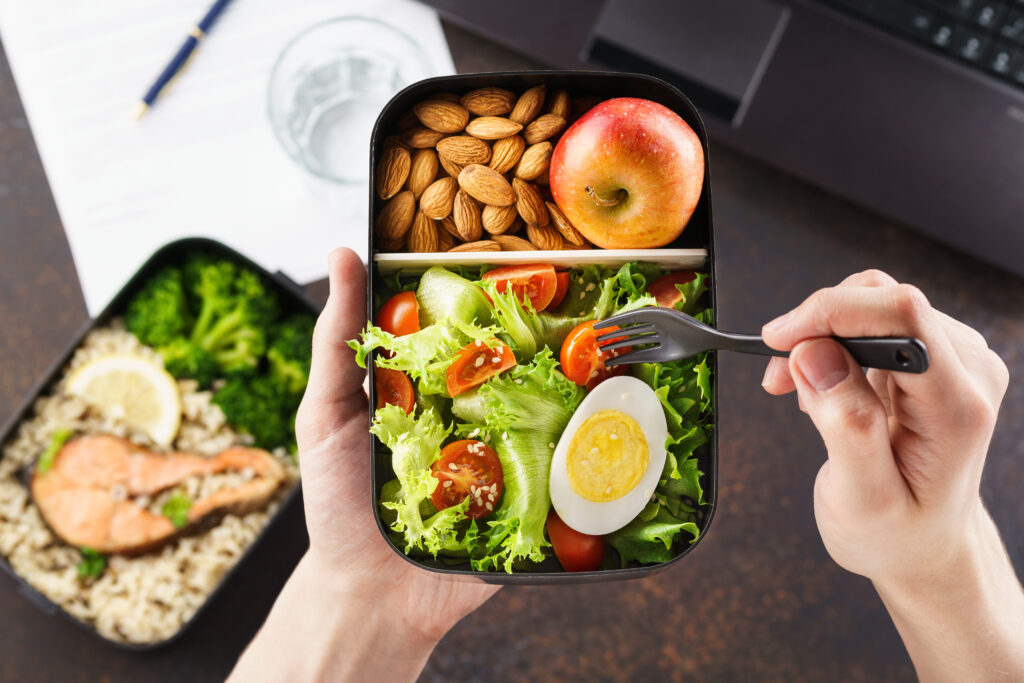
healthy lunch

A look at the nervous system and mindful eating

Our nervous system has different pathways for working and eating that do not operate well together. One is dealing with the stress or activity in front of us and switches off digestion to focus our energies on that pathway. The other is the rest and digest pathway. With digestion switched off, you can easily see how bloating, reflux and constipation may become an issue.

Work is not the only lifestyle factor to blame

Let’s be fair, work is not the only culprit here. I’m sure you can relate to scrolling through social media, sending an SMS or checking emails on your phone at dinner. Maybe you even find yourself with your food on your lap in front of the TV binging your favourite Netflix series. All of these contribute to MindLESS eating.

Do you admire your food and salivate at the sight? This is the beginning of digestion. If you are looking away, busying your mind, you are not effectively starting the digestive process.

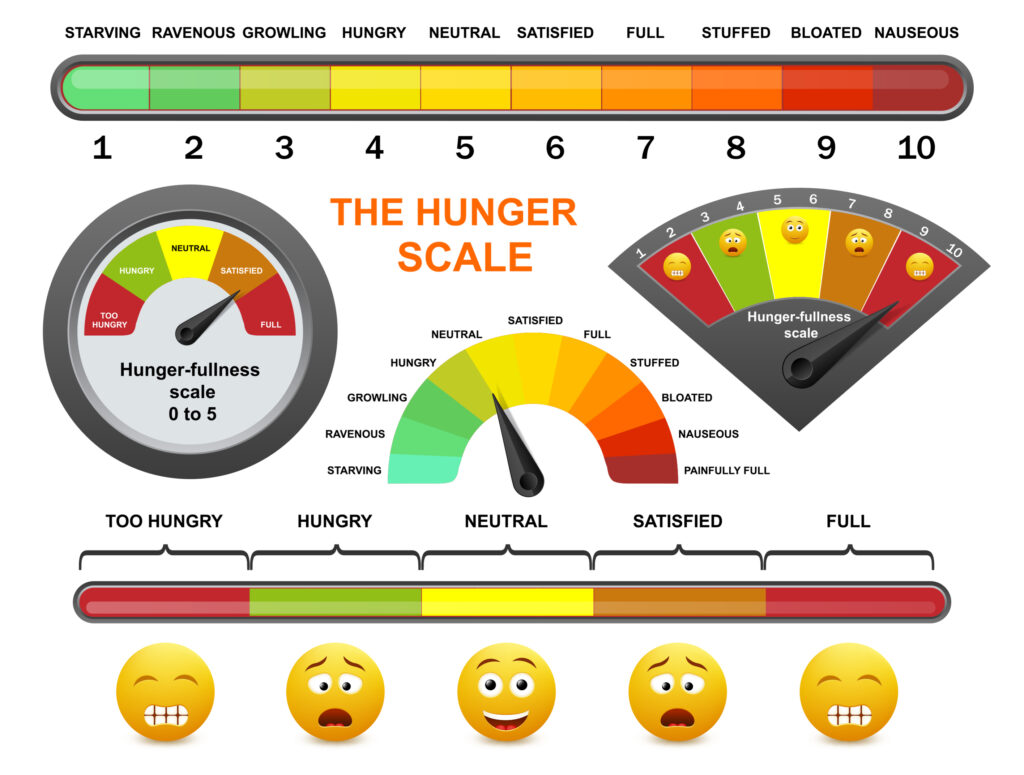
As you continue to shovel food in, do you recognise when you are full before you are ‘overstuffed’? Many of us don’t, we sit there after a meal feeling bloated, full, and uncomfortable.

Hunger Scale

What is MindFUL eating?

MindFUL eating on the other hand is focusing on your hunger and fullness cues. It is being present with your food and the people who are enjoying the food with you. It’s sitting down to admire the aroma, the colours and anticipating every delicious mouthful. It is being thankful that you can fuel your body with something nutritious. It’s focusing on chewing each mouthful slowly and completely.

A healthy relationship with food rewards us with less bloating, better toileting habits, healthy weight and a healthy mind. Eating mindfully puts us in control of our body and how it feels.

Tips to support your MindFUL eating goals

  • Look for signs of emotional or boredom eating.
  • Enjoy the process of preparing food that nourishes your body.
  • Consider what you want to eat and why?
  • Is your body telling you it is hungry? Could it be tired or bored? This will avoid MindLESS snacking.
  • Think about how the food is fuelling your body. Think vitamins and minerals, protein, fibre, healthy fats etc.
  • Thinking of seconds? Allow 20 minutes before deciding on a second course, after the 20 minutes, determine if you are still hungry.
  • Sit at the table to eat meals with the TV off.
  • Take 10-15 minutes, at least, away from your desk to sit and eating your meal.

Food should give us enjoyment, nourishment, and fuel. Eating should be something we put thought into, just as much as our work. Without nourishment, our abilities to accomplish working and family tasks diminishes with our health.

Complete a contact form

Health Tips to Get You Fed – The Joys of Parenthood and Forgetting to Feed Yourself

Busy Parent Tips

Before parenthood, the concept of ‘forgetting to eat’ is inconceivable to most. Insert children and soon the days of waking up and thinking about what you are going to have for breakfast, sitting down to enjoy that HOT breakfast and shortly after thinking about what, when and where your next meal is going to come from turn into a distant memory. This blog was designed to provide you with some of the health tips and tools I use to ensure I remain nourished and on top of my game when it comes to caring for my son and being a working mum, with a business to run.

Tips for parents

Once your children arrive, sacrifice and selflessness quickly become part of the parental territory. Busy days feeding the baby or taking kids to school and sport, all while trying to maintain the household and your career interrupt your appetite and you soon say goodbye to HOT and seated meals. Your days are now a whirlwind fog.

You are certainly not alone in the neglect of your own needs. Parents and caregivers, mums and dads all over the world experience the same struggles, whether you are a stay-at-home parent or full-time working parent.

To your kids, you are a Superhero. A superhero can only be the kind of super they need if YOU are healthy and happy.

Superhero parent tips
You can only be the superhero they need if you have YOUR OWN health

Your health should be your priority and because everyone else relies on you to keep them healthy, it is also your responsibility to keep yourself healthy.

Why?

Because..

  • you deserve it!
  • your kids need it.
  • children need role models to show them HOW to be healthy, not simply be told.

Some health tips

parent health tips
Get the whole family involved
  • Start and end your day early.
  • Plan out healthy meals and snack wisely.
  • Keep a good supply of healthy grab-and-go one handed snacks in the pantry/fridge (see tops and ideas below).
  • Even if you cannot get a complete meal in, eat several small meals across the day to keep your energy up and prevent crashes.
  • Ensure snacks and meals are high in fibre to sustain you for longer and prevent cravings for sugary/carb rich junk foods.
  • Ask your Nutritionist to help you with a simple meal plan that is achievable.
  • Nurture friendships and extended family who support you and your own need to be healthy.
  • Be a team
      • Get your kids involved in helping to cook meals.
      • Ask your partner to help with meal preparation or other chores, so you can meal prep.
    • Ask a family member or friend to take the kids for a few hours while you prepare meals in advance.
  • Stay active, not only chasing children but walk, run, dance, swim, gym, do whatever you enjoy to stay active, keep your mind clear and maintain energy for planning and preparing healthy meal options and supporting a healthy appetite.
  • Reduce the stress and clutter in your mind, to allow your body to remember to eat (with the above)
  • Set alarms for yourself as reminders to eat regularly.
  • Use healthy ready-meal services (speak with your nutritionist on healthy options available).
  • Have a health plan in place (e.g. a mummy/daddy pamper day, a meal prep day, massage once per month etc.)

Quick Snack Ideas

  • Boiled Eggs (done the night before while the kids are sleeping)
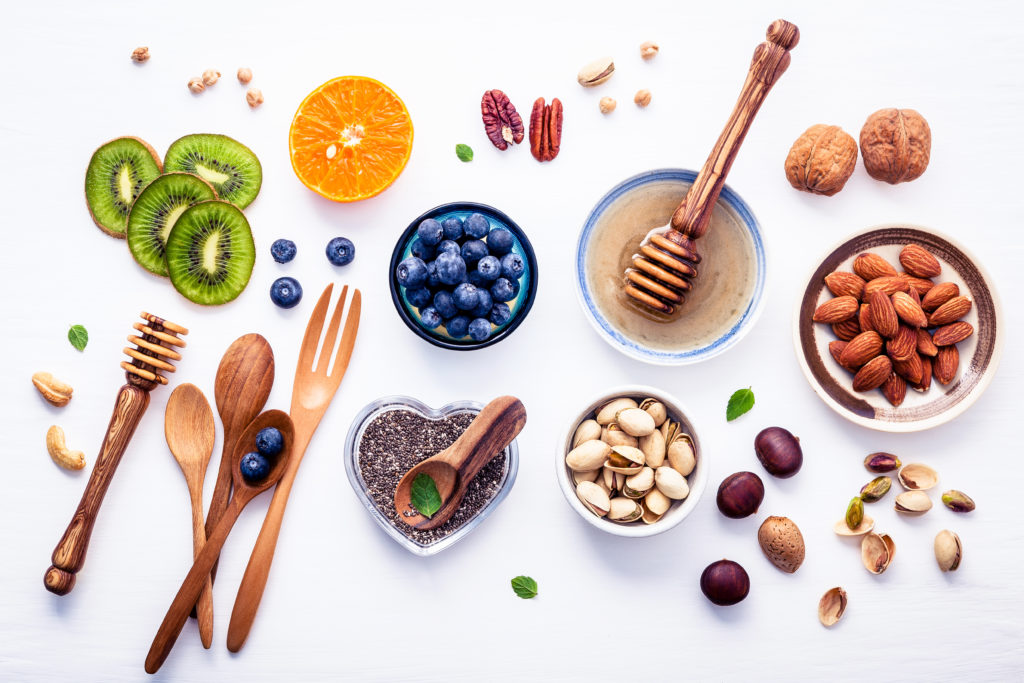
  • Nuts and seeds – almonds, walnuts, Brazil nuts are all great choices, pepitas, sunflower seeds.
  • Fresh fruit – berries, bananas, apples are all quick and easy.
  • Smoothies
  • Chia pots – (done the night before while the kids are sleeping)
  • Yoghurt pouches
  • 70% or more Dark Chocolate (limit to 2 squares)
Healthy Snack Ideas
Healthy Snack Tips

Could in-activity or over-activity be affecting your digestive health?

digestive health and exercise

Most of us are well aware of the benefits of exercise and movement for heart, mental, bone and muscle health. There is also no disputing its benefits in maintaining a healthy weight. What most of us are oblivious to, is the impact exercise can have on digestive health, in a positive or negative way. Especially if you suffer from some of the more common digestive health complaints that I see in clinic including, SIBO (small intestinal bacterial overgrowth), IBS or reflux. As well as the ever increasing IBD (Crohn’s and Ulcerative Colitis) and diverticulitis.

What are the BENEFITS of regular exercise for digestion?

  • Your gut microbiome (the healthy guys that live in her gut), rely on good and consistent circulation to the stomach to perform their duties. Duties such as immune support, mood, metabolism, the creation of hormones and to regulate the digestion of food.
  • Exercise also alters the diversity (variety) of our gut friends, to ensure the good ones outnumber and are stronger than the bad ones.
  • Sure, we know about the importance of building the muscles that we can see from the outside. But the gut also has particularly important muscles along the digestive tract. These muscles need to be toned and strengthened by exercise to perform digestive functions.
  • These same muscles are required to twist, churn, and push leftover food and metabolic waste through the digestive tract to be eliminated. Imagine if you did not have those important muscles you use to do number two! Moving makes sure your bowels also keep moving.

It is best to clear it with your doctor to make sure that the level of exercise is safe for you. Whatever you do, just get moving. Walking, jogging, riding, bushwalking, hiking, Pilates, yoga, gym classes are all great options and can be tailored to your fitness and mobility levels.

What about the flip side, how might my digestive health symptoms worsen with exercise?

  • Exercising too quickly after food may increase reflux.
  • Eating heavy foods before exercise may increase flatulence, bloating, reflux and abdominal discomfort. This, due to the body’s ability to switch off digestive function to activate its “fight or flight” response in exercise.
  • While adequate exercise can be effective at reducing inflammation in the long term, over exercising is inflammatory and can stress the body. This causes an increase in a hormone called cortisol, which can lead to digestive complaints and fatigue.  
  • It is important to incorporate recovery days or low impact and gentle exercise into your regime to reduce inflammatory damage and digestive disturbances.
  • High intensity exercise is great for keeping your heart in shape. However, overdoing it can contribute to diarrhea, especially in those susceptible to loose bowel motions (e.g. IBS). Why? When we run, the flow of blood is diverted to the legs and digestive organs are being thrown around creating disorder in the gut and bowels. 

Thinking Holistically

So, while food can absolutely be a major contributing factor to digestive discomfort, other lifestyle factors such as exercise and sleep can also play an important role.

If you are newly taking up exercise, start slow, set small, achievable goals such as a 10 minute walk for the first week and slowly increase from there, but be CONSISTENT.

Or, enlist the support of an Exercise Physiologist or other exercise specialist along with your Nutritionist to build a holistic, supportive and motivating approach to your digestive health goals.

Happy and safe exercising!

Danielle x

[chained-quiz 1]

COLLAGEN – The gut and skin wonder nutrient

Collagen

The collagen market has hit the health and wellness industry by storm. Everyone wants a piece of the beauty pie. Claims of increasing skin elasticity, firming up sagging skin, healing damaged skin and on a less vein level, supporting joints and healing the gut have people scrambling at local health food stores, pharmacies and beauty houses for all things collagen. Now I have suggested here that the vanity side of things might be completely separate from the gut, but in reality, the gut and skin are very closely connected.

We all begin life as just one lonely little cell, in the comfy and warm womb of our mothers. From here, we very rapidly divide into many cells and develop until we become a fully grown baby. As we continue this growth some of our original cells and remain linked together. Our gut, skin and brain are connected closely by our original tissues.

This has led research to identify a clear link between the gut, skin and associated skin conditions.

Did you know the skin is our body’s largest organ?

As a structural organ, the skin plays a very important part in maintaining a healthy body from:

  • UV damage (from the sun)
  • Dietary and environmental factors that cause free radical damage
  • Environmental pollutants
  • Physical stress placed on the skin

Other factors may affect the health of our skin including:

  • Hormone imbalances
  • A poor diet
  • Alcohol
  • Dehydration
  • The dysfunction of other organs such as the liver and gut

So, what about collagen then?

Collagen is found naturally in the structural makeup of our skin. It plays a large role in skin elasticity, ensuring that our skin does not sag and wrinkle, which is why the beauty industry has made a fortune out of topical collagen products. Collagen is also found in the gut lining playing a similar healing and protective role, but on a deeper level that we cannot see. Although, those with gut problems such as leaky gut will soon discover the benefits after taking collagen supplements or increasing collagen naturally with food.

PLUS Vitamin C

Collagen is heavily reliant on the incredibly famous antioxidant known as Vitamin C for production in the body. Including several sources of Vitamin C rich foods in the diet daily can boost your chances of producing enough collagen to achieve that beautiful, firm glow you have been searching for, as well as do some fabulous healing work in the gut. Because both organs are so connected and so vital to overall health, it is important to work on both the skin and gut.

Here are some vitamin C rich food sources:

  • Broccoli, brussels sprouts, cauliflower
  • Capsicums
  • Chillis
  • Leafy greens (spinach, cabbage, kale etc.)
  • Sweet potatoes, pumpkins
  • Kiwi fruit
  • Mango
  • Pineapple
  • Papaya
  • Watermelon
  • All berries
  • Thyme
  • Parsley
  • Lemons, oranges, grapefruit

Sources of Collagen

  • Fish
  • Chicken
  • Turkey
  • Lean beef
  • Citrus fruits
  • Egg white
  • Garlic
  • Berries
  • Cashews
  • Green leafy vegetables
  • Soy products
  • Tomatoes
  • Capsicum

The road to healthy skin

The diet plays a key role in the health of our skin. The skin relies on essential nutrients to preserve its integrity and elasticity. Eating nutrient-rich foods often can ensure we are getting the variety of nutrients require for that all-important glow and youthfulness.

Enjoy Your Fruit & Veggies Plentifully

Fruit and vegetables are a given, we all know it, but we sometimes need to be reminded of this in these times of fast food and time-poor lifestyles. The antioxidants and phytochemicals (plant chemicals and nutrients) found in our fruits and vegetables help to maintain skin elasticity and integrity below the surface of the skin, as well as what we can see in the mirror. Fruit and vegetables also offer the gut the nutrients it requires to produce collagen and stressless hormones.

Eat Seasonally

Eating seasonally increases the nutritional profile of fruits and vegetables meaning you will get the most out of them!

Healthy Fats

Healthy fats are important in helping to build cell membranes and hydrate and plump the skin. Omega-3, omega-6 and monounsaturated fatty acids are the best of the fats.

Sources of healthy fats include:

  • Avocado
  • Nut butters
  • Nuts and seeds
  • Eggs
  • Oily fish (salmon, tuna, cod, sardines)
  • Olive oil
  • Olives

Prebiotics – Improve the health of your friendly gut bacteria

Our colon (the large bowel) has an enormously diverse number of healthy bacteria. Like us, they are living. These very live and operating healthy bacteria require fuel, much the same as we require fuel (food) to live, notably prebiotics.

What do they eat?

The preferred fuel source of our healthy friends are called indigestible carbohydrates known as prebiotic fibres to undertake the vast array and very important roles they play in our health.

What do they do for us?

Our healthy bacteria are responsible for regulating the immune system, metabolism, energy production and much more.

It is important to ensure we are consuming enough prebiotic fibres from our food to sustain our friendly colonic bacteria. Because, let’s face it, without them and their health, we would be sick, tired and lethargic and that is just the beginning. Unfortunately, many of those who presented to clinic have already reached the sick, tired, and lethargic stage and require supportive treatments to reorganise, rebuild and repopulate their healthy bacteria.

Why are prebiotics considered indigestible?

  • They are resistant to the acid and enzymes found in our stomach.
  • They are fermented by our healthy bacteria (as their food and energy source).
  • They become a source of fuel to help the healthy bacteria grow and produce the materials. required to keep us healthy and happy.

What is Guar Gum?

Guar gum is a prebiotic fibre that is popular in many packaged food items and baked goods. In these food forms, guar gum may not offer its full nutritional potential. However, on its own guar gum is seen as a gut friendly ingredient that feeds our little gut ‘besties’.

What are the benefits of Guar Gum?

This gum is tasteless, odourless and helps to improve toileting habits. It does this by increasing the bulk of the stool, drawing in water and reducing the straining that often accompanies constipation.  Guar gum has been praised for its positive effects in Irritable Bowel Syndrome (IBS) and other digestive complaints such as gas, bloating and discomfort thanks largely to its prebiotics properties.

Some popular dietary fibres have demonstrated risks for nutrient absorption. Guar gum however, has not shown the same risks and is therefore suitable for those suffering from iron, zinc and calcium deficiencies under the care of a health professional.

Simple use tips

You can add Guar gum to smoothies or protein shakes to make them like thick shakes or play around with the quantities to blend protein powder and water into a mousse. You may also like to thicken home-made soups, stir fry sauces or salad dressings.

[chained-quiz 1]

Loading...