
4 Seasonal Wellness Trends in Australia That Actually Work

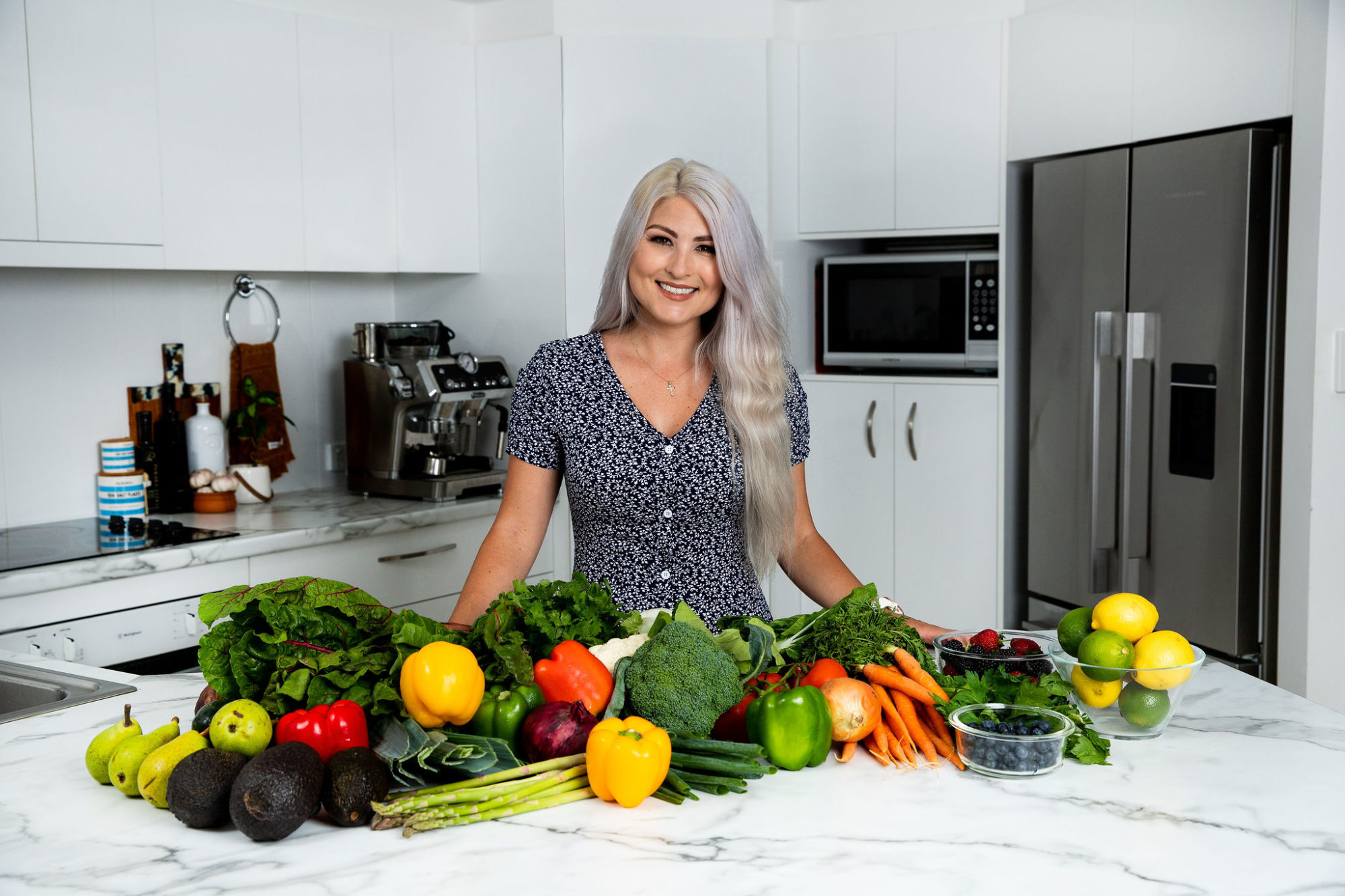
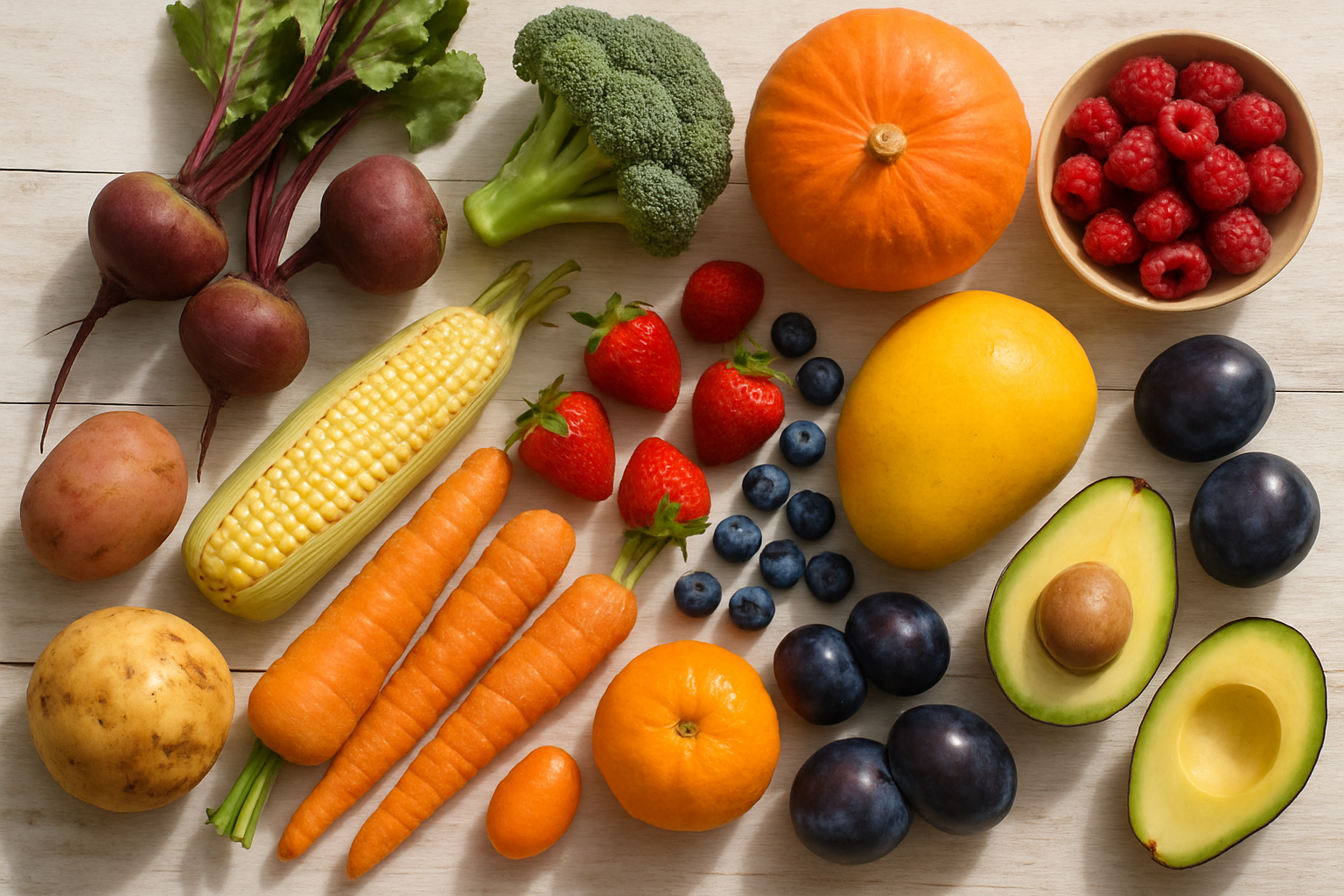
A colourful arrangement of seasonal Australian fruits and vegetables on a wooden table.

4 Seasonal Wellness Trends in Australia That Actually Work

Scroll through your social feed and you’ll see a dozen new wellness ‘trends’ every week. From sea moss gel to lymphatic drainage, it’s hard to know what’s a fleeting fad and what can genuinely support your health.

As the seasons shift here in Australia, it’s time to cut through the noise.

Let’s focus on the seasonal wellness trends that are grounded in solid health principles—the ones that offer practical, lasting benefits for your year-round wellbeing.

1. Focus on Gut Health: Your Immune System’s Foundation

A person serving a bowl of healthy, homemade vegetable soup.

This isn’t a new trend, but its importance is finally getting the recognition it deserves. A healthy gut microbiome is the foundation for everything: your immune response, mood, and energy levels. The trend is shifting away from restrictive diets and towards actively nourishing your gut.

Why it matters seasonally: A robust gut is your first line of defence against winter sniffles. In summer, a balanced microbiome helps with digestion during a season filled with social events and different foods.

How to Apply This Trend:

  • Diversify Your Fibre: Aim to eat 30+ different plant foods each week. This feeds a wider range of beneficial gut bacteria. Think beyond just fruit and veg—include nuts, seeds, legumes, and wholegrains.
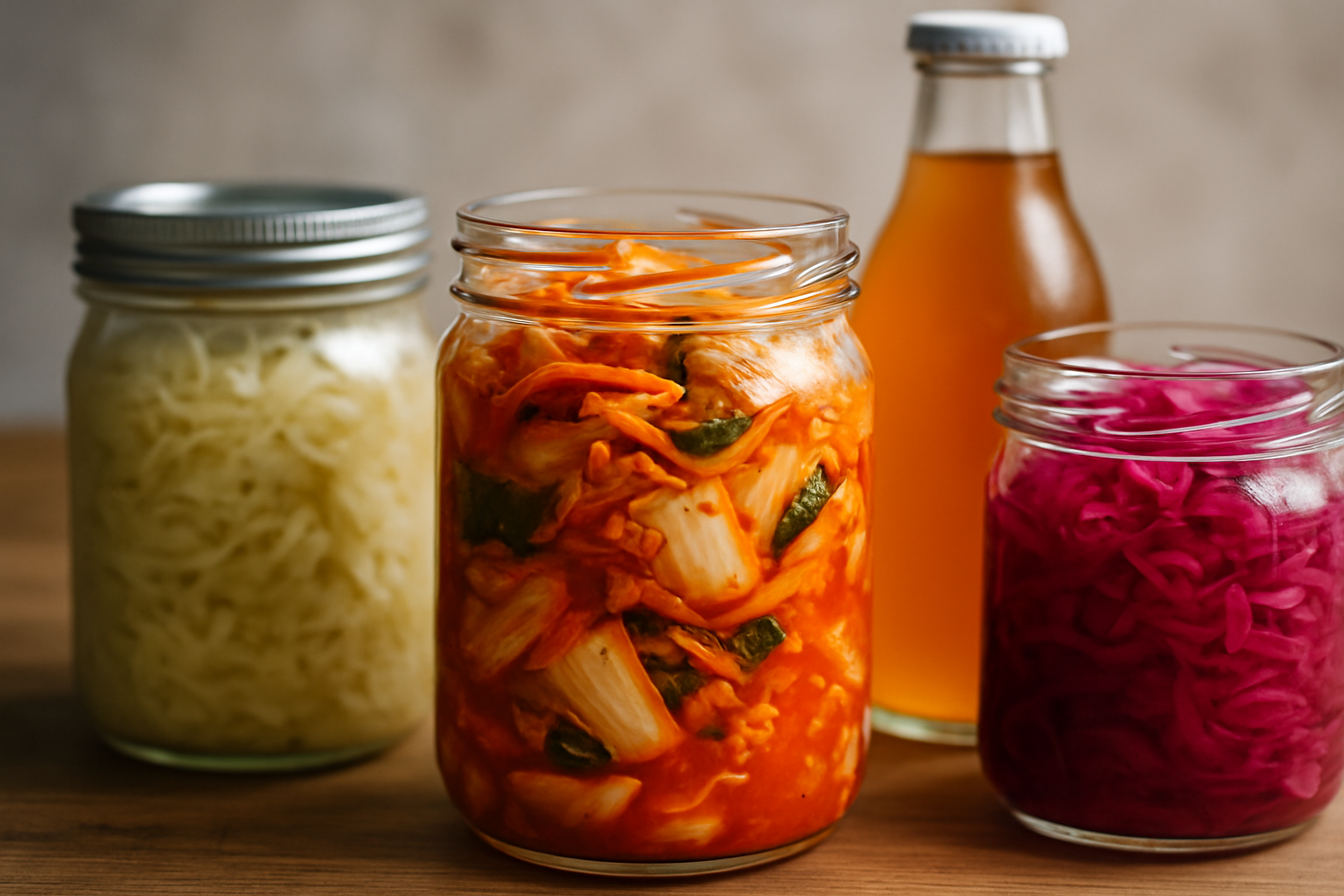
  • Embrace Fermented Foods: Incorporate foods like sauerkraut, kimchi, kefir, and quality natural yoghurt. They are a fantastic natural source of probiotics.
  • Prioritise Immunity: Your gut houses around 70% of your immune system. To learn more, see how you can boost your immune system this winter.

2. Eat Seasonally: Connect With Your Food

A powerful movement is growing away from processed, packaged foods towards a deeper connection with where our food comes from. This trend champions eating locally sourced, seasonal produce. Why? It boasts superior flavour and nutrient profiles and is better for the environment.

This also encourages mindful eating—paying attention to your food and your body’s hunger cues, which can transform your relationship with meals.

Why it matters seasonally: Eating seasonally means you’re giving your body what it needs most. Think hearty root vegetables and citrus in winter, versus hydrating fruits and leafy greens in summer.

How to Apply This Trend:

  • Visit a Local Market: The Gold Coast has some fantastic farmers’ markets. It’s a great way to see what’s truly in season and connect with producers.
  • Shop the Perimeter: At the supermarket, focus on the outer aisles where fresh produce, meat, and dairy are typically located.
  • Become a Savvy Shopper: If markets aren’t your thing, you can still make smart choices. Learning to read labels and identify genuinely healthy products is a crucial skill. We make this easier by navigating the aisles with a supermarket shopping tour.

3. Embrace Personalised Nutrition (Not Rigid Diets)

The era of the one-size-fits-all diet is over. We’re finally acknowledging that what works for your friend might not work for you. Your unique genetics, lifestyle, stress levels, and health goals all determine your nutritional needs. This trend is all About bio-individuality.

This means listening to your body and seeking professional guidance to create a plan that fits your life, rather than trying to force your life into a rigid diet.

Why it matters seasonally: Your nutritional needs can change with the seasons. You might need more Vitamin D support in winter or different electrolytes in summer. A personalised plan adapts with you.

How to Apply This Trend:

  • Ditch the Quick Fix: Instead of a punishing New Year detox, consider a gentle, supportive reset. Focus on whole foods, hydration, and reducing inflammatory triggers. Get a sensible take on this in our Goss on Detox post.
  • Listen to Your Body: Pay attention to how different foods make you feel. Do you feel energised after one meal? Sluggish after another? This is valuable data.
  • Seek Expert Guidance: A generic plan from the internet can only take you so far. Working with a professional ensures your approach is safe, effective, and truly tailored to you.

4. Prioritise Foundational Health: Stress, Sleep & Movement

Perhaps the most important trend is realising you can’t out-diet chronic stress or poor sleep. Wellness is holistic. This means prioritising stress-reduction techniques, quality sleep, and consistent movement as non-negotiable pillars of health.

Why it matters seasonally: Less sunlight in winter can impact our mood and vitamin D levels. The busy social calendars of summer can increase stress. Adapting your self-care routine to the season is key to staying balanced.

How to Apply This Trend:

  • Schedule Downtime: Actively block out time in your calendar for rest and relaxation, just as you would for a work meeting. It is that important.
  • Create a Wind-Down Routine: An hour before bed, dim the lights and put away screens. Do something calming like reading a book, stretching, or sipping herbal tea.
  • Find Movement You Love: A walk in the morning sun or a restorative yoga class can be just as beneficial as an intense gym session, especially for managing stress.

Ready to Build Your Seasonal Wellness Plan?

Navigating health trends can be overwhelming, but you don’t have to do it alone. The most effective approach is one that considers your unique body and is built on sustainable habits, not fads.

If you’re ready to move beyond generic advice and discover what truly works for you, it might be time for guidance from a qualified nutritionist and naturopath. At Beta Me, Danielle Lamb can help you create a practical, personalised strategy to feel your best, no matter the season.

Stop guessing and start feeling better. Book your consultation today and explore more advice on our blog.

Related reading: Gold
Beyond the Beach: 4 Health & Wellness Trends to Watch on the Gold Coast This Season

Seasonal Gold Coast produce laid out for meal planning, a key wellness trend.

Beyond the Beach: 4 Health & Wellness Trends to Watch on the Gold Coast This Season

Here on the Gold Coast, the rhythm of life changes with the seasons. It’s not just about swapping swimmers for sweaters; it’s about how our energy, social calendars, and health needs shift. We’re seeing a move away from quick fixes and towards sustainable, year-round wellbeing.

Let’s look at four key trends shaping how Gold Coasters are approaching their health and how you can apply them in a practical way.

1. The Gut Health Revolution

A collection of fermented foods representing the trend towards better gut health.

The focus on gut health is more than a trend; it’s a foundation for overall wellbeing.

It’s official: gut health is no longer a niche topic. More locals are understanding the powerful connection between a healthy gut and everything else—from mood and immunity to skin health and energy levels. This isn’t about following a restrictive diet; it’s about nurturing your microbiome with whole foods, fermented options, and targeted support.

What this looks like on the GC:

  • Fermented foods are everywhere: Local cafes are stocking kombucha on tap, and stores are filled with kimchi, kefir, and sauerkraut.
  • Fibre is the focus: People are consciously adding more diverse plant-based foods to their plates to feed good gut bacteria.
  • Seeking professional guidance: There’s a growing demand for a qualified gut health dietitian on the Gold Coast to investigate underlying issues like bloating, food intolerances, and digestive discomfort instead of just guessing.

2. Hyper-Local and Seasonal Eating

Choosing fresh, local produce at a Gold Coast farmers' market.

Eating locally isn’t just better for you; it connects you to the community.

Why eat strawberries in winter when local citrus is at its peak? The farm-to-table mindset is strong on the Coast. Visiting the weekend markets at HOTA, Palm Beach, or Bundall is now a core part of many people’s weekly routine. This trend is about maximising nutrient density, supporting local growers, and eating food that’s truly fresh.

How to embrace this trend:

  • Shop the perimeters: Focus your grocery shopping on fresh, whole foods. For extra support, consider navigating the aisles with a supermarket tour to learn how to read labels and make healthier choices.
  • Plan meals seasonally: Build your weekly meals around what’s abundant at the local markets. This ensures variety and a broader range of nutrients throughout the year.
  • Keep it simple: Roasting a tray of seasonal vegetables is an easy, nutrient-packed meal base.

3. Proactive Mental Wellbeing

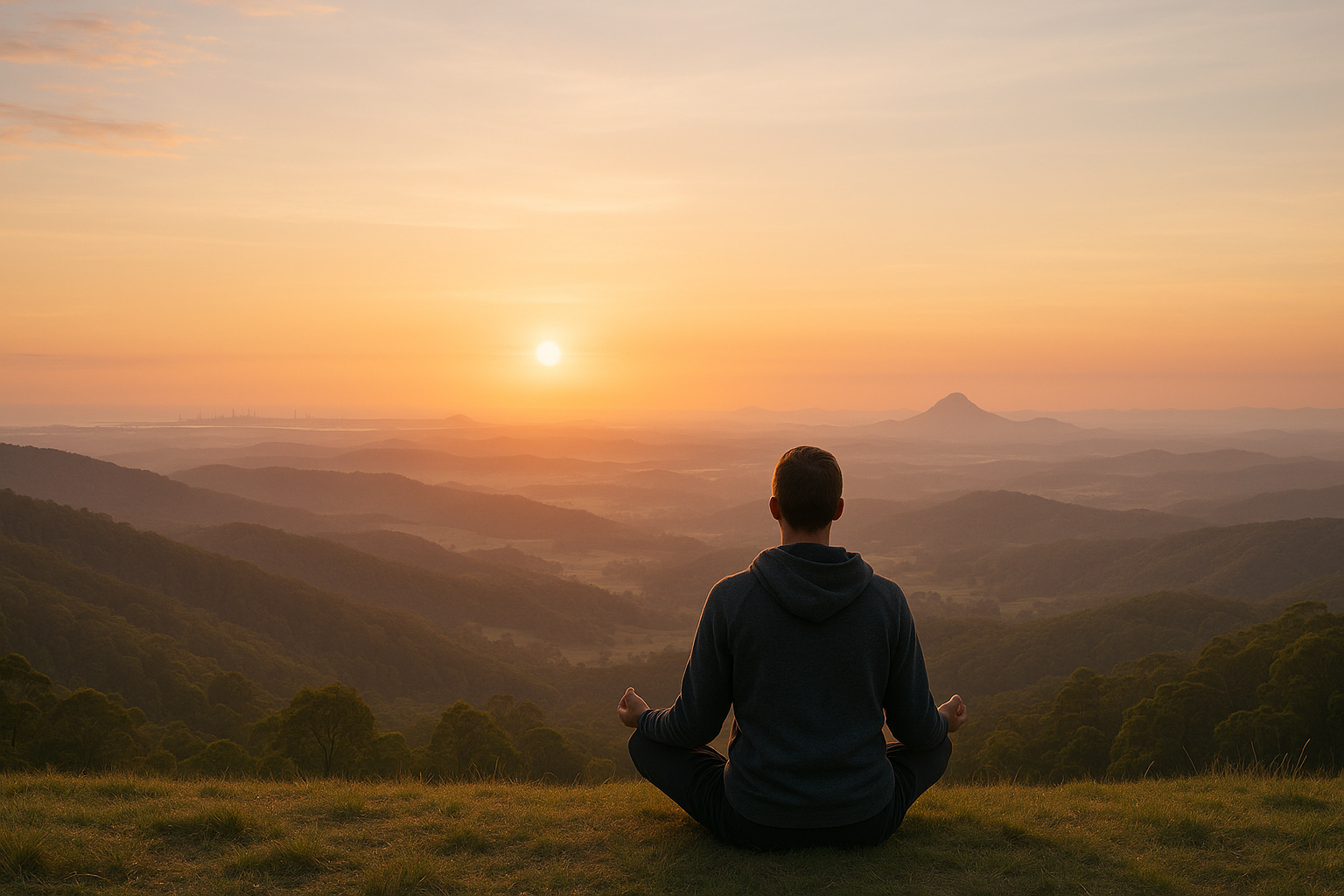
A moment of calm, reflecting the importance of proactive mental wellbeing.

We live in a beautiful place, but the pressures of work, family, and a fast-paced lifestyle still exist. The conversation around mental health has shifted from being reactive to proactive. Gold Coasters are actively seeking strategies to manage stress, improve sleep, and support their nervous systems before burnout hits.

This holistic approach recognises that mental and emotional health is directly linked to physical health—what you eat, how you move, and your gut health all play a crucial role. Many are exploring naturopathic support for anxiety and stress, which looks at the whole person to identify and address root causes.

4. Ultra-Personalised Nutrition

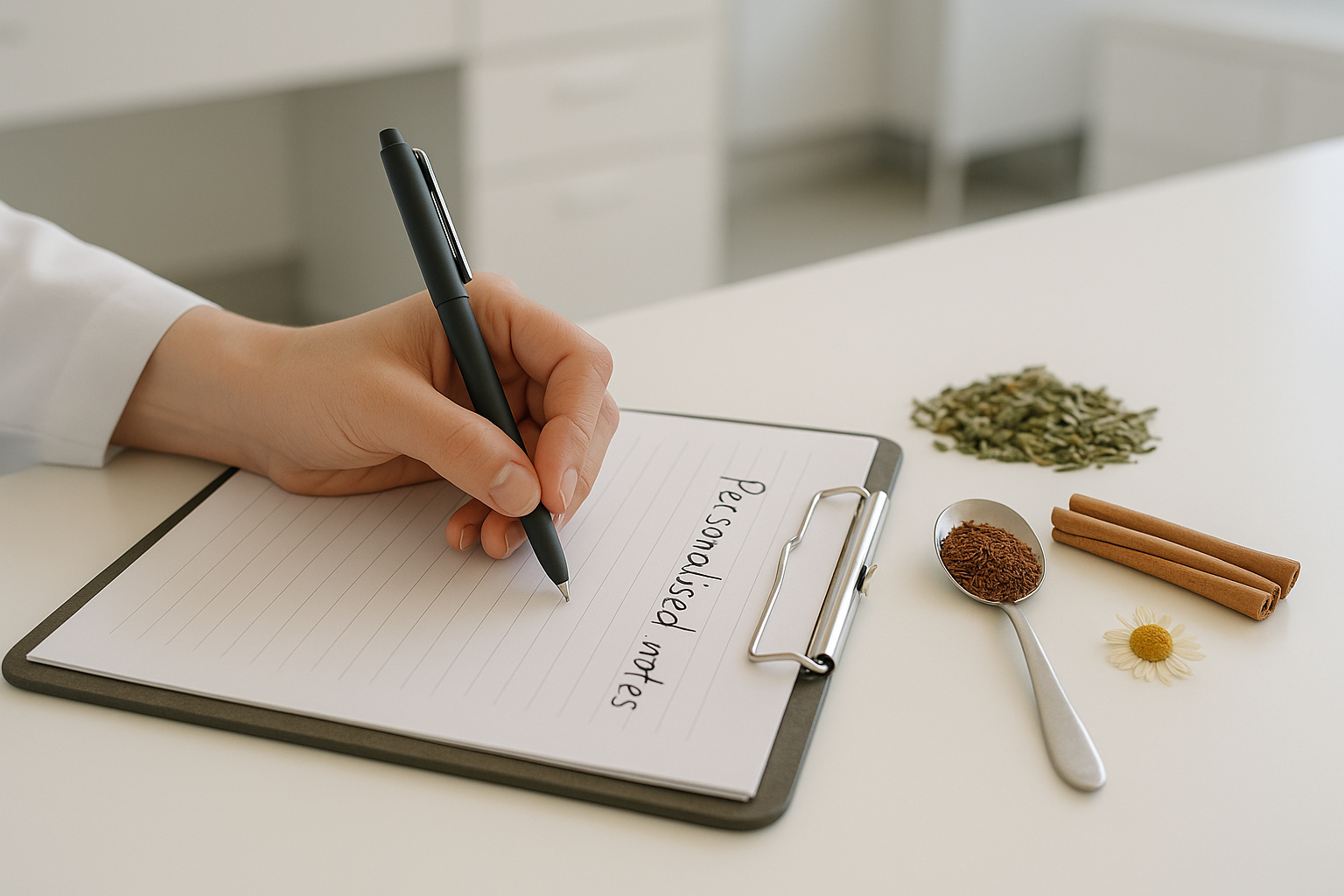
A naturopath creating a personalised health plan for a client.

The era of one-size-fits-all diets is over. People now want nutrition advice that understands their unique body, lifestyle, and health goals. This is especially important for those with specific needs, such as individuals seeking an NDIS dietitian on the Gold Coast.

Personalised nutrition moves beyond generic advice to provide tailored plans that are realistic and effective. It’s about working with a professional who can account for your health history, dietary preferences, and specific goals, whether that’s managing a chronic condition, improving energy, or supporting a healthy family.

How to Integrate These Trends with Expert Guidance

These trends all point to a more intuitive and individualised way of looking after yourself. While it’s great to be informed, putting it all together can be overwhelming. That’s where professional guidance makes a difference.

Working with a qualified professional like Danielle Lamb, one of the dedicated naturopaths on the Gold Coast, helps you move from simply following trends to building a sustainable health strategy. A consultation can help you understand your body’s specific needs and create a practical, achievable plan that fits your life.

Ready to align your health with the seasons? If you’re looking for a holistic Nutritionist on the Gold Coast who can provide practical guidance, book a consultation to create a wellness plan that’s tailored just for you.

Related reading: Nutritionist

Gold Coast design trends and layout ideas for wellness clinics (and why they matter for your appointments)

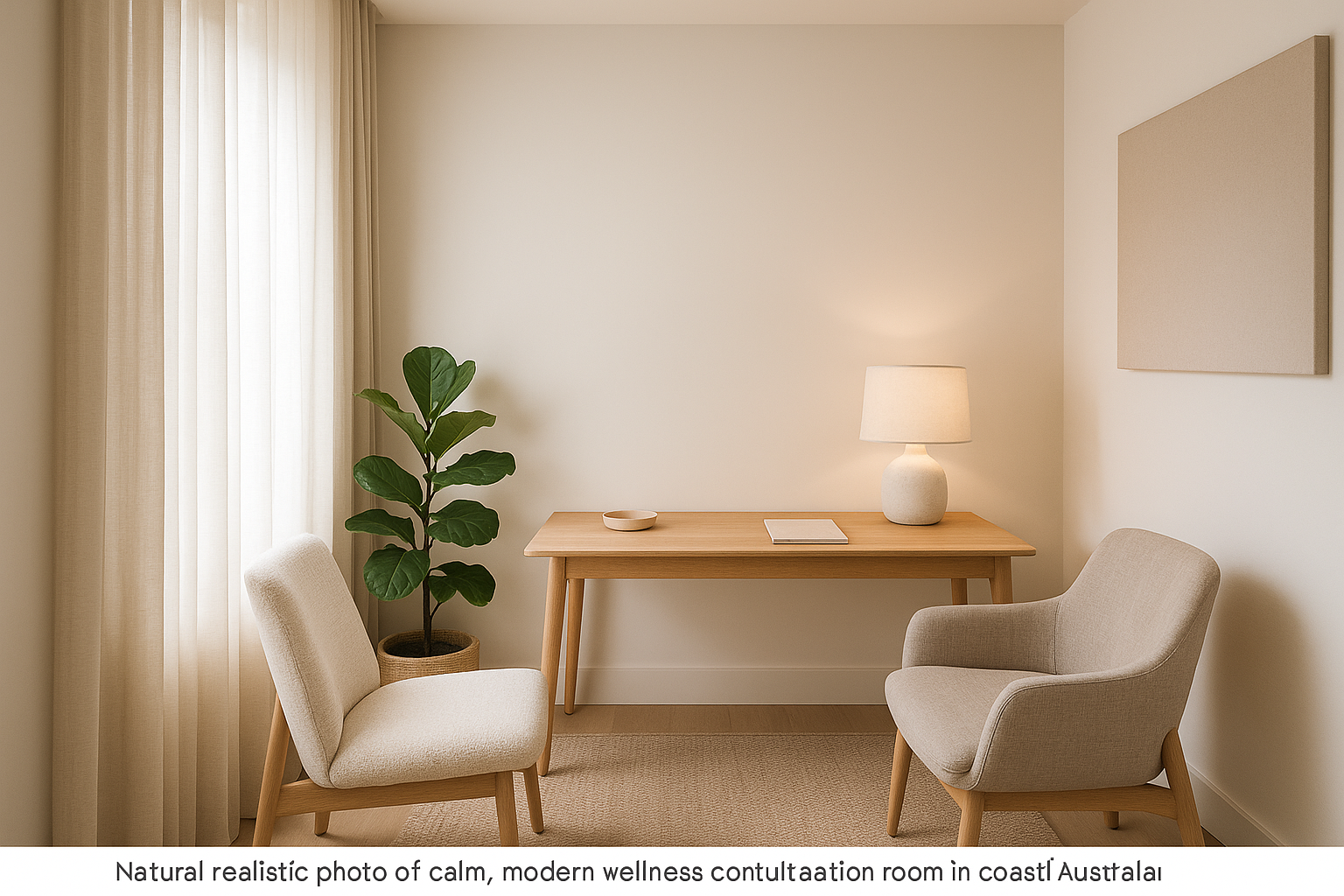
Calm coastal-style consultation room layout with warm lighting and natural textures

Gold Coast design trends and layout ideas for wellness clinics (and why they matter for your appointments)

On the Gold Coast, a “good space” isn’t only about how it looks. It’s about how you feel the moment you walk in.

For wellness clinics, design and layout affect privacy, comfort, and how easy it is to talk through sensitive health concerns. The same is true if you’re setting up a corner at home for telehealth.

Below are practical Gold Coast gold coast design trends and layout ideas that suit local life (light, airflow, and a relaxed, modern feel) without slipping into themed décor.


1) Coastal calm (without the beach theme)

The most timeless Gold Coast look is simple, warm, and uncluttered.

Skip shells, slogans, and “beach house” props. Aim for a space that feels steady and professional.

Try this:

  • Warm whites and sand tones (softer than bright white)
  • Light timber or timber-look finishes
  • One muted accent colour (eucalyptus, clay, soft ocean blue)
  • Minimal décor with a purpose (clock, mirror, plant, one artwork)

Why it matters: Many people arrive tired, stressed, or overwhelmed. That includes clients booking with a naturopath Gold Coast, a gold coast naturopath, a holistic nutritionist Gold Coast, or a gut health dietitian Gold Coast. A calm palette reduces visual “noise” and helps people settle.


2) Less reception, more privacy

Health care is moving away from big, transactional front desks. People want to feel welcomed, not processed.

Even in a small clinic, privacy can feel intentional.

Layout ideas that work well:

  • A small waiting nook rather than a large counter
  • Seating that doesn’t face other clients directly
  • Discreet check-in (for example, a QR code on a side table)
  • A clear separation between entry and consult spaces

Privacy is also a quality cue. It matters when someone is trying to find the best naturopath Gold Coast or a highly recommended naturopath Gold Coast.


3) Consult-room flow: set up for conversation

In a naturopath and nutritionist consult, the room should support discussion. Large desks can feel like a barrier.

A client-friendly consult room layout:

  • Two chairs at a slight angle (more natural than face-to-face)
  • A small side table for water, tissues, and a notebook
  • A screen positioned so it helps, without becoming a “wall”
  • One clear bench surface for paperwork or resources (without clutter)

At-home telehealth tip

If you’re meeting a nutritionist Gold Coast practitioner online, sit slightly off-centre from the camera. It often feels less intense and more conversational.


4) Acoustic comfort (the trend clients don’t always name)

Open-plan spaces can look great. But echo and noise reduce privacy fast.

If people can hear the next appointment, they tend to hold back. If you can hear the hallway, it’s harder to focus.

Simple acoustic upgrades (clinic or home):

  • Layered curtains (sheers + blockout)
  • A rug (even low-pile)
  • Fabric seating rather than all hard surfaces
  • Acoustic wall panels that double as décor
  • Door seals (often overlooked, very effective)

This is especially relevant for appointments around stress and anxiety. See: naturopathy support for anxiety.


5) Gold Coast lighting: warm, layered, glare-free

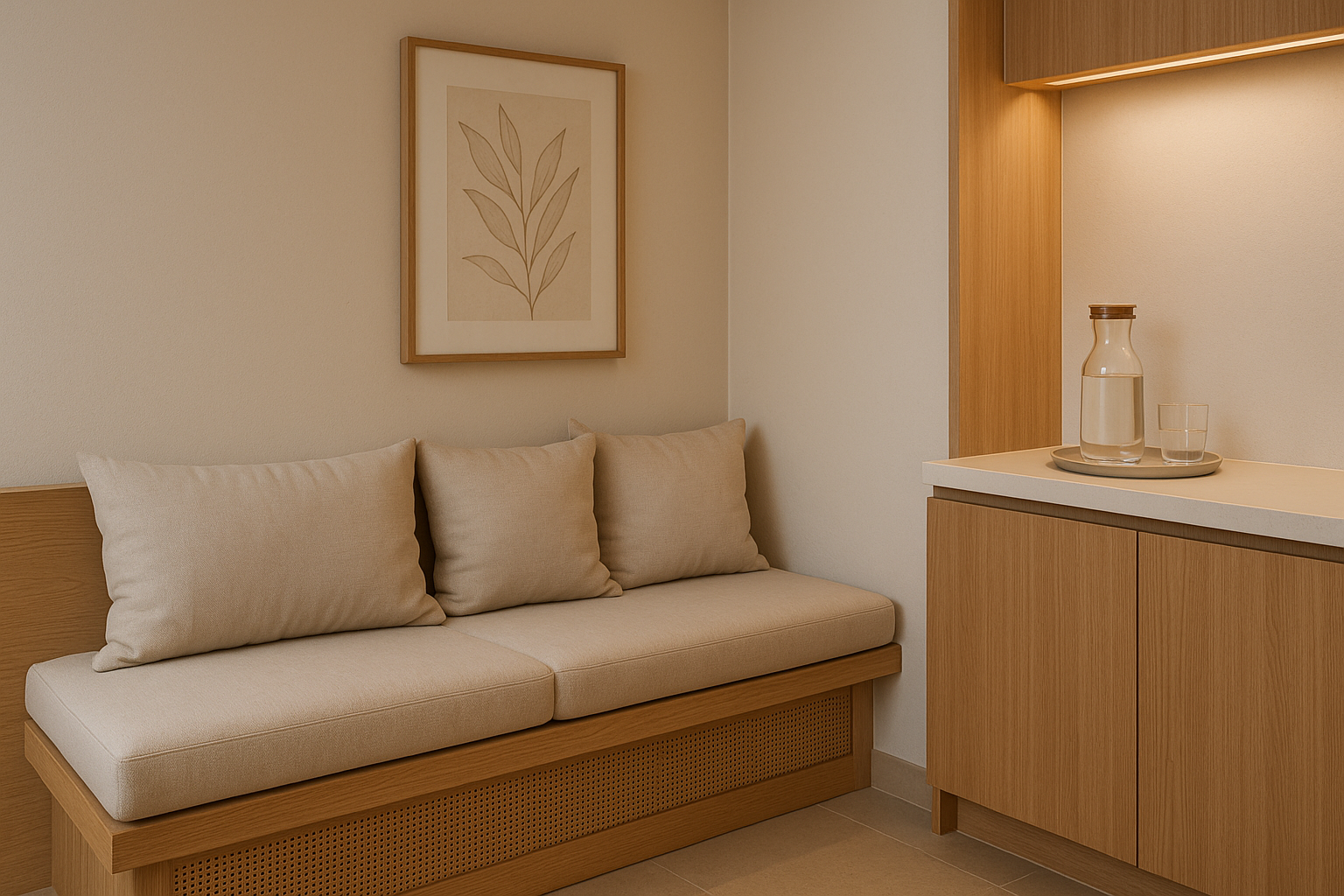
Minimal waiting area design with water station and comfortable seating

Harsh downlights can make a space feel clinical. A modern approach uses lighting in layers.

Aim for:

  • Warm globes (comfortable and flattering)
  • A mix of overhead + lamp lighting
  • Task lighting where you need it (desk, storage)
  • Less screen glare for telehealth and note-taking

If you’re setting up for video calls, place light in front of you (or slightly to the side), not only overhead.


6) “Visual quiet”: storage that makes a room feel calmer

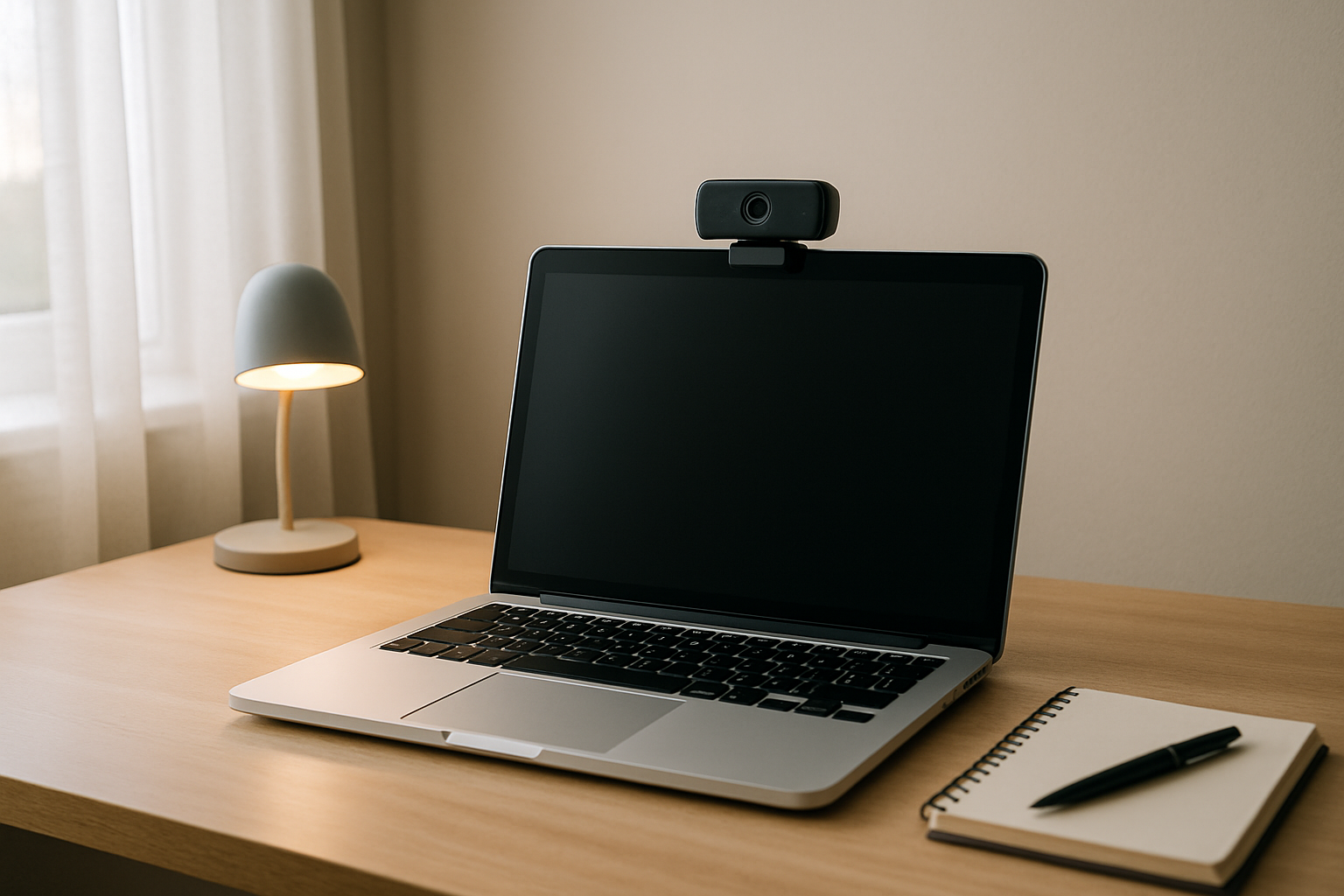
Simple telehealth consult setup with soft light and tidy background

A room can be clean and still feel chaotic. Visual calm often comes from what you can’t see.

Design for visual quiet:

  • Closed storage for supplies and equipment
  • One clear “client zone” surface
  • Cables hidden and chargers tucked away
  • A dedicated spot for bags and shoes

This helps in education-heavy appointments, including planning and habit building with a gut health dietitian Gold Coast, NDIS dietitian Gold Coast, or NDIS nutritionist Gold Coast.


7) Telehealth-ready spaces are now standard

Telehealth suits busy households, shift workers, and anyone who prefers to stay at home.

Telehealth setup checklist:

  • Stable internet and a quiet room
  • Neutral background (less visual distraction)
  • Camera at eye height
  • Notes and resources ready to share
  • Headphones for privacy

If you’re exploring NDIS support, telehealth may be part of your options. See: NDIS nutritionist support options (including telehealth).


8) Mobile consults: when your home becomes the “clinic”

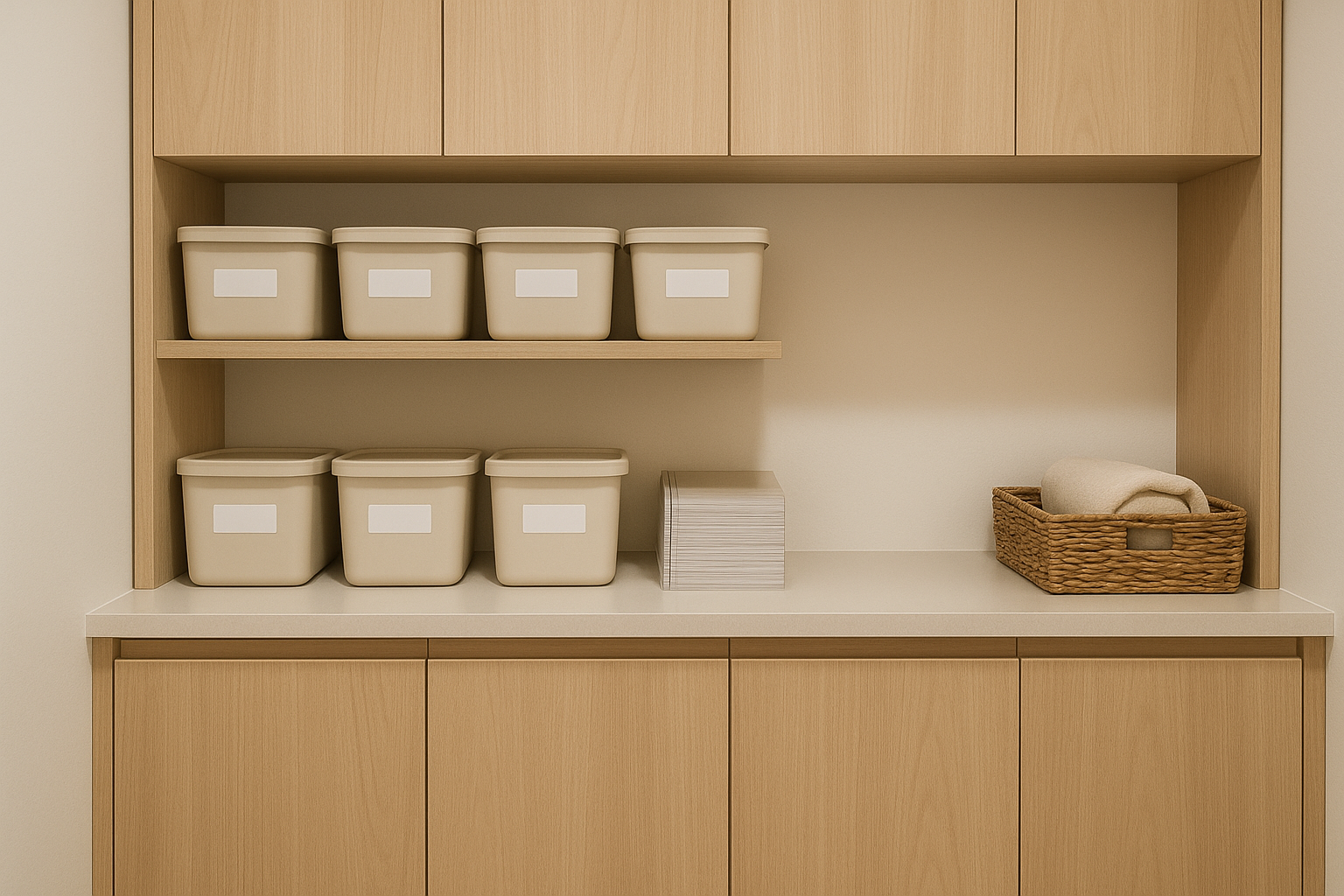
Tidy clinic storage that reduces clutter and supports smooth consults

Mobile appointments change the design challenge. Instead of travelling to a clinic, you create a calm, workable space at home.

A simple in-home setup for mobile support:

  • Clear a small table or bench
  • Comfortable seating for two people
  • Have relevant supplements/medications nearby (if applicable)
  • Reduce distractions (TV off, pets settled if possible)
  • Fresh air where you can

Learn more: mobile nutritionist and mobile naturopath consultations.


9) The “education layout”: make room for food skills

A lot of wellness care is practical. It involves food choices, routines, and plans you can keep.

Education-friendly layout ideas:

  • A small whiteboard or notepad spot for meal planning
  • Space to review pantry staples or labels
  • A simple system for shopping lists and swaps

If you want guided support in a real supermarket environment, consider: Supermarket shopping tours.


10) Choosing a practitioner? Use design as a quality cue (without judging style)

Design isn’t everything. But it can signal how thoughtfully a service runs.

Helpful “green flags” to look for:

  • Clear privacy boundaries (sound and sight)
  • Calm, uncluttered consult rooms
  • Comfortable seating, water available, tissues nearby
  • Options for telehealth or flexible support

This applies whether you’re looking for a naturopath Gold Coast, gold coast naturopath, a nutritionist Gold Coast, a holistic nutritionist Gold Coast, or NDIS supports such as an NDIS dietitian Gold Coast.


Quick layout examples you can copy at home

Example A: A telehealth corner in a living area

  • Small desk facing a plain wall
  • Side lamp + daylight from a window
  • Basket storage underneath (headphones, notebook, papers)

Example B: A “food planning” spot for families

  • One dedicated bench section with a notepad
  • One drawer for lunchbox staples
  • A simple weekly plan you can see at a glance

Example C: A calmer bedroom setup for sleep support

  • Warm bedside lighting (avoid harsh downlights)
  • Cables out of sight
  • Fresh air and uncluttered surfaces

Where Beta Me fits

Beta Me provides naturopathy and nutrition support for locals, with options that suit real schedules.

If you’ve been searching for a naturopath Gold Coast, nutritionist Gold Coast, NDIS dietitian Gold Coast, or NDIS nutritionist Gold Coast, a useful next step is to get clear on:

  • what you want to improve (gut health, energy, anxiety, food habits)
  • what appointments you can realistically commit to
  • whether mobile or online support would make it easier

Explore: Naturopath Gold Coast and Nutritionist Gold Coast.

To learn more about the approach, see: About Beta Me. For allied health context, you can also read: allied health nutritionist information.


Ready for support? Choose the most practical option for you

If you want help choosing between in-clinic, mobile, or online appointments, the simplest next step is to reach out.

Share:

  • what you’re struggling with right now
  • what your week actually looks like
  • whether you need support at home, via telehealth, or both

From there, you can be guided to a next step that fits your routine—whether you’re comparing a naturopath Gold Coast, looking for a naturopath and nutritionist approach, or you want nutrition support such as a gut health dietitian Gold Coast.

Enquire here: Contact Beta Me.


Supermarket produce section suitable for guided shopping tour education

FAQs

What are the most practical Gold Coast design trends for a naturopath or nutritionist space?

Coastal calm colours, warm layered lighting, better acoustics, and closed storage are the most practical. They make the room feel private, comfortable, and easy to focus in.

How many rooms do you need for a small wellness practice?

At minimum, one private consult room. A second flexible area helps with admin, telehealth, and education. If privacy or scheduling is tight, that’s often the first upgrade.

What layout helps clients feel comfortable discussing anxiety or gut issues?

A door that closes, softer acoustics, angled seating, water and tissues within reach, and minimal barriers like large desks. Calm and privacy matter.

What should a telehealth setup include?

A quiet room, stable internet, neutral background, camera at eye height, and soft front lighting. Headphones help keep conversations private.

What’s different with mobile consults or supermarket shopping tours?

Mobile consults use your home layout, so a clear table and fewer distractions help. Shopping tours are education-focused and work best with a simple plan for label reading and easy swaps.

How do I keep a clinic feeling coastal without being themed?

Use restrained natural colours, timber textures, soft lighting, and breathing space. Keep décor minimal and functional. Think “coastal calm”, not beach props.

Loading...